



108 Pitchers, One Majestic Tradition: Snana Purnima Rituals Begin In Puri
Key Points
This sacred bathing festival is observed on the full moon day of Jyestha.
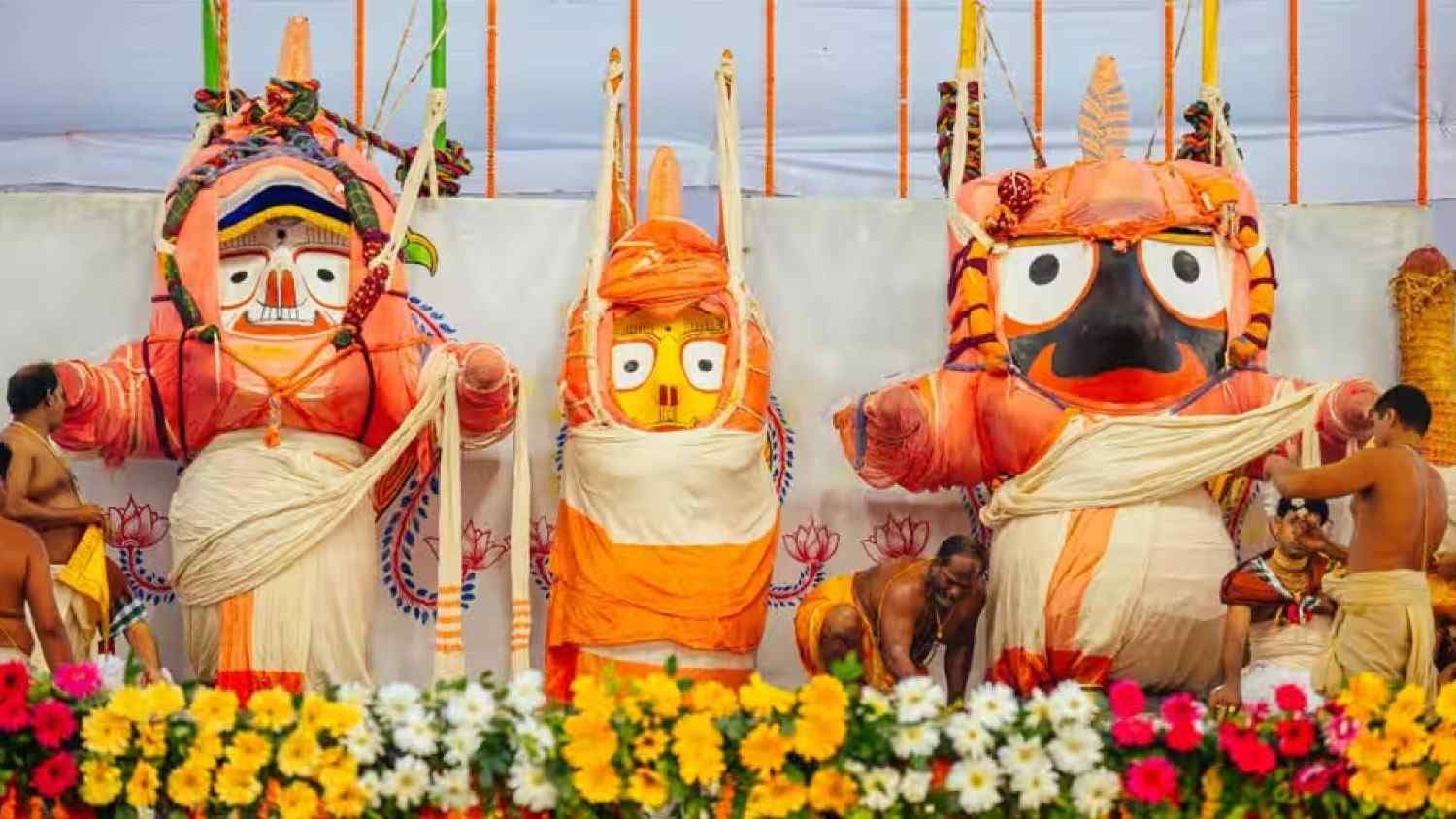
Lord Jagannath, Balabhadra, Subhadra, and Sudarshan Chakra—were brought out of the sanctum sanctorum of the Shree Jagannath Temple and placed on the Snana Mandap.
The deities were adorned in the Hati Besha (Elephant Attire), a rare and revered form symbolising Lord Ganesha.
Puri, Jun 11: The holy city of Puri witnessed the commencement of Snana Purnima 2025, marking the ceremonial beginning of the annual Rath Yatra.
This sacred bathing festival, observed on the full moon day of Jyestha, is one of the most visually grand and spiritually significant rituals in the Jagannath tradition.
As per tradition, the Chaturdha Murti—Lord Jagannath, Balabhadra, Subhadra, and Sudarshan Chakra—were brought out of the sanctum sanctorum of the Shree Jagannath Temple and placed on the Snana Mandap (bathing platform).
Amidst the chants of devotees and the rhythmic beats of temple drums, the deities were bathed with 108 pitchers of sanctified water, drawn from the temple’s Golden Well.
Snana Purnima stands as one of the most revered and visually spectacular rituals in the Jagannath tradition, heralding the ceremonial commencement of the grand Puri Rath Yatra.
Following the sacred bath, the deities were adorned in the Hati Besha (Elephant Attire), a rare and revered form symbolising Lord Ganesha. This transformation is believed to bring blessings and remove obstacles for devotees.
After the Snana Yatra, the deities enter a 15-day isolation period known as Anasara, during which they are believed to recover from the ceremonial bath. During this time, devotees offer prayers to the Anasara Pata, a traditional painted cloth representing the deities, as public darshan remains suspended.
Snan Purnima: Importance of the day
The bathing ritual is done for renewal and purification purpose. After the deities are bathed with 108 pitchers of water, they go into a state of seclusion called Anasara. They rest there for a while and then they get ready for Ratha Yatra. Before the Snana yatra begins, the idols are carried to the bathing area in a colourful procession called Pahandi or Phandi Vijay. A lot of devotees travel from all across the nation to take a look at this ritual. Some people also believe that this is the day when lord Jagannath birthday is commemmorated. After the bathing ritual is done, the deities are dressed in Sada Besha (basically, simple white clothes). Later, the deities are adorned in Hathi Besha, also known as Gajanana Besha, where lord Jagannath takes the form of lord Ganesha. Interestingly, it is believed that lord Jagannath is said to embody all gods and on the day of Snan purnima, the lord represents Ganesha, the one who is known to bestow wisdom on devotees and remove obstacles from their life. It is only after 14 days of seclusion, one can see the deities again and they reappear shortly before the famous Rath yatra.
After the Anasara period, the deities are believed to regain their health and reappear for the Rath Yatra, where they travel in beautifully decorated chariots to the Gundicha Temple.
read more Odisha News
