



Discovery / Rare Odia Inscription of Gajapati Kapilendra Deva Found in Andhra
Key Points
A rare Odia inscription of Gajapati Kapilendra Deva has been discovered in Tekkali, Andhra Pradesh, offering fresh insights into Odisha’s 15th-century history and the Gajapati dynasty’s southern influence.
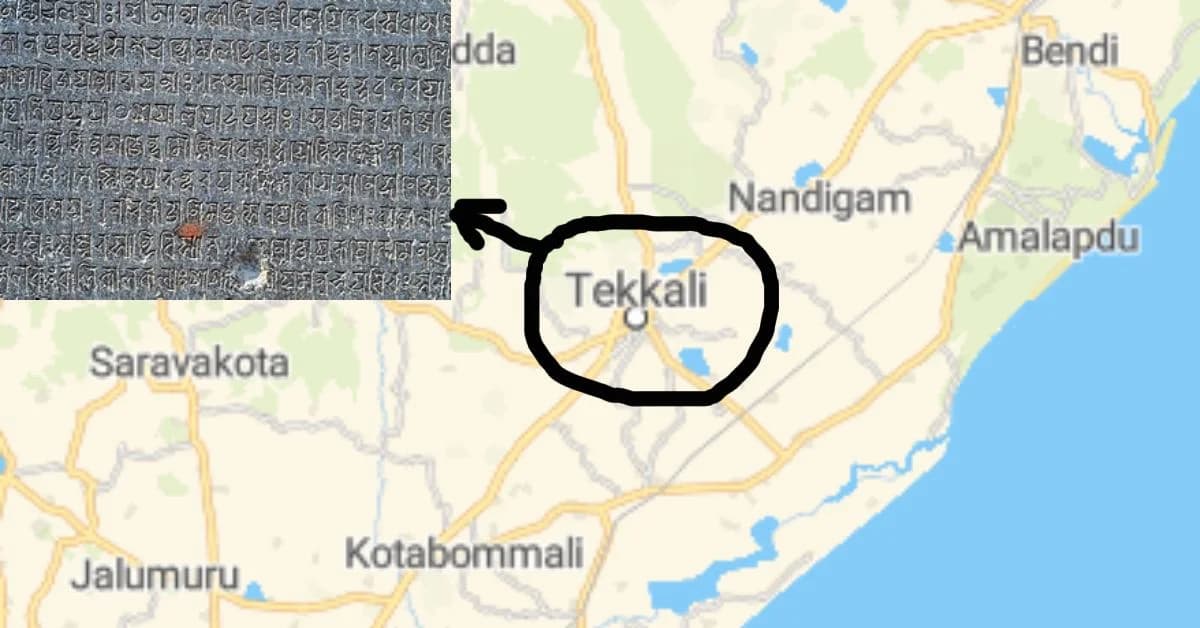
Srikakulam, Aug 22: A rare Odia inscription dating back to the reign of Gajapati Kapilendra Deva has been discovered in Tekkali town of Andhra Pradesh’s Srikakulam district.
The stone record, carved in Odia script and language, was identified by heritage researchers Deepak Kumar Nayak and Bikram Kumar Nayak of the Rediscover Lost Heritage Trust, marking a significant find for Odisha’s medieval history.
Researcher Deepak Kumar Nayak explained that references to this inscription were first published in the Annual Report on Indian Epigraphy in 1926-27.
Also read: Odisha Govt Issues Strict Guidelines on Consultant Jobs

📱 Get Argus News App
✨Acting on this lead, the team contacted Lalit Kumar Dev of the Tekkali royal family, whose assistance helped them locate the stone inside the Tekkali palace premises. The inscription was found beneath a Tulasi altar, with much of its surface damaged. However, estampages (impressions) have been collected for study.
Despite the damage, the second and third lines clearly mention “Pratap Kapileshwar” or Gajapati Kapilendra Deva, while the fourth line contains the word “Bijeraije.” The purpose of the inscription and the exact regnal year remain unclear due to erosion, but scholars believe it dates back to the 15th century, when Kapilendra Deva ruled Odisha.
Kapilendra Deva’s reign was marked by Odisha’s territorial expansion, stretching from the Ganga river in the north to the Kaveri river in the south.
Tekkali itself was once part of ancient Ganjam and a prominent Odia zamindari before being separated during the formation of modern Andhra Pradesh. Even today, many Odia families reside in Tekkali, preserving cultural ties to Odisha.
Similar inscriptions from Kapilendra Deva’s era have
previously been found at Mukhalingam and Srikurmam in Srikakulam district. The
latest discovery at Tekkali adds a new dimension to research on the Gajapati
dynasty’s influence in southern India and strengthens the historical narrative
of Odisha’s medieval heritage.
Related Topics
Explore more stories