



Kotia Row / President's Secretariat Seeks Report from Home Ministry on Advocate's Petition over Kotia Dispute
Key Points
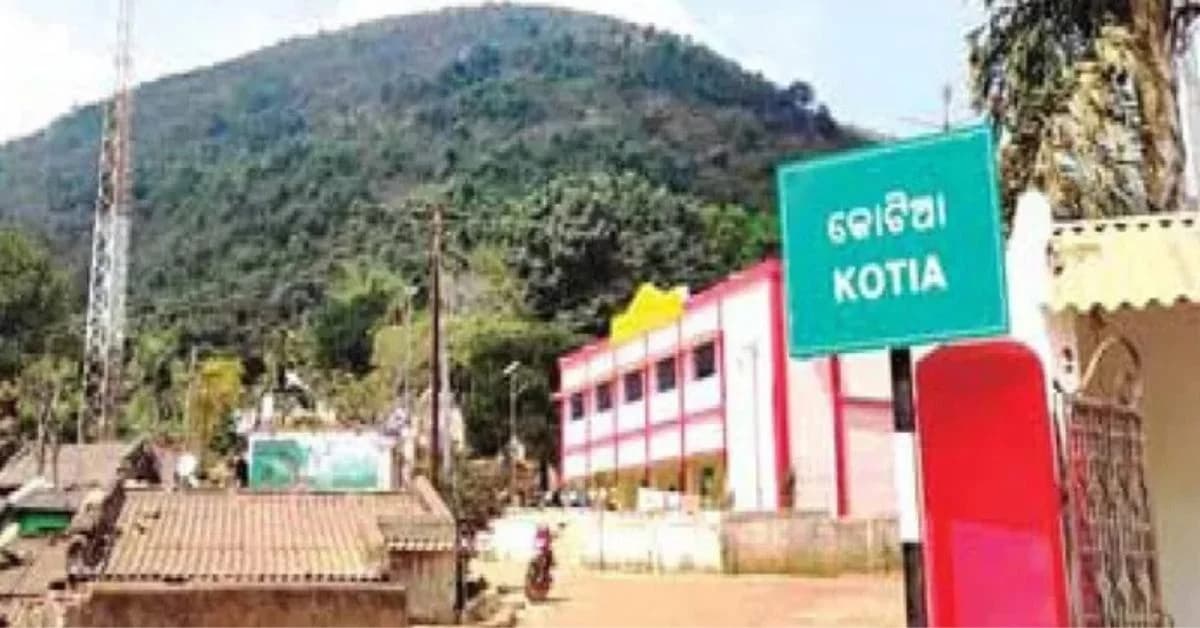
A Koraput-based advocate had petitioned the President seeking protection of Kotia's territorial integrity, tribal rights and historic postal infrastructure, alleging administrative encroachment by Andhra Pradesh.
Bhubaneswar, Oct 28: Raising concerns over the alleged erosion of administrative infrastructure, tribal rights and territorial integrity in Odisha's border areas, Koraput-based advocate and human rights activist Anup Kumar Patro had submitted a detailed petition to the President of India, seeking urgent constitutional intervention in the disputed Kotia region of Koraput district.
In the memorandum addressed to the President, Patro described the situation in Kotia Gram Panchayat as a "constitutional crisis" involving tribal rights, territorial sovereignty and the protection of what he termed as "Odia Swabhiman" or Odia pride.
Acting on the representation, the President’s Secretariat responded on October 27, 2026.
According to the communication, the complaint filed by Advocate Patro has been forwarded to the Ministry of Home Affairs for necessary action. The long-standing border dispute involves 21 of the 28 villages under Kotia Gram Panchayat.

📱 Get Argus News App
✨Also read: CM Mohan Majhi Writes to Naveen Patnaik, Reaffirms Odisha's Claim Over Kotia Villages
The President’s Secretariat has further directed that the applicant be informed directly about the Action Taken Report (ATR) and the steps being taken by the Ministry of Home Affairs on the matter.
Dual Identity Crisis
The petition focuses on Kotia Gram Panchayat, comprising 28 villages, including 21 villages that remain at the centre of the long-standing boundary dispute between Odisha and Andhra Pradesh.
According to the memorandum, tribal communities residing in the disputed villages are facing a severe "dual identity" crisis due to the parallel administrative activities of both states.
"The focal point of this constitutional crisis is the Kotia Gram Panchayat, where local tribal populations face a severe crisis of 'Dual Identity' due to aggressive administrative expansions, welfare poaching and unconstitutional election notifications issued by the State of Andhra Pradesh," the petition states.
Patro alleged that villagers have been compelled to maintain dual voter identities and access competing welfare schemes, creating confusion over their legal and administrative status.
Concern over Andhra Pradesh's Administrative Activities
The petition accuses Andhra Pradesh of violating the status quo in the disputed territory through administrative expansion and local election-related activities.
"In total violation of the apex court's mandate, the Andhra Pradesh State Election Commission recently issued a provocative notification to conduct local panchayat elections within the disputed Kotia territory," the petition alleged.
The memorandum further claimed that certain villages traditionally administered by Odisha were being incorporated into administrative units created by Andhra Pradesh.
Postal Network at the Centre of the Protest
A major concern highlighted in the petition is the reported dismantling or downgrading of historic postal infrastructure in the tribal-dominated Scheduled Areas of Koraput.
Patro argued that post offices in remote regions serve purposes far beyond mail delivery.
"The postal network in the Scheduled Areas of Koraput is not merely a utility; it is a historic symbol of the Indian State's presence, serving as the sole conduit for financial inclusion, direct benefit transfers, official communications and statutory filings for marginalised tribal communities," the memorandum states.
The petition contends that any closure, relocation or weakening of postal services could adversely impact tribal residents who depend heavily on government communications, banking services and welfare delivery mechanisms.
Constitutional Safeguards Invoked
Invoking Articles 14, 21 and 372 of the Constitution along with protections available under the Fifth Schedule, the petitioner argued that constitutional safeguards for tribal communities must be strengthened.
The petition says, "This petition seeks the immediate intervention of the Head of the Republic to safeguard Odia Swabhiman, enforce the Supreme Court's historical status quo directives, and halt the arbitrary structural rollback of essential public services."
The memorandum also references past territorial disputes involving Odisha and Andhra Pradesh, cautioning against relying solely on prolonged litigation.
"Relying exclusively on fresh litigation without matching it with absolute and unyielding on-the-ground administrative enforcement allows adverse governance realities to emerge over time," it stated.
Key Demands before the President
Among the key demands, Patro has sought directions to the Union Ministry of Home Affairs and the Odisha Government to strengthen administrative control across all 28 villages of Kotia Gram Panchayat.
The petition urges the Centre to "take immediate, firm and unyielding administrative control" of the area and enforce a "zero-tolerance policy against external administrative incursions."
It also seeks intervention from the Ministry of Communications to prevent the closure, relocation or downgrading of historic postal establishments in the erstwhile undivided Koraput district.
Additionally, the memorandum has proposed the creation of border security enclaves and enhanced monitoring mechanisms to safeguard territorial integrity and protect the rights of tribal citizens.
Call to Protect Tribal Rights and Odia Identity
Describing the issue as one involving constitutional governance, tribal welfare and regional identity, the petitioner appealed for immediate action from the highest constitutional office.
"The rule of law must prevail through strict, aggressive and lawful state actions," the petition emphasised, while urging stronger administrative safeguards in the sensitive border region.