



Political Analysis / Old Biju Guard’s Show of Strength: Symbolism, Signal, or Start of A New Political Undercurrent?
·5 months ago·3 min read
Key Points
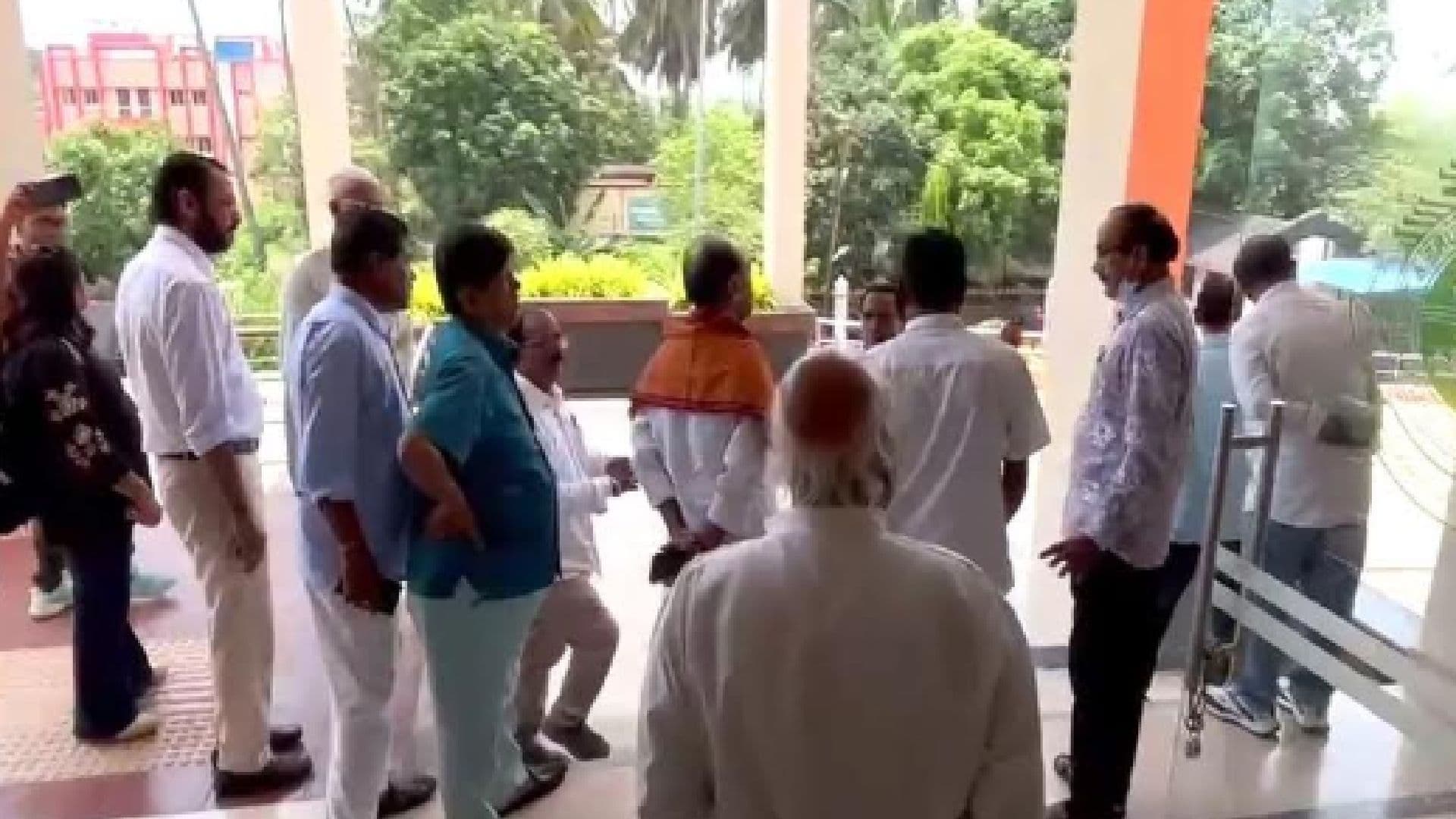
Veteran leaders, including Bijoy Mohapatra, Dilip Ray, and suspended BJD MLA Ramakanta Bhoi, gather under Odisha Nagarik Manch banner in Bhubaneswar.
Bhubaneswar, Apr 16: Friday’s proposed gathering of Odisha’s “old Biju guard” in Bhubaneswar is shaping up to be more than a routine political reunion -- it carries the potential to test the enduring relevance of a legacy, and perhaps, the appetite for an alternative narrative in the state’s evolving political landscape.
Convened under the banner of Odisha Nagarik Manch, the mobilisation brings together a group of veteran leaders who once stood at the core of the Biju Janata Dal (BJD) during its formative phase. Figures such as Bijoy Mohapatra, Dilip Ray, Prabhat Tripathy, Amar Prasad Sathapathy and Rabi Pani are not merely former party members; they are, in many ways, custodians of a political memory rooted in the legacy of Biju Patnaik.
Their collective reappearance on a shared platform raises a key question: is this an exercise in nostalgia, or a calculated attempt to reinsert themselves into Odisha’s current political discourse?
For years, these leaders have remained on the margins—sidelined, expelled, or distanced following differences with BJD president Naveen Patnaik. Yet, their periodic interventions have consistently echoed a similar refrain: that the party they helped build has drifted from its founding ideals. Friday’s event appears to consolidate that critique into a visible, collective assertion.
Convened under the banner of Odisha Nagarik Manch, the mobilisation brings together a group of veteran leaders who once stood at the core of the Biju Janata Dal (BJD) during its formative phase. Figures such as Bijoy Mohapatra, Dilip Ray, Prabhat Tripathy, Amar Prasad Sathapathy and Rabi Pani are not merely former party members; they are, in many ways, custodians of a political memory rooted in the legacy of Biju Patnaik.
Their collective reappearance on a shared platform raises a key question: is this an exercise in nostalgia, or a calculated attempt to reinsert themselves into Odisha’s current political discourse?
For years, these leaders have remained on the margins—sidelined, expelled, or distanced following differences with BJD president Naveen Patnaik. Yet, their periodic interventions have consistently echoed a similar refrain: that the party they helped build has drifted from its founding ideals. Friday’s event appears to consolidate that critique into a visible, collective assertion.

📱 Get Argus News App
✨📰 60 Word News🎬 Argus Podcast📺 Live TV and Breaking News🔔 Free Notification Alerts
Download Free:
The participation of suspended BJD MLA Ramakanta Bhoi adds an immediate layer of political intrigue. By publicly aligning himself with the old guard and terming them the “real architects” of the BJD, Bhoi’s move could signal the beginning of a broader, if cautious, realignment within sections of the party’s extended ecosystem.
At its core, the gathering is being framed as an effort to reclaim the ideological essence associated with Biju Patnaik -- marked by regional pride, administrative boldness, and a relatively decentralised style of functioning. Whether this framing resonates with the public, however, will depend on how convincingly these leaders can translate legacy into contemporary relevance.
The critique of Naveen Patnaik’s long tenure -- from 2000 to 2024 -- forms a central theme of this mobilisation. Allegations of centralised decision-making, erosion of internal democracy, and the rise of a more controlled political structure are not new. What is different now is the attempt to package these concerns into a broader political messaging exercise at a time when Odisha is adjusting to a post-BJD power structure.
This timing is critical. With the state witnessing a churn after the end of the BJD’s prolonged dominance, political spaces that once seemed closed are gradually reopening. In that context, the old guard’s show of strength may be less about immediate electoral impact and more about staking a moral and ideological claim in a shifting landscape.
Yet, questions remain. Can a group defined largely by its past cohesively articulate a forward-looking agenda? Does it possess the organisational depth to move beyond symbolic assertion? Or will Friday’s event remain a moment of visibility without sustained political traction?
Ultimately, the significance of the gathering will not rest solely on the number of attendees or the rhetoric from the leaders. It will lie in whether this display of unity can evolve into a structured political force -- or at least a credible pressure group capable of influencing the discourse in Odisha.
At its core, the gathering is being framed as an effort to reclaim the ideological essence associated with Biju Patnaik -- marked by regional pride, administrative boldness, and a relatively decentralised style of functioning. Whether this framing resonates with the public, however, will depend on how convincingly these leaders can translate legacy into contemporary relevance.
The critique of Naveen Patnaik’s long tenure -- from 2000 to 2024 -- forms a central theme of this mobilisation. Allegations of centralised decision-making, erosion of internal democracy, and the rise of a more controlled political structure are not new. What is different now is the attempt to package these concerns into a broader political messaging exercise at a time when Odisha is adjusting to a post-BJD power structure.
This timing is critical. With the state witnessing a churn after the end of the BJD’s prolonged dominance, political spaces that once seemed closed are gradually reopening. In that context, the old guard’s show of strength may be less about immediate electoral impact and more about staking a moral and ideological claim in a shifting landscape.
Yet, questions remain. Can a group defined largely by its past cohesively articulate a forward-looking agenda? Does it possess the organisational depth to move beyond symbolic assertion? Or will Friday’s event remain a moment of visibility without sustained political traction?
Ultimately, the significance of the gathering will not rest solely on the number of attendees or the rhetoric from the leaders. It will lie in whether this display of unity can evolve into a structured political force -- or at least a credible pressure group capable of influencing the discourse in Odisha.
For now, Friday’s event stands as a test -- of memory, mobilisation, and the possibility of reinvention in a state where political narratives are, once again, in flux.
Related Topics
Explore more stories