



Viksit Odisha / Odisha's research-driven governance: A forward-looking approach to development
Key Points
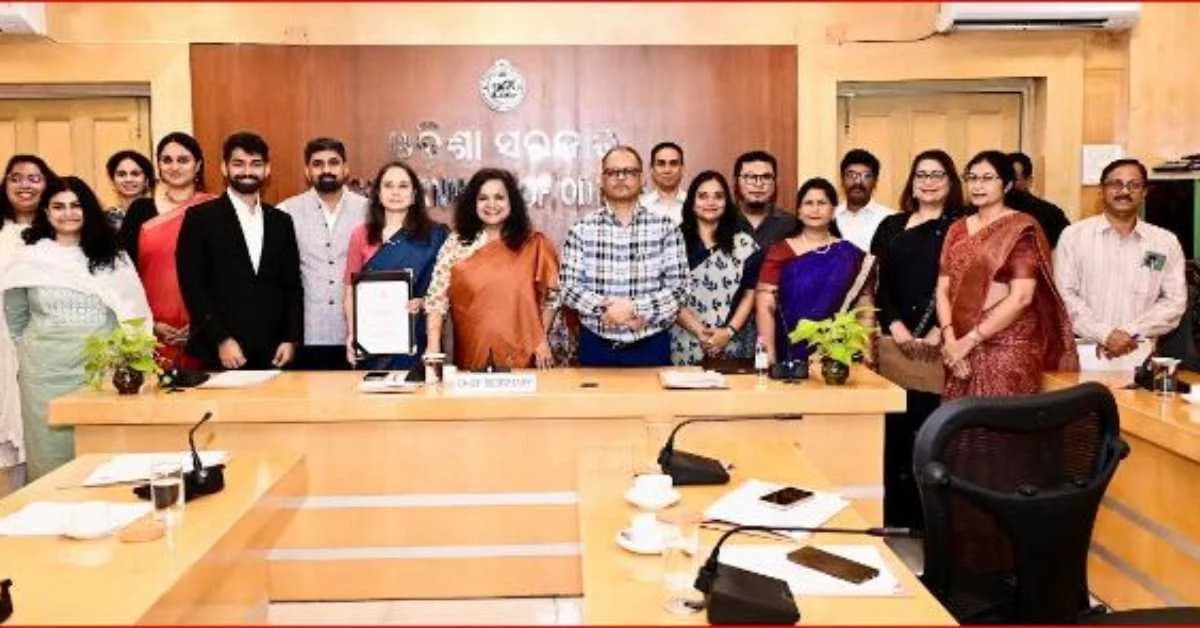
Bhubaneswar, Nov 6: The Odisha government's three-year partnership with the Abdul Latif Jameel Poverty Action Lab (J-PAL) South Asia to strengthen evidence-based policymaking across departments is a significant and forward-looking initiative that could give a new direction to governance in the state. At a time when Odisha has set ambitious development targets under its Vision 2036 and 2047 roadmaps, the collaboration signals an effort to move beyond conventional administrative decision-making towards a more scientific, research-driven and outcome-oriented model of governance.
The Memorandum of Understanding (MoU), signed between the Planning & Convergence Department and J-PAL South Asia on November 4, reflects the government's recognition that ambitious development goals cannot be achieved merely through policy announcements, budgetary allocations or the expansion of welfare programmes. They require a clear understanding of what works, what does not, why certain interventions succeed and how public resources can generate maximum social and economic returns.
This is particularly relevant for Odisha, where the BJP government led by Chief Minister Mohan Charan Majhi has outlined a vision of transforming the state into Samruddha Odisha by 2036 and contributing to Viksit Bharat by 2047. The challenge before the administration is to translate these aspirations into measurable improvements in education, healthcare, agriculture, livelihoods, gender equality and public service delivery.
The partnership with J-PAL offers an opportunity to bring independent research, global development experience and rigorous evaluation into the policy formulation process.

📱 Get Argus News App
✨One of the important dimensions of the initiative is its emphasis on identifying policy challenges in consultation with individual departments and developing research-based solutions suited to Odisha's specific circumstances.
Governments routinely introduce schemes and programmes with the intention of improving people's lives. However, the effectiveness of such interventions depends on their design, implementation, accessibility and impact on beneficiaries. A programme that appears successful on paper may not necessarily deliver the intended results on the ground.
The proposed collaboration could help address this gap by encouraging departments to examine their programmes through credible data, field research and systematic evaluation.
For instance, in education, the government could assess whether interventions are improving foundational literacy and numeracy rather than measuring success solely through enrolment figures. In agriculture, research could help determine whether particular schemes are increasing farmers' incomes, improving productivity or reducing vulnerabilities.
Similarly, in governance, evidence-based evaluation could help identify administrative bottlenecks, improve service delivery and ensure that welfare benefits reach the intended beneficiaries.
Such an approach would make policymaking more accountable, as the success of a programme would increasingly be judged by its actual outcomes rather than the expenditure incurred or the number of beneficiaries covered.
The collaboration is not an entirely new beginning for Odisha. J-PAL South Asia has been associated with research and development initiatives in the state since 2006, covering areas such as early childhood education, foundational learning, governance, sanitation, agriculture and gender.
This continuity is important because effective research partnerships require familiarity with local institutions, administrative processes and social realities.
The government's decision to formalise the engagement through a three-year MoU provides an institutional framework for extending such cooperation across departments.
The proposed Steering Committee, chaired by the Chief Secretary and comprising senior government officials and representatives of J-PAL South Asia, is expected to review project proposals every six months. This arrangement could help maintain coordination between research institutions and the administration while ensuring that projects remain aligned with the state's development priorities.
The involvement of departmental nodal officers is equally significant. Research findings often remain confined to academic publications unless they are translated into practical administrative decisions. A structured mechanism for coordination could help bridge this gap.
However, the real test will be whether the partnership produces actionable recommendations that departments are willing and able to implement.
The ongoing Barnali gender-equity curriculum, being taught in approximately 23,000 government schools, provides an important example of how research and policy can work together.
J-PAL South Asia is serving as the knowledge and research partner to the School and Mass Education Department and Breakthrough Trust in this initiative.
The programme illustrates the potential of research
partnerships to address social challenges that cannot be resolved through
infrastructure or financial assistance alone.
Also Read: Odisha proposes 290 new EV charging stations across 13 cities, highways
Gender equality, classroom participation, social attitudes and educational opportunities require sustained interventions whose effectiveness must be carefully assessed.
If the government can use evidence to strengthen such programmes, the benefits could extend beyond the immediate educational objectives to broader social development.
At the same time, the initiative should encourage departments to identify similar opportunities in health, nutrition, agriculture and rural development, where research-based interventions could improve the quality and reach of public services.
Related Topics
Explore more stories