



Odisha’s 2027 Panchayat Polls Set to Reflect Political Direction Ahead of 2029
·4 months ago·4 min read
Key Points
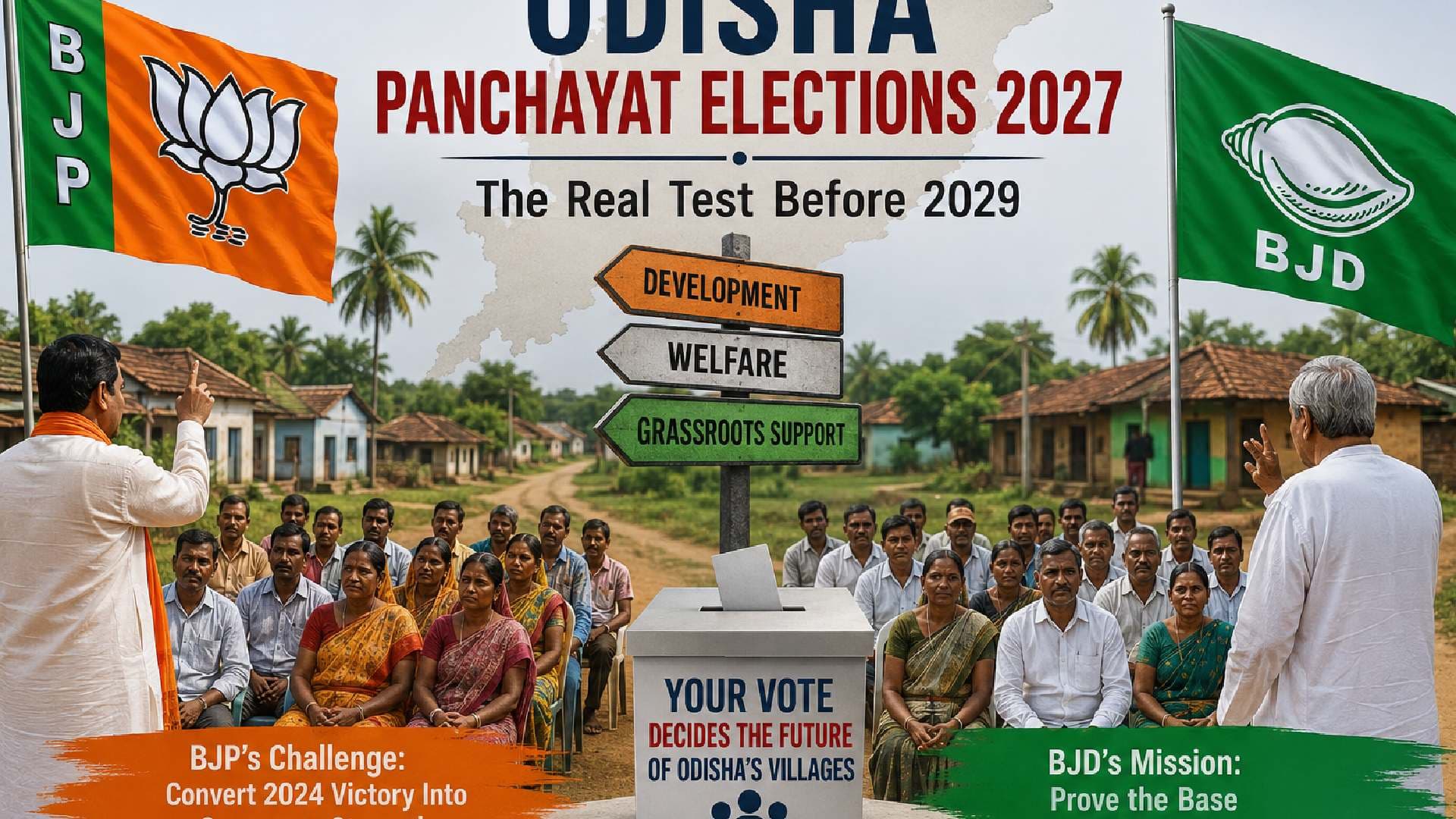
Odisha's 2027 Panchayat elections are expected to carry major political significance, testing BJP's rural organisation against BJD's deeply rooted grassroots structure.
Bhubaneswar, May 19: The political atmosphere in Odisha is gradually becoming active again as parties prepare for the crucial 2027 Panchayat elections. Though local body elections are often viewed as regional contests, the upcoming rural polls in Odisha are expected to carry far greater political significance. For both the ruling Bharatiya Janata Party (BJP) and the opposition Biju Janata Dal (BJD), the results could redefine the political narrative before the 2029 Assembly elections.
The BJP’s victory in the 2024 Assembly elections was historic. It ended the BJD’s uninterrupted 24-year rule and enabled the party to form a government in Odisha on its own strength for the first time. However, the circumstances surrounding that victory continue to shape political discussions even today.
Many political observers believe the BJP’s success in 2024 was influenced not only by its own campaign but also by growing public dissatisfaction against the then BJD government. Administrative centralisation, anti-incumbency and the controversial rise of VK Pandian became major election issues. Public perception that power had shifted away from the traditional political structure of the BJD created resentment among sections of voters and party workers alike.
Yet, despite losing power, the BJD’s organisational network at the grassroots level has not collapsed. In Odisha politics, Panchayat elections are widely considered the true test of rural organisational strength. Unlike Assembly elections, which are often influenced by state-level narratives and leadership appeal, Panchayat polls depend heavily on booth-level mobilisation, local leadership and sustained voter engagement.
The BJP’s victory in the 2024 Assembly elections was historic. It ended the BJD’s uninterrupted 24-year rule and enabled the party to form a government in Odisha on its own strength for the first time. However, the circumstances surrounding that victory continue to shape political discussions even today.
Many political observers believe the BJP’s success in 2024 was influenced not only by its own campaign but also by growing public dissatisfaction against the then BJD government. Administrative centralisation, anti-incumbency and the controversial rise of VK Pandian became major election issues. Public perception that power had shifted away from the traditional political structure of the BJD created resentment among sections of voters and party workers alike.
Yet, despite losing power, the BJD’s organisational network at the grassroots level has not collapsed. In Odisha politics, Panchayat elections are widely considered the true test of rural organisational strength. Unlike Assembly elections, which are often influenced by state-level narratives and leadership appeal, Panchayat polls depend heavily on booth-level mobilisation, local leadership and sustained voter engagement.

📱 Get Argus News App
✨📰 60 Word News🎬 Argus Podcast📺 Live TV and Breaking News🔔 Free Notification Alerts
Download Free:
This is where the BJP faces its biggest challenge.
The 2022 Panchayat election results highlighted the enormous gap between the BJP and the BJD at the grassroots level. Out of 852 Zilla Parishad seats, the BJD had won 766 seats, while the BJP secured only 42. Even the Congress remained close to the BJP in terms of seat share. These figures showed that despite its expanding political presence, the BJP’s rural organisation was still relatively weak compared to the BJD’s deeply rooted structure.
Since coming to power, the BJP government led by Mohan Charan Majhi has attempted to consolidate its support base through welfare measures and governance initiatives. Schemes such as Subhadra Yojana have been designed to strengthen outreach among women voters. However, electoral success in Odisha’s rural politics requires more than welfare delivery. It demands a strong grassroots machinery capable of maintaining constant engagement with voters.
Also Read: Odisha CM Asks OMC to Explore Mining Opportunities Beyond State Amid Rising Global Mineral Demand
There are indications that the BJP is still struggling in that area. Several party leaders have informally expressed concern over inadequate coordination between the government and the organisation. In many local bodies and development projects, individuals linked to the previous BJD establishment continue to enjoy influence. This has led to dissatisfaction among sections of BJP workers who expected a greater political transition after the change of power.
On the other hand, Naveen Patnaik continues to retain considerable goodwill, especially in rural Odisha. His personal image and the BJD’s local-level structure still remain powerful political assets. The fact that the BJD continues to control a large number of Panchayat and urban local institutions reflects that reality.
The 2022 Panchayat election results highlighted the enormous gap between the BJP and the BJD at the grassroots level. Out of 852 Zilla Parishad seats, the BJD had won 766 seats, while the BJP secured only 42. Even the Congress remained close to the BJP in terms of seat share. These figures showed that despite its expanding political presence, the BJP’s rural organisation was still relatively weak compared to the BJD’s deeply rooted structure.
Since coming to power, the BJP government led by Mohan Charan Majhi has attempted to consolidate its support base through welfare measures and governance initiatives. Schemes such as Subhadra Yojana have been designed to strengthen outreach among women voters. However, electoral success in Odisha’s rural politics requires more than welfare delivery. It demands a strong grassroots machinery capable of maintaining constant engagement with voters.
Also Read: Odisha CM Asks OMC to Explore Mining Opportunities Beyond State Amid Rising Global Mineral Demand
There are indications that the BJP is still struggling in that area. Several party leaders have informally expressed concern over inadequate coordination between the government and the organisation. In many local bodies and development projects, individuals linked to the previous BJD establishment continue to enjoy influence. This has led to dissatisfaction among sections of BJP workers who expected a greater political transition after the change of power.
On the other hand, Naveen Patnaik continues to retain considerable goodwill, especially in rural Odisha. His personal image and the BJD’s local-level structure still remain powerful political assets. The fact that the BJD continues to control a large number of Panchayat and urban local institutions reflects that reality.
For the BJP, therefore, the 2027 Panchayat elections are not just another electoral exercise. They are an opportunity to prove that the party’s 2024 victory represented a permanent political shift rather than a temporary anti-incumbency wave. For the BJD, the elections are a chance to demonstrate resilience and prepare the ground for a political comeback.
The verdict of the Panchayat elections may ultimately reveal which party truly commands Odisha’s grassroots politics - and that could significantly influence the course of the 2029 Assembly battle.
The verdict of the Panchayat elections may ultimately reveal which party truly commands Odisha’s grassroots politics - and that could significantly influence the course of the 2029 Assembly battle.
Related Topics
Explore more stories