



Student Election / Odisha Student Union Polls: 15 Lyngdoh Rules Every Candidate Must Know For October 15
·2 hours ago·4 min read
Key Points
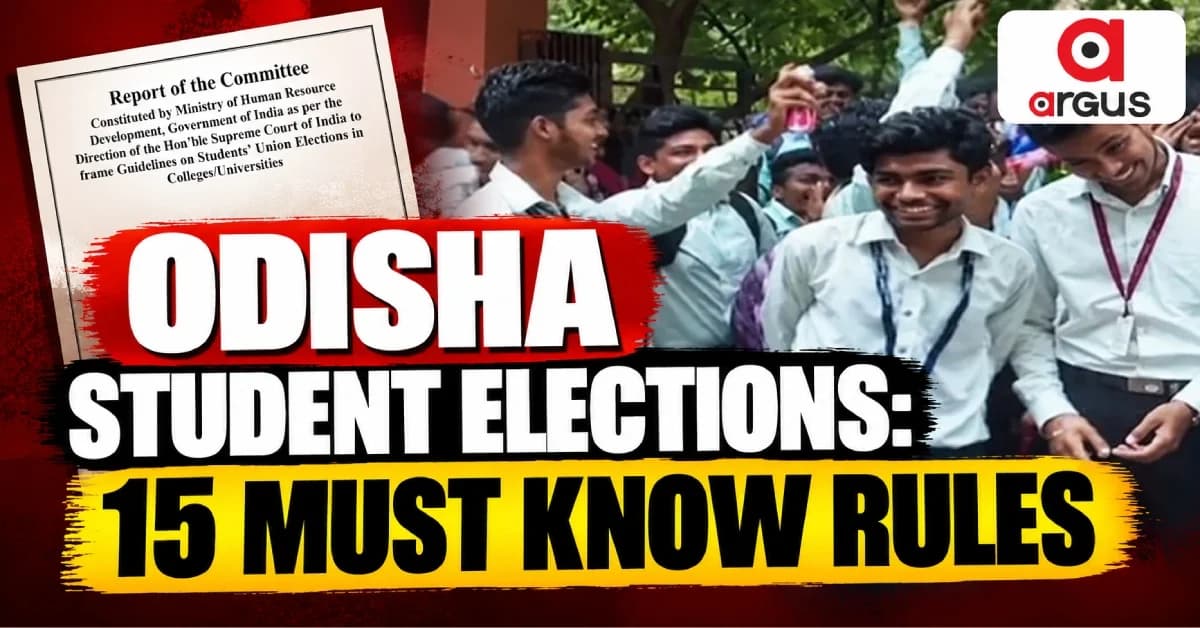
The Lyngdoh Committee recommendations, accepted by the Supreme Court, prescribe rules for student union elections, including a maximum expenditure of Rs 5,000 per candidate and no printed posters, loudspeakers or vehicles for canvassing.
Bhubaneswar, Oct 5: Planning to contest the student union elections in Odisha on October 15? Before you start asking for votes, there is one thing you need to get right: know the rules.
The Lyngdoh Committee recommendations, accepted by the Supreme Court for implementation in student elections, lay down several restrictions on candidates, from campaign spending and posters to political influence and polling-day conduct. Here are 10 mistakes to avoid and five things every student leader must do.
Five Things You Must Do
1. Check Your Eligibility Before Filing
The Lyngdoh Committee recommended age limits of 17-22 years for undergraduate students, 24-25 years for postgraduate students and 28 years for research students, with some relaxation possible for professional courses. Candidates should also have no academic arrears, meet the prescribed attendance requirement or 75%, whichever is higher, and be Regular Full-Time students.
2. Keep Every Election Expense Documented
Maintain proper records of your campaign spending and submit audited accounts within the prescribed period. Don't wait until after the election to reconstruct your expenses.
The Lyngdoh Committee recommendations, accepted by the Supreme Court for implementation in student elections, lay down several restrictions on candidates, from campaign spending and posters to political influence and polling-day conduct. Here are 10 mistakes to avoid and five things every student leader must do.
Five Things You Must Do
1. Check Your Eligibility Before Filing
The Lyngdoh Committee recommended age limits of 17-22 years for undergraduate students, 24-25 years for postgraduate students and 28 years for research students, with some relaxation possible for professional courses. Candidates should also have no academic arrears, meet the prescribed attendance requirement or 75%, whichever is higher, and be Regular Full-Time students.
2. Keep Every Election Expense Documented
Maintain proper records of your campaign spending and submit audited accounts within the prescribed period. Don't wait until after the election to reconstruct your expenses.

📱 Get Argus News App
✨📰 60 Word News🎬 Argus Podcast📺 Live TV and Breaking News🔔 Free Notification Alerts
Download Free:
3. Take Written Permission For Campus Events
Planning a procession or public meeting? Get prior written permission from the college or university and ensure the event does not interfere with classes or academic activities.
4. Keep Your Campaign Focused On Issues
The Lyngdoh Committee allows criticism of a candidate's policies, programmes, past record and work. Use that space to tell students what you want to change instead of turning the campaign into a personal battle.
5. Cooperate With Election Officials And Respect Voters
On polling day, candidates must cooperate with election officials and ensure voters can exercise their franchise freely without obstruction or annoyance.
Also Read: Odisha Student Union Elections To Be Held On October 15, Minister Confirms
10 Mistakes You Must Avoid
Don't Print Posters And Pamphlets
The Committee recommends no printed posters, pamphlets or other printed material for canvassing. Hand-made posters can be used, but only within the expenditure limit and at locations authorised by the institution.
Don't Use Loudspeakers Or Vehicles
The Lyngdoh recommendations prohibit the use of loudspeakers, vehicles and animals for canvassing.
Planning a procession or public meeting? Get prior written permission from the college or university and ensure the event does not interfere with classes or academic activities.
4. Keep Your Campaign Focused On Issues
The Lyngdoh Committee allows criticism of a candidate's policies, programmes, past record and work. Use that space to tell students what you want to change instead of turning the campaign into a personal battle.
5. Cooperate With Election Officials And Respect Voters
On polling day, candidates must cooperate with election officials and ensure voters can exercise their franchise freely without obstruction or annoyance.
Also Read: Odisha Student Union Elections To Be Held On October 15, Minister Confirms
10 Mistakes You Must Avoid
Don't Print Posters And Pamphlets
The Committee recommends no printed posters, pamphlets or other printed material for canvassing. Hand-made posters can be used, but only within the expenditure limit and at locations authorised by the institution.
Don't Use Loudspeakers Or Vehicles
The Lyngdoh recommendations prohibit the use of loudspeakers, vehicles and animals for canvassing.
Don't Campaign On Polling Day
Candidates and student organisations must cooperate with election officials. The Committee says no campaign propaganda or food distribution should take place on polling day, except distribution of water. There is also a 24-hour restriction on public meetings before the close of polling.
Don't Bring Outsiders Into Your Campaign
The Lyngdoh Committee says a person who is not a student of the college or university should not participate in the election process. Violation can lead to disciplinary action and cancellation of candidature.
Don't Cross The Spending Limit
The Committee recommended a maximum expenditure of Rs 5,000 per candidate. Candidates must also submit complete, audited accounts within two weeks of the results.
Don't Take Political-Party Money
Candidates should use only voluntary contributions from the student body. The Lyngdoh recommendations specifically seek to keep political-party funding out of student elections.
Don't Buy Votes Or Transport Voters
Bribing or intimidating voters, impersonating voters and arranging transport for voters are prohibited. Canvassing within 100 metres of a polling station is also barred.
Don't Ask For Votes In The Name Of Caste Or Religion
The Lyngdoh Committee prohibits appeals to caste or communal feelings for votes. Places of worship cannot be used for election propaganda.
Don't Spread Unverified Allegations
Criticise a rival's policies, programmes, past record or work, but avoid attacks on their private life unrelated to public activity. The Committee also says unverified allegations and distorted claims should be avoided.
Don't Take The Campaign Outside Campus
Processions, public meetings and canvassing are not permitted outside the college or university campus. Even campus meetings and processions require prior written permission and must not disrupt academic activities.
The Lyngdoh Committee's message is ultimately simple: contest hard, but contest clean. For a student leader, a campaign should be about policies, performance and the support of fellow students, not money, muscle or outside influence.
And with the elections scheduled for October 15, these 15 points could be the difference between simply contesting an election and staying on the right side of the rules.
Candidates and student organisations must cooperate with election officials. The Committee says no campaign propaganda or food distribution should take place on polling day, except distribution of water. There is also a 24-hour restriction on public meetings before the close of polling.
Don't Bring Outsiders Into Your Campaign
The Lyngdoh Committee says a person who is not a student of the college or university should not participate in the election process. Violation can lead to disciplinary action and cancellation of candidature.
Don't Cross The Spending Limit
The Committee recommended a maximum expenditure of Rs 5,000 per candidate. Candidates must also submit complete, audited accounts within two weeks of the results.
Don't Take Political-Party Money
Candidates should use only voluntary contributions from the student body. The Lyngdoh recommendations specifically seek to keep political-party funding out of student elections.
Don't Buy Votes Or Transport Voters
Bribing or intimidating voters, impersonating voters and arranging transport for voters are prohibited. Canvassing within 100 metres of a polling station is also barred.
Don't Ask For Votes In The Name Of Caste Or Religion
The Lyngdoh Committee prohibits appeals to caste or communal feelings for votes. Places of worship cannot be used for election propaganda.
Don't Spread Unverified Allegations
Criticise a rival's policies, programmes, past record or work, but avoid attacks on their private life unrelated to public activity. The Committee also says unverified allegations and distorted claims should be avoided.
Don't Take The Campaign Outside Campus
Processions, public meetings and canvassing are not permitted outside the college or university campus. Even campus meetings and processions require prior written permission and must not disrupt academic activities.
The Lyngdoh Committee's message is ultimately simple: contest hard, but contest clean. For a student leader, a campaign should be about policies, performance and the support of fellow students, not money, muscle or outside influence.
And with the elections scheduled for October 15, these 15 points could be the difference between simply contesting an election and staying on the right side of the rules.
Related Topics
Explore more stories