



Odisha News / Odisha Speaker Dismisses Disqualification Petitions Against 11 MLAs
Key Points
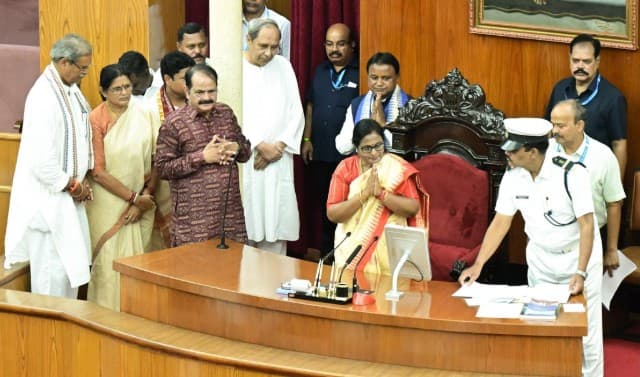
Bhubaneswar, Jun 22: In a significant ruling, Odisha Assembly Speaker Surama Padhy on Monday dismissed disqualification petitions filed against 11 legislators accused of cross-voting during the March 16 Rajya Sabha elections. Eight MLAs belonged to the Opposition Biju Janata Dal (BJD) and three to the Congress, officials said.
The Speaker, in separate orders, held that the petitions lacked proper verification and supporting materials. Citing Rule 6, particularly sub-rules (6) and (7), of the Members of the Odisha Legislative Assembly (Disqualification on Ground of Defection) Rules, 1987, she said the applications failed to meet statutory requirements.
Petitions Termed “Vague and Unsubstantiated”
A notification issued by the Assembly secretariat noted: “The petition is cryptic, vague, unsubstantiated and does not fulfil the statutory requirements to be gone into on merits… Therefore, the petition suffers from gross infirmity and does not deserve any consideration.”

📱 Get Argus News App
✨The Speaker further observed that the petitions were not verified in the manner prescribed under the Code of Civil Procedure, 1908, and the evidence did not establish voluntary resignation or defection under paragraph 2(1)(a) of the Tenth Schedule of the Constitution.
MLAs Suspended by Parties
The BJD had suspended six of its MLAs, including Chakramani
Kanhar (Baliguda), Naba Kishore Mallick (Jayadev), and Souvic Biswal
(Choudwar-Cuttack), for cross-voting. Two others, Arvind Mohapatra and Devi
Ranjan Tripathy, had already been suspended earlier for anti-party activities.
Congress had also suspended Sofia Firdous (Barabati-Cuttack), Ramesh Chandra
Jena (Sanakhemundi), and Dasarathi Gamango (Mohana) for defying the party whip.
Also Read: Debashish Samantaray Elected Unopposed In Odisha Rajya Sabha Bypoll
Political Reactions
While the ruling BJP welcomed the Speaker’s decision, the opposition BJD and Congress termed it a setback and announced plans to explore legal options. Both parties argued that cross-voting represented a serious breach of discipline and constitutional provisions.
Related Topics
Explore more stories