



Lunar Eclipse Timings / Odisha Set To Witness Partial 'Chandra Grahan'; Lunar Eclipse Timings Announced for March 3
·7 months ago·2 min read
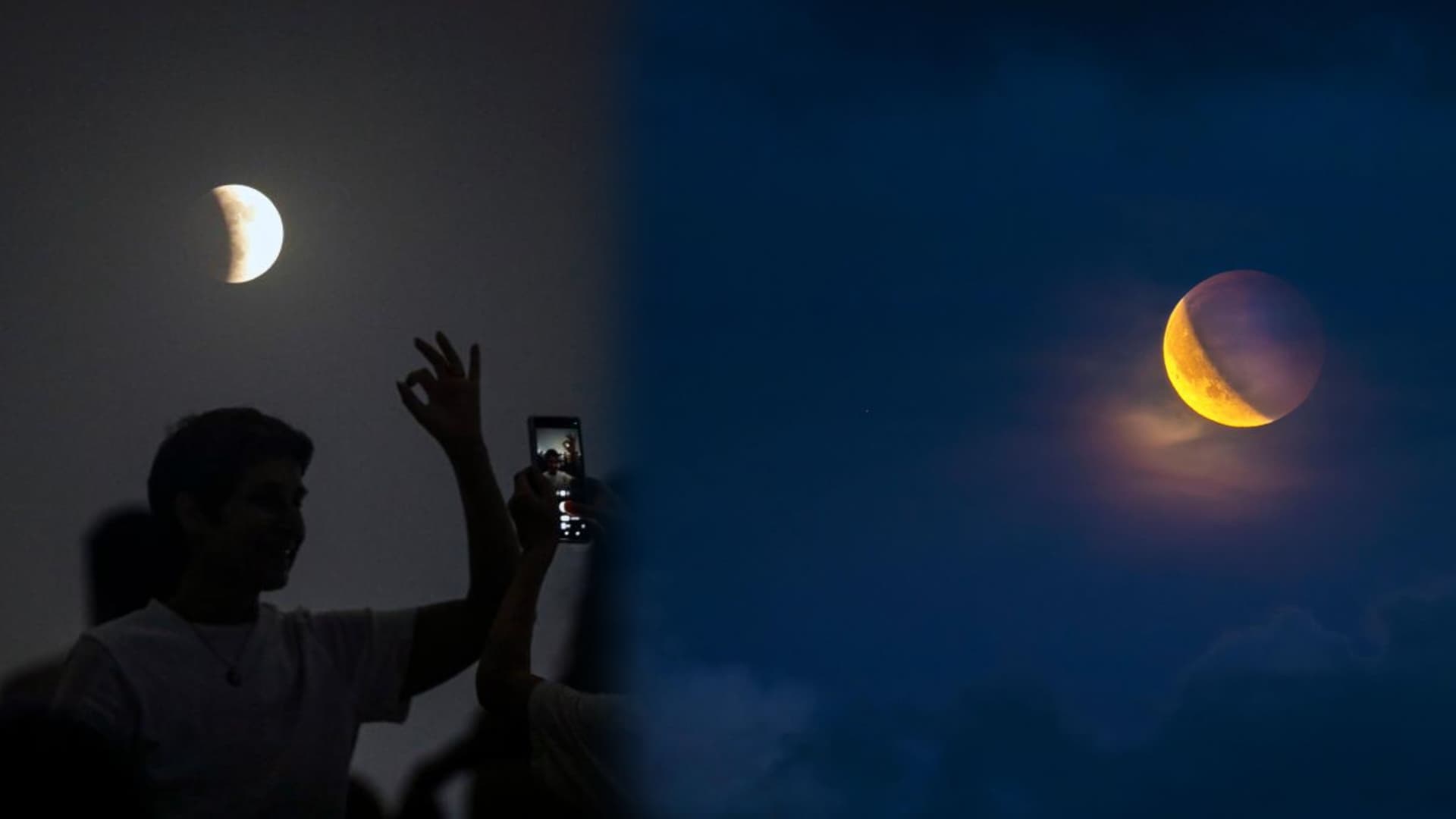
Key Points
- The first lunar eclipse of 2026 will occur on March 3, visible in parts of India, including Odisha, as a partial eclipse from 6:00pm to 6:47pm IST.
- The total eclipse phase will occur from 4:34pm to 5:32pm IST but will not be visible in India.
- Astronomers confirm the eclipse is safe to observe with the naked eye; visibility depends on clear sky conditions.
Bhubaneswar, Feb 22: The first lunar eclipse (Chandra Grahan) of the year 2026 will occur on March 3 and will be visible in parts of India, including Odisha.
According to astronomical calculations, the eclipse will begin at 2:14pm Indian Standard Time when the Moon enters the Earth’s penumbra. The partial phase will start at 3:20pm, followed by the total lunar eclipse from 4:34pm to 5:32pm. The partial phase will end at 6:47pm IST.
However, in Odisha, the Chandra Grahan will be visible only as a partial lunar eclipse from 6:00pm to 6:47pm, shortly before moonset. Visibility will depend on clear sky conditions.
A lunar eclipse occurs when the Sun, Earth and Moon align in a specific configuration, causing the Earth’s shadow to fall on the Moon. It is a rare and striking celestial event that can be safely observed with the naked eye.
According to astronomical calculations, the eclipse will begin at 2:14pm Indian Standard Time when the Moon enters the Earth’s penumbra. The partial phase will start at 3:20pm, followed by the total lunar eclipse from 4:34pm to 5:32pm. The partial phase will end at 6:47pm IST.
However, in Odisha, the Chandra Grahan will be visible only as a partial lunar eclipse from 6:00pm to 6:47pm, shortly before moonset. Visibility will depend on clear sky conditions.
A lunar eclipse occurs when the Sun, Earth and Moon align in a specific configuration, causing the Earth’s shadow to fall on the Moon. It is a rare and striking celestial event that can be safely observed with the naked eye.

📱 Get Argus News App
✨📰 60 Word News🎬 Argus Podcast📺 Live TV and Breaking News🔔 Free Notification Alerts
Download Free:
Scientists emphasised that a lunar eclipse has no harmful effects on people or on Earth.
Astronomer Dr Subhendu Pattnaik said that if the sky remains clear, people in Odisha will be able to witness the partial phase of the eclipse until 6:47pm.
In 2026, there will be two lunar eclipses and two solar eclipses during the year.
Also Read: Odisha to Ditch Glass Liquor Bottles for Tetra Packs
First Solar Eclipse
The first solar eclipse of 2026 took place on February 17, drawing global attention to the rare celestial spectacle popularly known as the “Ring of Fire”.
According to the National Aeronautics and Space Administration (NASA), an annular solar eclipse occurs when the Earth, Moon and Sun align, and the Moon passes between the Sun and Earth while being at or near its farthest point from the planet.
Astronomer Dr Subhendu Pattnaik said that if the sky remains clear, people in Odisha will be able to witness the partial phase of the eclipse until 6:47pm.
In 2026, there will be two lunar eclipses and two solar eclipses during the year.
Also Read: Odisha to Ditch Glass Liquor Bottles for Tetra Packs
First Solar Eclipse
The first solar eclipse of 2026 took place on February 17, drawing global attention to the rare celestial spectacle popularly known as the “Ring of Fire”.
According to the National Aeronautics and Space Administration (NASA), an annular solar eclipse occurs when the Earth, Moon and Sun align, and the Moon passes between the Sun and Earth while being at or near its farthest point from the planet.
The maximum eclipse was visible over Antarctica, particularly from research stations such as Concordia and Mirny. In Southern Africa, countries including South Africa, Tanzania, Zambia and Zimbabwe witnessed a partial eclipse.
Parts of South America, especially Argentina and Chile, also experienced visibility.
Parts of South America, especially Argentina and Chile, also experienced visibility.
Related Topics
Explore more stories