



Odisha Leads India in Health Spending at Nearly 2% of GSDP: SBI Study Suggests Health Investment Paying Off for Children| Special Story
Key Points
* SBI Research finds higher health expenditure is associated with better child nutrition outcomes, including lower stunting and underweight rates.
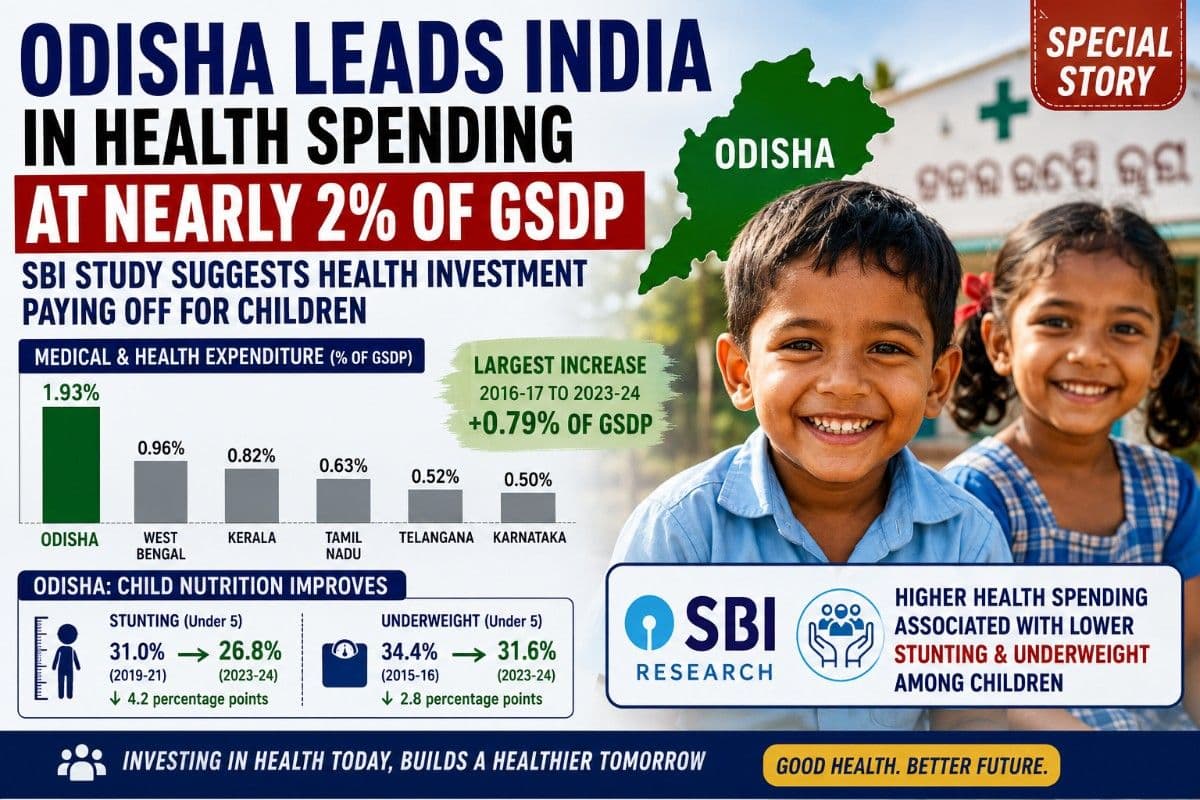
* Odisha recorded the largest rise in health spending among major states, with expenditure increasing by 0.79 percentage points of GSDP since 2016-17.
Bhubaneswar: At a time when many progressive Indian states like Karnataka, Kerala and Telangana continue to spend less than 1% of their Gross State Domestic Product (GSDP) on healthcare, Odisha has emerged as the country's biggest public health spender among major states, allocating nearly 1.93% of its GSDP to medical and health services in 2023-24.
The big revelation has been made by a new SBI Research analysis released Wednesday. The study using its regression model suggest that such sustained investment is translating into tangible gains in child health and nutrition. And it has made this big observation taking into account the recently released National Family Health Survey’s (NFHS-6) child nutrition indicators.
The SBI report highlights that Odisha recorded the largest increase in health expenditure among major states, with spending rising by 0.79 percentage points of GSDP between 2016-17 and 2023-24 – far ahead of every other state in the comparison. In contrast, several states continue to spend barely 0.5% of GSDP on health.
More importantly, SBI's analysis suggests that higher public health spending is associated with improved child nutrition outcomes. The report notes that states with greater health expenditure generally witnessed larger reductions in two critical indicators of child malnutrition – stunting and underweight prevalence.

📱 Get Argus News App
✨Odisha's Child Health Indicators Improve
The NFHS-6 data show that Odisha has made measurable progress in reducing child malnutrition over the past few years.
The proportion of stunted children under five years in Odisha declined from 31.0% in NFHS-5 (2019-21) to 26.8% in NFHS-6 (2023-24), a fall of 4.2 percentage points. Stunting reflects chronic undernutrition and is considered one of the most important indicators of long-term child health.
Similarly, the share of underweight children dropped from 34.4% in 2015-16 to 31.6% in 2023-24, reflecting gradual improvement in nutritional status.
While Odisha did witness an increase in the prevalence of wasting—a measure of acute malnutrition – from 18.1% to 22.1%, the overall trend in stunting and underweight indicators aligns with SBI's broader finding that health investments contribute positively to child well-being.
Spending Alone Is Not Enough, But It Matters
SBI Research examined the relationship between medical and health expenditure and child nutrition through a regression model using stunting, underweight and wasting as indicators of malnutrition. The study found a negative association between health spending and both stunting and underweight levels, indicating that states investing more in healthcare tend to experience better nutritional outcomes among children.
However, the researchers also caution that the statistical relationship is not strong enough to establish definitive causation. Factors such as maternal education, institutional deliveries, access to clean drinking water and community-level interventions also play critical roles in determining child health outcomes.
A Model for Other States?
The SBI report underscores a growing policy lesson: sustained public investment in healthcare can produce long-term social dividends. Odisha's near-2% health spending level stands in sharp contrast to several economically stronger states that allocate less than 1% of GSDP to health.
As India battles persistent malnutrition despite improvements in healthcare access and vaccination coverage, Odisha's experience offers an important case study. The state's commitment to health spending appears to be supporting better child nutrition outcomes, reinforcing the argument that public health expenditure should be viewed not merely as a welfare cost but as a long-term investment in human capital.
With NFHS-6
showing significant progress in reducing child stunting nationwide and SBI
identifying a positive link between health spending and nutritional outcomes,
Odisha's performance may strengthen calls for other states to increase
healthcare allocations and place child nutrition at the centre of development
policy.
Also Read: Critical Health Alert / NFHS-6 Drops Health Bombshell on Odisha: Young Adults Getting Trapped in Sudden Sugar, BP Spike| Exclusive Breaking
Related Topics
Explore more stories