



Odisha Assembly Needs Debate, Not Disruption
Key Points
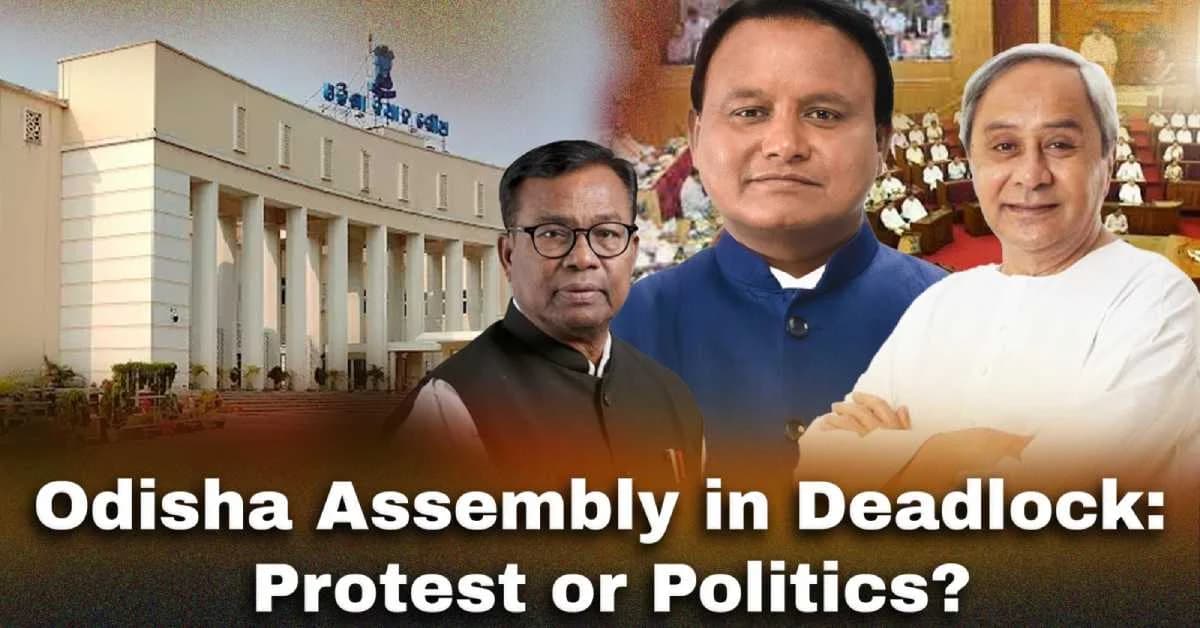
Bhubaneswar, Sep 24: The Odisha Legislative Assembly has now lost three consecutive working days to protests and disruptions. The issues at the centre of the confrontation — the amended Mines and Minerals (Development and Regulation) Act and serious errors reported in newly published school textbooks — are neither trivial nor irrelevant. They concern the state's economic interests and the quality of education being provided to children.
The more important question, therefore, is not whether the Opposition has the right to raise these issues. It certainly does. The question is whether repeated disruption of the House is the most effective way of pursuing them.

📱 Get Argus News App
✨For three successive days since the Monsoon Session began on September 22, Opposition members have entered the Well, raised slogans and protested over the two issues. As a result, Question Hour, Zero Hour and other scheduled business have repeatedly been affected. On Thursday, the House was adjourned till 4 pm after Opposition members again protested over the MMDR amendment.
This raises a larger question about the functioning of parliamentary democracy: what is the purpose of a legislature if its principal instrument — debate — is repeatedly replaced by disruption?
The Opposition's role in a democracy is not simply to oppose the government. It is to question it, scrutinise its decisions, expose shortcomings, demand accountability and place alternative viewpoints before the public. Raising the MMDR issue and the textbook controversy is therefore an entirely legitimate part of Opposition politics.
But democratic rights come with democratic responsibilities.
The Assembly is different from a street protest. Outside the legislature, political parties can organise rallies, demonstrations and slogan-shouting to mobilise public opinion. Inside the legislature, their principal instruments are questions, documents, arguments, evidence, motions, debates and votes.
That distinction matters.
Take the MMDR issue. The Congress and other Opposition members have raised concerns about the amended mining law and its possible implications for Odisha's mineral revenue. The state government itself told the Assembly on Thursday that it had not yet assessed the financial impact of the amended law and that an evaluation would follow after the Centre frames the rules.
That is precisely the kind of issue that deserves a detailed Assembly debate.
How much revenue could potentially be affected? What are the provisions of the amended law? What powers remain with the state? What would be the impact on auction premiums, royalties and other mining-related receipts? What is the Odisha government's legal and financial assessment? What safeguards does it want from the Centre?
These questions cannot be adequately answered through slogans.
A structured debate, supported by documents and figures, would give legislators an opportunity to put the government on the spot and, equally importantly, allow the government to place its position before the people.
The textbook controversy presents another example.
The reported discovery of around 1,700 errors in school textbooks is a serious matter. A three-member inquiry committee has reportedly found that the errors were not confined to printing mistakes but included factual, conceptual, language and other content-related problems, while also pointing to weaknesses in the review process.
The Opposition is therefore justified in asking: How did these errors occur? Who approved the books? Who was responsible for reviewing them? What action has been taken? Have the books been corrected? What system will prevent a recurrence?
But demanding answers in the Well is less consequential than obtaining those answers on the floor of the House.
There is also a question about the demand for the resignation of the School and Mass Education Minister. A resignation demand is a legitimate political position. But the legislature's more enduring function is to establish facts, fix responsibility and ensure institutional correction. If responsibility has to be assigned, it should follow an examination of the evidence rather than become a substitute for it.
The responsibility, however, does not rest with the Opposition alone.
The Treasury Bench also has an important role in restoring the credibility of the House.
When Opposition members raise serious allegations, the government's answer cannot simply be that it is ready for discussion. Ministers must provide facts, figures and documents. Where mistakes have occurred, the government must explain what went wrong and what corrective action has been taken. Where allegations are unsupported, they should be rebutted with evidence.
A confident government should have little reason to fear a searching debate.
Similarly, the Speaker and the parliamentary leadership have the difficult task of ensuring that both sides can exercise their rights without paralysing the House. The objective should not merely be to restore silence. It should be to restore meaningful parliamentary business.
There is a practical way forward.
The Opposition can agree to allow Question Hour and other scheduled business to proceed while insisting on a time-bound discussion on the MMDR amendment. The government can facilitate such a discussion and provide the relevant financial and legal information. The textbook issue could similarly be taken up through a structured debate, with the findings of the inquiry committee placed before the House and the government's corrective measures explained.
If necessary, an all-party meeting could help establish a mutually acceptable framework for discussion.
The fundamental point is simple: disagreement is not the problem in a democracy. The inability to convert disagreement into debate is.
A legislature without Opposition is not a healthy democracy. But a legislature in which the Opposition cannot question the government is equally problematic. At the same time, a legislature in which repeated protests prevent questions from being asked and answers from being given cannot effectively perform its constitutional and democratic function.
The people of Odisha did not elect their MLAs merely to see them protest inside the Assembly. They elected them to speak, question, argue, scrutinise and legislate on their behalf.
The MMDR amendment deserves scrutiny. The textbook controversy deserves accountability. Both issues deserve sustained public attention.
But the most powerful democratic response is not to silence the House. It is to use the House.
Related Topics
Explore more stories