



Exclusive / NIT Rourkela’s IC Designs Shine At Semicon India 2025
Key Points
Two IC designs from NIT Rourkela featured in Vikram-32 memento presented to PM Modi.
Developed under MeitY’s Chip-to-Startup Programme to promote indigenous VLSI design.
New Delhi, Sept 2: In a proud moment for Odisha and India’s academic innovation ecosystem, NIT Rourkela’s two indigenous integrated circuit (IC) designs were prominently featured at the prestigious Semicon India 2025 summit, inaugurated by Prime Minister Narendra Modi at Yashobhoomi, New Delhi.
The event marked India’s decisive leap toward semiconductor self-reliance, with the unveiling of Vikram-32, the nation’s first fully indigenous 32-bit microprocessor.

📱 Get Argus News App
✨Union Minister Ashwini Vaishnaw presented Vikram-32 to PM Modi along with a commemorative memento that included NIT Rourkela’s IC designs—developed under the Ministry of Electronics and Information Technology’s (MeitY) Chip-to-Startup (C2S) Programme.
The two featured ICs are:
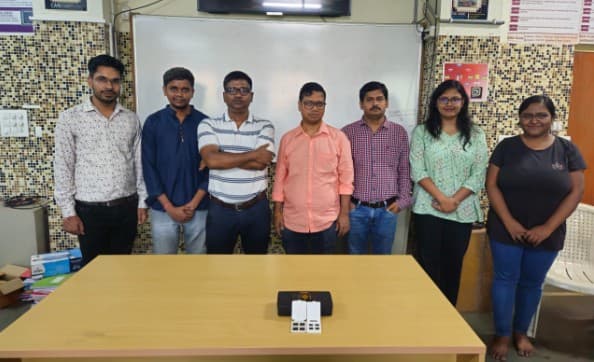
Present Encryption Core IC (C2S0017): A lightweight block cipher optimized for resource-constrained environments such as IoT, RFID, e-payments, healthcare, and sensor networks. Developed by Dr. Ruby Mishra, Mr. Bharat Patidar, Prof. Ayas Kanta Swain, and Prof. K. K. Mahapatra.
VGA Amplifier Sensor Circuit IC (C2S0018): Designed for biomedical and IoT applications, this IC integrates capacitive interfaces, accelerometer connectivity, OTA components, and energy harvesting mechanisms. Created by Ms. Ipsita, Ms. Samikshya, Mr. Prem Sai, Prof. Sauagat Kumar Kar, and Prof. Sudip Kundu.
These designs were developed as part of NIT Rourkela’s participation in the C2S Programme, launched in 2023 to promote indigenous VLSI and system-level design. Led by Principal Investigator Prof. Kamalakanta Mahapatra and Co-PI Prof. Ayas Kanta Swain, the initiative aims to build a skilled semiconductor workforce across UG, PG, and PhD levels.
Faculty and student contributors expressed pride in their work being showcased to the Prime Minister. Prof. Ayas Kanta Swain called the recognition “a boost to India’s Atmanirbhar Bharat journey,” while Prof. Sauagat Kumar Kar emphasized Odisha’s growing role in the national chip ecosystem. PhD student Bharat Patidar highlighted the hands-on learning and real-world exposure the project provided.
NIT Rourkela’s contributions underscore the power of academia in driving India’s semiconductor ambitions. With Odisha emerging as a key player in chip design and fabrication, the institute’s vision aligns with India’s broader goal of becoming a global semiconductor hub.
Related Topics
Explore more stories