



Healthcare / NIT Rourkela Develops Affordable Force Plate To Combat Heel Pain
Key Points
NIT Rourkela creates low-cost force plate for heel pain diagnosis.
Device aids gait profiling and neuromuscular disorder detection.
Offers 70–85% cost reduction compared to imported alternatives.
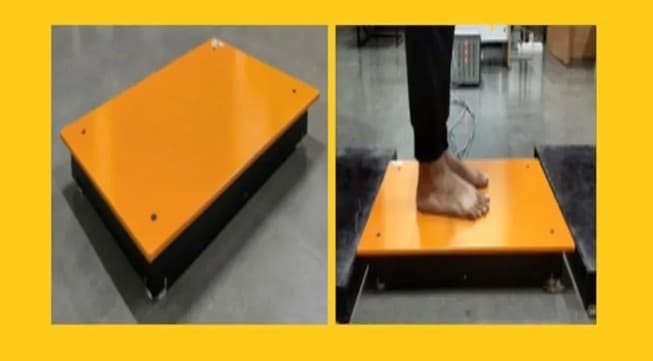
Rourkela, Sep 25: In a breakthrough for biomechanics and healthcare innovation, researchers at the National Institute of Technology Rourkela (NIT Rourkela) have developed a low-cost, indigenous force plate that promises to revolutionize gait analysis and treatment strategies for heel pain, officials said on Thursday.
This innovation is poised to benefit sports academies, hospitals, rehabilitation centers, and educational institutions across India.

📱 Get Argus News App
✨Understanding Heel Pain and Gait Profiling
Heel pain is one of the most common foot ailments among adults, often caused by overloading of the plantar fascia or deterioration of the heel pad—a fatty tissue that acts as a shock absorber. Factors such as aging, obesity, diabetes, injury, and poorly fitted footwear can contribute to this condition.
The newly developed force plate measures multi-axial ground reaction forces (GRF), which are critical for diagnosing abnormal gait patterns. These insights can guide the development of better footwear and personalized treatment plans to alleviate heel pain.
Also Read: 35 NIT Rourkela Scientists Ranked Among World’s Top 2% Scientists By Stanford–Elsevier
A Game-Changer for Neuromuscular Diagnostics
“Most neuromuscular disorders affect gait patterns,” explained Prof. A. Thirugnanam from NIT Rourkela. “Diseases like Parkinson’s, cerebral palsy, myopathies, and peripheral neuropathies can alter GRF. Our force plate helps detect these abnormalities, enabling early intervention.”
Globally, force plates are considered essential tools for musculoskeletal diagnostics. However, their high cost—ranging from Rs30 to ₹50 lakhs—has limited their accessibility in India. NIT Rourkela’s version, priced between Rs8 to Rs10 lakhs, offers a cost reduction of nearly 70–85%, making it a viable alternative for Indian institutions.
Boosting Indigenous Innovation
This development not only addresses a critical healthcare need but also strengthens India’s self-reliance in medical technology. By reducing dependence on foreign suppliers, NIT Rourkela’s force plate sets a new benchmark for affordable innovation in biomechanics.
Related Topics
Explore more stories