



Naveen’s Ganjam visit: Political calculations amid people’s suffering
Key Points
Bhubaneswar, Nov 10: Cyclone Arnab, which struck Odisha on October 28, inflicted extensive damage on Ganjam district, the home district of former chief minister and Biju Janata Dal (BJD) president Naveen Patnaik. Eleven days after the disaster, Naveen visited the affected areas, raising questions about the timing of his intervention and the political calculations behind it.
The visit came after opposition parties questioned his absence from the cyclone-hit district. For a leader who ruled Odisha for 24 years and built his political image around disaster management and public welfare, the delay attracted attention.
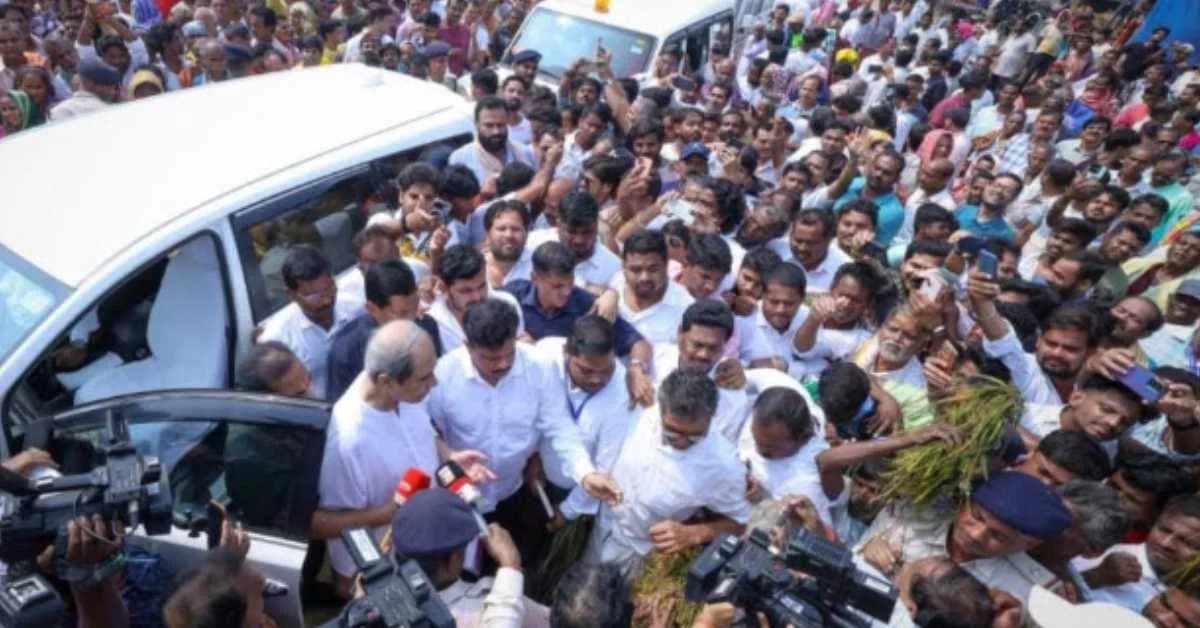
Naveen's November 7 visit, covering Hinjilicut, Aska and two other locations, appeared carefully organised. BJD leaders and workers had gathered in advance, while the party's social media machinery actively publicised the programme. The arrangements suggested that the visit was not merely an exercise in assessing damage but also an opportunity for the opposition to regain political visibility.
Affected people showed him damaged paddy crops and appealed for assistance. The images of farmers displaying their ruined harvest conveyed the scale of distress. However, questions remained about how effectively their grievances were heard and whether the visit would translate into concrete relief.

📱 Get Argus News App
✨In his media interaction, Naveen said he had visited four places and met cyclone-affected people. He alleged that the government had failed to understand the suffering of farmers and ordinary citizens. He promised to convey their grievances to the government and press for fulfilment of their demands.
By highlighting the alleged shortcomings of the government, Naveen sought to position himself as the voice of the affected people. Yet the larger question is whether such political interventions can bring immediate relief to those struggling to rebuild their lives.
The disaster and the challenge of rehabilitation
Cyclone Arnab brought heavy rainfall to Ganjam, with flooding emerging as a major source of destruction. Rivers overflowed, inundating villages and urban settlements. Landslides affected vulnerable areas, while several people suffered casualties.
The damage extended beyond agricultural fields. Paddy crops were submerged, businesses suffered losses, and educational institutions and public infrastructure were affected. For many families, the disaster meant lost livelihoods, damaged homes and uncertainty about their future.
The immediate priorities are accurate assessment of losses, timely compensation, restoration of infrastructure, assistance to farmers and support for small traders and vulnerable households. Schools need repairs, damaged textbooks must be replaced and public facilities restored.
At such a time, political parties should work together to ensure that relief and rehabilitation are not held hostage to partisan competition. Unfortunately, the emerging political narrative suggests that the disaster has also become an opportunity for political positioning.
Naveen's political experience and the 1999 precedent
Naveen Patnaik understands the political significance of natural disasters in Odisha.
Following the devastating super cyclone of 1999, Naveen, then a Union minister, became politically active in the affected areas. He visited disaster-hit communities, criticised the then Congress government over its response and projected himself as a leader capable of representing the suffering population.
That political engagement helped strengthen the BJD, which came to power in 2000.
The experience demonstrated how disaster management, public perception and political leadership can become closely connected in Odisha. Naveen's intervention helped establish his political identity and contributed to the BJD's electoral success.
The circumstances today, however, are different
Naveen is no longer a challenger seeking to establish himself. He is a former chief minister attempting to revive a party that lost power in 2024 after more than two decades in government.
The BJD is therefore looking at the Ganjam disaster not only as a humanitarian crisis but also as a political moment that could help it reconnect with voters.
The party's organisational mobilisation and social media
publicity indicate that it wants Naveen's visit to have a wider political
impact. However, its effectiveness will depend on whether people see the
intervention as genuine concern or an attempt to use their suffering for
political advantage.
Also Read: Ganjam landslide: Five more bodies of a family recovered, death toll rises to seven
BJD's opportunity and BJP's responsibility
Ganjam is particularly important because of its association with Naveen and the BJD's long-standing political presence.
The party may hope that dissatisfaction over relief and rehabilitation will create an opportunity to regain public support. If the government fails to address the concerns of farmers, traders and affected families, the opposition could question its administrative competence.
But the BJP government also has an opportunity to demonstrate that it can respond effectively to a major disaster.
Chief Minister Mohan Charan Majhi and his administration must ensure that relief measures are implemented efficiently and coordination among ministers, legislators and district officials improves.
Concerns over coordination among political representatives have highlighted the importance of a unified response. The chief minister's intervention to address differences among ministers and legislators underlines the need for administrative discipline.
Political disagreements should not interfere with relief distribution. The government must establish clear responsibilities, monitor rehabilitation and ensure that affected people receive assistance without repeatedly approaching political leaders.
The BJP's performance will be judged less by political statements than by the speed and effectiveness of its response.
A test of political maturity
Natural disasters can provide opportunities for political parties to mobilise public opinion. Opposition leaders have a legitimate role in highlighting grievances, monitoring relief distribution and demanding accountability.
But political engagement becomes problematic when public suffering is reduced to a publicity exercise.
The same standard should apply to both the BJD and the BJP. If the government responds effectively, it can strengthen public confidence. If it fails, the opposition will have a legitimate opportunity to question its performance.
Ultimately, the Ganjam disaster should not become a contest over which party can organise the largest gathering or produce the most effective publicity.
Cyclones come and go, but their economic and social
consequences remain for months. Farmers need support to recover losses,
businesses need assistance to resume operations, and families need confidence
that the administration will stand by them.
Also Read: Odisha Cabinet clears 13 proposals; College students to get free Wi-Fi
Naveen's political experience may help him communicate with affected communities, but his delayed visit raises questions about the consistency of his engagement with his home district. The BJP, meanwhile, must demonstrate administrative competence and improve coordination.
For the people of Ganjam, the real question is not whether Naveen Patnaik or the BJP gains politically. It is whether the political leadership can address their suffering with urgency, sensitivity and sustained commitment.
That is the test of leadership in a disaster—and the measure by which both the government and the opposition should ultimately be judged.
Related Topics
Explore more stories