



Odisha Politics / Naming A Party, Signalling A Strategy: Reading Between The Lines Of Moquim’s Political Move
Key Points
- Former Congress MLA Mohammed Moquim confirms new party formation in March.
- Party name to include “Odisha” and “Congress”, with a people-centric term under consideration.
- Move aims to attract disgruntled Congress leaders and fill the vacuum left by BJD’s decline.
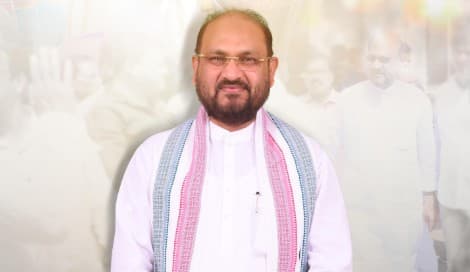
Bhubaneswar, Jan 29: Speculation surrounding the emergence of a new political party in Odisha has largely been put to rest following former Congress MLA Mohammed Moquim’s categorical statement that his party will formally take shape in March. What continues to generate political curiosity, however, is not merely the formation of the party but the careful thought being invested in its proposed name. Moquim has made it clear that the words “Odisha” and “Congress” will feature in the party’s name, while the third component—possibly “Janata”, “Lok”, or a similar people-centric term—remains under deliberation.
In politics, nomenclature is rarely cosmetic. It is often the first ideological signal sent to voters, cadres, and rival parties alike. Moquim’s emphasis on these particular words reveals a calculated attempt to position his proposed party within Odisha’s crowded yet fluid political space.

📱 Get Argus News App
✨The inclusion of “Odisha” unmistakably anchors the party in regional identity. It seeks to convey an image of a homegrown political force—rooted in Odia aspirations, sensitive to local concerns, and distinct from national parties perceived as distant or inattentive to state-specific priorities. In a state where regional pride and cultural identity continue to influence political choices, the word carries emotional resonance and immediate recognition.
Equally significant is Moquim’s insistence on retaining the word “Congress”. Having begun his political career in the Indian National Congress, Moquim appears keen to signal ideological continuity rather than rupture. This is less about allegiance to the present-day Congress organisation and more about invoking the broader political legacy historically associated with the Congress tradition—secularism, inclusiveness, and a centrist political ethos.
At a practical level, the move also seems designed to attract disgruntled Congress leaders and workers in Odisha. The state Congress unit has struggled for years with organisational inertia, leadership uncertainty, weak finances, and a perceived lack of sustained attention from the central leadership. In this vacuum, a resourceful and politically connected leader like Moquim could emerge as an alternative pole for those seeking relevance, resources, and electoral viability.
The possible insertion of words like “Janata” or “Lok” between Odisha and Congress further underlines the strategy. Historically, such terminology has carried strong anti-Congress and anti-BJP connotations, especially in eastern India. Parties like the Janata Party, Janata Dal, and Lok Dal once successfully occupied the ideological space of non-Congress, non-BJP politics. By drawing on this linguistic legacy, Moquim appears to be attempting a careful ideological balancing act—combining the familiarity of Congress with the populist appeal of people-centric politics.
Timing is another crucial factor. The 2024 Assembly election defeat has left the Biju Janata Dal (BJD) visibly weakened and internally unsettled. For over two decades, the BJD successfully occupied the political middle ground in Odisha, presenting itself as a credible regional alternative to both national parties. With its decline, a vacuum has emerged—particularly in coastal Odisha—for a force that can appeal to voters disillusioned with both the BJP’s centralised politics and the Congress’s organisational frailty.
Moquim appears to be betting that this space can be at least partially reclaimed. Even if his proposed party does not replace the BJD outright, it could fragment its traditional support base or absorb sections of its cadre and voter base. Such fragmentation could significantly alter electoral equations, especially in tightly contested constituencies.
Yet Odisha’s political history offers sobering lessons. Since the state’s formation in 1936, numerous regional parties have risen on waves of regional aspiration only to fade away. The Ganatantra Parishad, born in the 1940s to articulate western Odisha’s socio-economic grievances, briefly challenged Congress dominance but failed to sustain itself due to its narrow geographical base. Later, parties such as Jana Congress, Utkal Congress, and Jagat Congress articulated state interests vis-à-vis the Centre but eventually succumbed to internal power struggles and leadership rivalries.
What distinguished the Biju Janata Dal from its predecessors was not merely charisma or ideology but organisational discipline, centralised authority, and the ability to correct structural weaknesses that had plagued earlier regional formations. Its long tenure in power underscores a simple political truth: regional identity alone is insufficient without internal cohesion, financial sustainability, and clear leadership succession mechanisms.
More recent experiments—Odisha Gana Parishad, Samrudha Odisha, and Ama Odisha—have demonstrated how difficult it is to translate political intent into electoral success. Most either merged with national parties or faded into irrelevance after failing to build durable grassroots structures.
This historical backdrop makes the central question unavoidable: can Moquim’s proposed party avoid the pitfalls that doomed its predecessors?
The answer will depend less on the symbolism of its name and more on its internal functioning. Regional parties in Odisha have repeatedly struggled with internal democracy, often degenerating into personality-driven or family-centric organisations. The reluctance to allow capable second-rung leadership to emerge has been a recurring weakness.
If Moquim’s party merely becomes another vehicle for individual ambition, its trajectory is unlikely to differ from earlier failed experiments. However, if it institutionalises internal democracy, encourages leadership beyond its founder, and articulates a coherent political programme rather than relying solely on identity politics, it may carve out a sustainable space.
For now, the naming debate serves as a window into a larger political calculation. It reflects an attempt to stitch together regional pride, Congress legacy, and populist appeal at a moment when Odisha’s political landscape is in flux. Whether this synthesis results in a durable political force or joins the long list of short-lived regional parties will only become clear in the years ahead.
Related Topics
Explore more stories