



Love, Lineage, And The Curse Of Tradition: An Analysis Of Social Punishment In Odisha's Tribal Heartland
Key Points
In tribal societies like the Kondh and Paraja in Odisha, same-gotra marriages are seen as both a social affront and a spiritual transgression that disrupts traditional harmony.
Young couples defying these norms faced public humiliation and harsh community-led punishments, underscoring the deep-rooted intolerance against such unions.
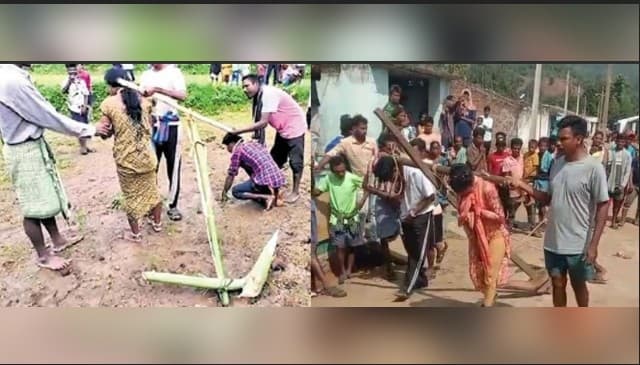
Bhubaneswar, July 15: Two strikingly similar incidents from Odisha's Koraput and Rayagada districts lay bare a grim reality—where love becomes a curse, and community-driven customs inflict humiliation and pain in the name of tradition. In both cases, young tribal couples who dared to marry within the same lineage, considered taboo by their communities, were subjected to public shaming and brutal social punishments. These acts were justified by invoking an age-old belief: that such unions anger the gods of nature and invite droughts, erratic rains, and disasters.
Among many tribal communities in southern Odisha, particularly the Kondh and Paraja tribes, marriage within the same lineage or gotra is seen not just as a social impropriety, but a spiritual violation. These beliefs are deeply intertwined with their ecological worldview—where nature is revered, and maintaining harmony with it is paramount. A breach, they believe, disrupts this harmony and invites divine retribution.

📱 Get Argus News App
✨This spiritual framework reinforces strong social sanctions. In these insular societies, lineage is not merely a bloodline; it's an identity marker that governs kinship, land rights, rituals, and conflict resolution. Defying this structure, even in the name of love, is perceived as a threat to collective survival. Hence, punishments—tying couples to ploughs, parading them as beasts, or ostracising their families—are not just acts of vengeance but warnings to others.
At the core, these incidents reflect a tragic conflict between individual rights and community customs. India's Constitution guarantees the right to choose a partner, yet in these pockets, local beliefs override national laws. What is considered a personal liberty elsewhere is treated as an affront to collective morality here.
The state machinery often intervenes after such incidents come to light—registering cases under IPC sections for cruelty or public humiliation. But the delay and social fear keep most victims from speaking out. Local police often struggle to balance cultural sensitivity with legal enforcement, particularly in tribal areas where customary law often operates informally alongside state law.
Pathways to Change: Combating Belief-Driven Violence
To mitigate and eventually eradicate such incidents, a multi-layered, culturally sensitive strategy is essential:
Traditional beliefs cannot be challenged through force alone. NGOs, tribal welfare agencies, and educators must conduct localized awareness programmes, using storytelling, local dialects, and community elders to communicate the legality and humanity of individual choice in marriage.
Change becomes more acceptable when it comes from within. Dialogue with traditional gaon sarkars, panch leaders, and religious heads can help evolve norms. Highlighting how modern values and traditions can coexist is key.
Strengthening Grassroots Institutions
Local women's collectives, youth groups, and school teachers can act as first responders. Training them to identify at-risk couples and liaise with authorities can prevent escalation.
Sharing stories of tribal youths who succeeded despite breaking traditional molds—through education, employment, or social work—can subtly reorient the younger generation away from regressive traditions.
District administrations must set up helplines and action teams that can quickly intervene when such incidents are reported. This also builds trust in formal governance structures.
It's crucial to draw a line between cultural preservation and human rights violations. Beliefs must be respected, but not at the cost of a couple’s dignity or liberty.
(This Article is written by senior journalist Akshaya Sahoo)