



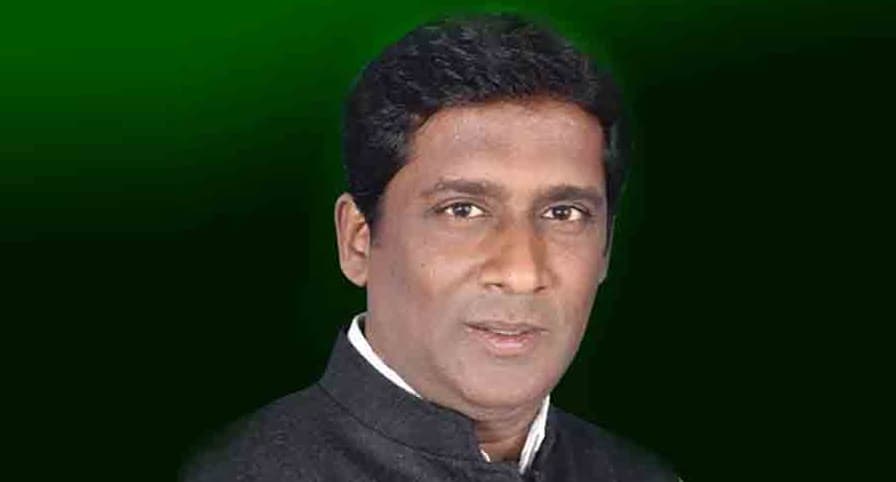
Jagannath Pradhan’s Surrender Will Boost Majhi Government’s Image
Key Points
As a leader with a strong grassroots presence in Bhubaneswar, BJP leader Jagannath Pradhan now finds himself a casualty of political expediency — a pawn moved to stabilize a larger board.
By Argus News
Bhubaneswar, July 8: The late-night surrender of senior BJP leader Jagannath Pradhan was not just a legal development but a politically charged decision aimed at salvaging the Mohan Charan Majhi government from a spiraling crisis. Under relentless pressure from both the opposition BJD and a defiant Odisha Administrative Service Association (OASA), Pradhan’s move appears less like an admission of guilt and more a sacrifice for the larger cause of protecting the fledgling BJP dispensation’s credibility.
For three days, Odisha’s administration was virtually crippled as government officers struck work, demanding swift action against those involved in the assault on senior bureaucrat Ratnakar Sahoo. The incident had ignited public anger, administrative disquiet, and political mudslinging — with the BJD and Congress seizing the opportunity to corner the new BJP government over its handling of law and order.

📱 Get Argus News App
✨
Faced with mounting criticism and a growing sense of administrative paralysis during a sensitive period — with both severe flood threats looming and the globally watched Ratha Yatra underway — the Majhi government risked appearing both weak and partisan if it failed to act decisively.
Against this backdrop, Pradhan’s decision to surrender reads as a politically negotiated, face-saving exercise. His own statement before surrendering made it clear that his primary concern was not personal vindication but the suffering of the people due to the administrative deadlock, and the need to “save his government from embarrassment.”
It was a tactical concession — an attempt to douse the fire before it consumed the government’s early tenure. For Chief Minister Mohan Majhi, this development provides a much-needed reprieve. It signals that his government, though barely a month old, is willing to uphold the rule of law and not shield its own, even at the cost of sacrificing a senior party leader.
The state BJP too found itself caught in a bind. Allowing Pradhan to remain at large while the OASA agitation escalated could have undermined both its administrative authority and public image. By facilitating this surrender, the party managed to reclaim the narrative of governance discipline, and simultaneously broker a truce with the bureaucracy, evident in OASA’s decision to withdraw its strike soon after.
Yet, for Jagannath Pradhan, this episode marks a personal and political setback. As a leader with a strong grassroots presence in Bhubaneswar, he now finds himself a casualty of political expediency — a pawn moved to stabilize a larger board.
In essence, Pradhan’s arrest may serve as a symbolic assertion of the Majhi government’s commitment to law and order, but it also exposes the transactional nature of political survival. In the end, it was the combination of public outrage, bureaucratic defiance, and opposition pressure that forced the hand of the ruling establishment — with Pradhan’s surrender becoming the collateral that restored temporary administrative normalcy and political respectability.
The real test for the Majhi government now lies in ensuring an impartial, transparent investigation and demonstrating that its proclaimed commitment to justice is not selective or situational.