



Weather Today / Day After Tornado Rips Through Karanjia, Bhubaneswar Sees Sun Halo; Is It Warning Sign? Science Has Answer
·7 months ago·2 min read
Key Points
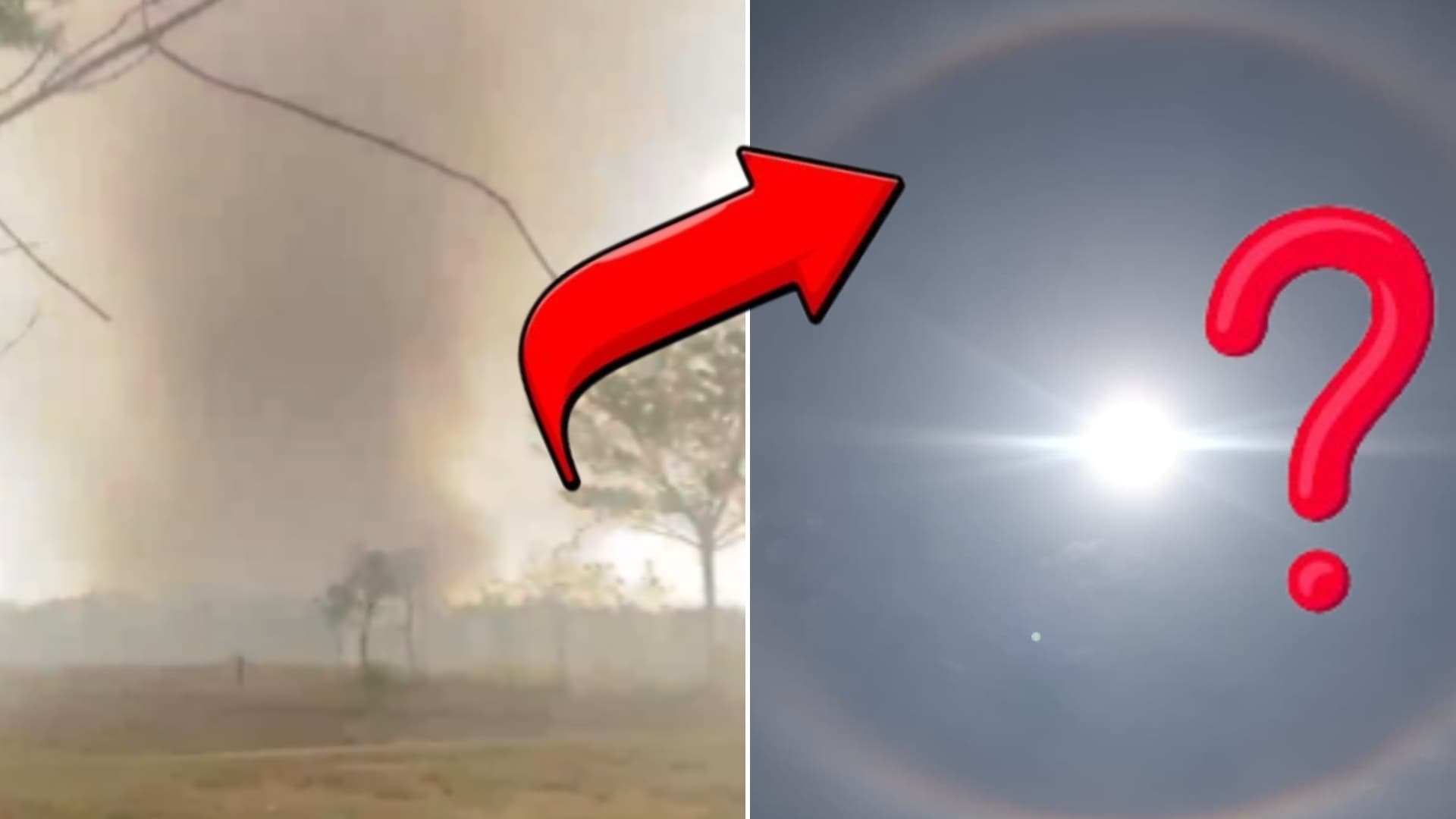
A striking sun halo was observed over Bhubaneswar, caused by sunlight passing through ice crystals in high-altitude cirrus clouds.
Bhubaneswar, Mar 17: A striking celestial phenomenon lit up the skies over Bhubaneswar on Tuesday, leaving residents both awestruck and anxious. A perfect glowing ring encircling the Sun -- captured widely on mobile cameras -- triggered speculation of extreme weather, barely a day after a rare EF2-category tornado hit Karanjia in Odisha’s Mayurbhanj district.
However, weather experts have a calmer explanation.
The phenomenon, known as a sun halo, occurs when sunlight passes through ice crystals present in high-altitude cirrus clouds. These tiny crystals bend and reflect sunlight, forming a luminous circular ring around the Sun — often at a radius of about 22 degrees.
Sun halos are often seen when thin clouds move in ahead of a weather system, indicating increased moisture in the upper atmosphere. In some cases, this can precede a change in weather — including rain or cloud build-up within the next 24 hours.
However, weather experts have a calmer explanation.
The phenomenon, known as a sun halo, occurs when sunlight passes through ice crystals present in high-altitude cirrus clouds. These tiny crystals bend and reflect sunlight, forming a luminous circular ring around the Sun — often at a radius of about 22 degrees.
Sun halos are often seen when thin clouds move in ahead of a weather system, indicating increased moisture in the upper atmosphere. In some cases, this can precede a change in weather — including rain or cloud build-up within the next 24 hours.

📱 Get Argus News App
✨📰 60 Word News🎬 Argus Podcast📺 Live TV and Breaking News🔔 Free Notification Alerts
Download Free:
However, experts stress there is no direct link between such halos and extreme events like tornadoes.
Also Read: Chain Collision on NH-16 in Bhadrak Leaves One Dead, Four Injured
“Tornadoes are caused by intense atmospheric instability and wind shear within thunderstorms. A halo only reflects conditions in the upper atmosphere,” a source clarified.
The recent EF2 tornado in Mayurbhanj — considered highly unusual for Odisha — heightened sensitivity to any unusual sky activity.
An EF2 tornado is a classification on the Enhanced Fujita Scale, which measures the strength of tornadoes based on the damage they cause. Falling in the “strong” category, an EF2 tornado typically has wind speeds ranging from 179 to 218 km/h and can lead to considerable destruction. It is powerful enough to tear roofs off well-built houses, uproot or snap large trees, overturn vehicles, and completely destroy weaker structures. While not as catastrophic as the highest categories like EF4 or EF5, an EF2 tornado still poses a serious threat to life and property. In regions like Odisha, where tornadoes are relatively rare, the occurrence of an EF2 event is considered highly unusual and significant, often triggering heightened concern among residents and authorities.
While the halo may hint at a possible weather shift, it should not be mistaken for an immediate warning signal.
Also Read: Chain Collision on NH-16 in Bhadrak Leaves One Dead, Four Injured
“Tornadoes are caused by intense atmospheric instability and wind shear within thunderstorms. A halo only reflects conditions in the upper atmosphere,” a source clarified.
The recent EF2 tornado in Mayurbhanj — considered highly unusual for Odisha — heightened sensitivity to any unusual sky activity.
An EF2 tornado is a classification on the Enhanced Fujita Scale, which measures the strength of tornadoes based on the damage they cause. Falling in the “strong” category, an EF2 tornado typically has wind speeds ranging from 179 to 218 km/h and can lead to considerable destruction. It is powerful enough to tear roofs off well-built houses, uproot or snap large trees, overturn vehicles, and completely destroy weaker structures. While not as catastrophic as the highest categories like EF4 or EF5, an EF2 tornado still poses a serious threat to life and property. In regions like Odisha, where tornadoes are relatively rare, the occurrence of an EF2 event is considered highly unusual and significant, often triggering heightened concern among residents and authorities.
While the halo may hint at a possible weather shift, it should not be mistaken for an immediate warning signal.
Related Topics
Explore more stories