



Smart City / Climate-Responsive Traffic Shelters to Enhance Commuter Comfort in Bhubaneswar
Key Points
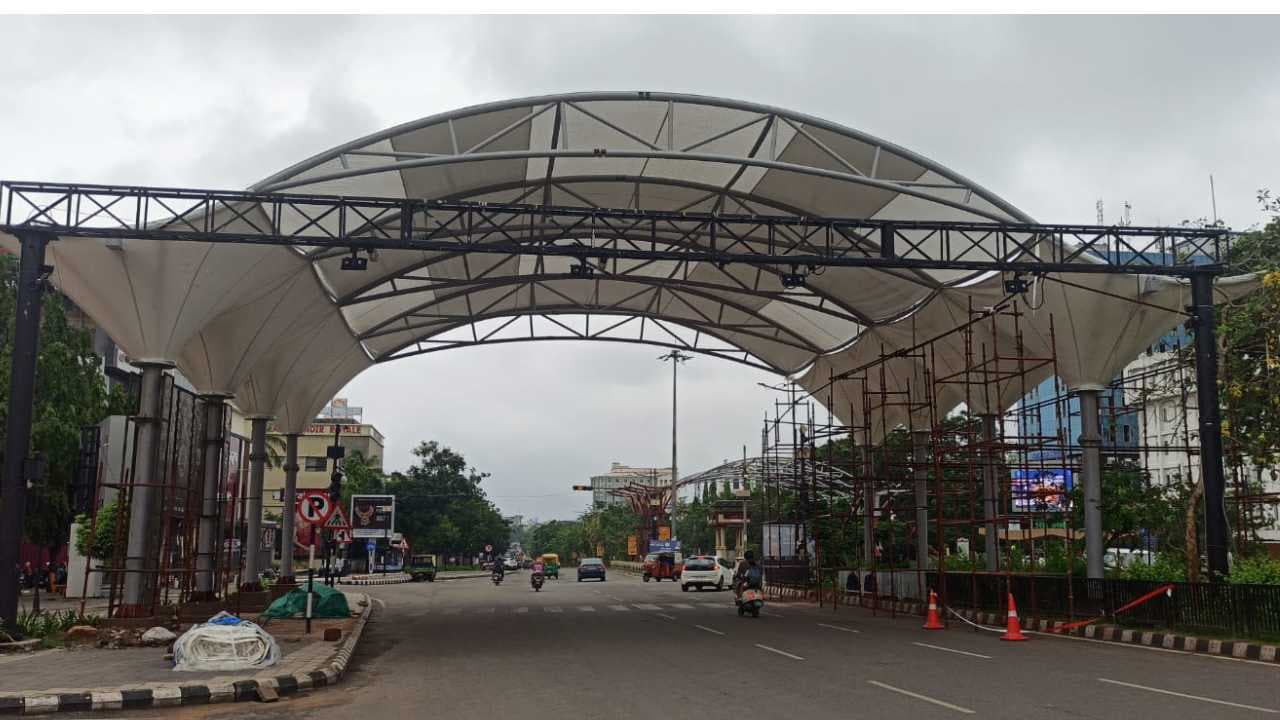
Bhubaneswar, Jul 21: In a bid to improve commuter convenience and reshape the city’s urban landscape, the Bhubaneswar Municipal Corporation (BMC) and Bhubaneswar Development Authority (BDA) have rolled out a pilot project to install modern traffic and parking-cum-commuter sheds along the Janpath corridor.
The initiative, part of the National Clean Air Programme (NCAP), seeks to provide better amenities while contributing to greener, citizen-friendly streetscapes. Two traffic sheds are being developed at Rupali Square and Power House Square, among the busiest intersections in the city. Additionally, four parking-cum-commuter sheds are being constructed at strategic points along Janpath to serve pedestrians, motorists, and daily commuters.
BMC Commissioner and BDA Vice-Chairman Chanchal Rana said
the sheds feature a contemporary design that blends functionality, aesthetics,
and sustainability. A key highlight is the use of Flame Vine creepers over
fabric canopies, which will gradually form a natural green cover. This
eco-friendly element is expected to reduce heat absorption during peak summer
and create cooler waiting areas.
Also Read: BSCL Launches Janpath Beautification Drive in Bhubaneswar
The traffic shelters also incorporate horizontal screening panels between support columns to block direct sunlight from multiple angles, offering protection against harsh weather. Similarly, the parking-cum-commuter sheds are designed to shield both commuters and vehicles from rain and excessive heat, while serving as convenient waiting spaces for senior citizens, pregnant women, and other vulnerable groups.

📱 Get Argus News App
✨Officials said the project reflects Bhubaneswar’s focus on climate-responsive urban infrastructure that prioritises public comfort and sustainable development. It complements the ongoing beautification of the 5.8-km Smart Janpath corridor, reinforcing the city’s vision of greener, pedestrian-friendly, and citizen-centric public spaces.
Related Topics
Explore more stories