



Waste Management / Bhubaneswar Steps Ahead: Waste-to-Energy Pact Signed
·6 months ago·2 min read
Key Points
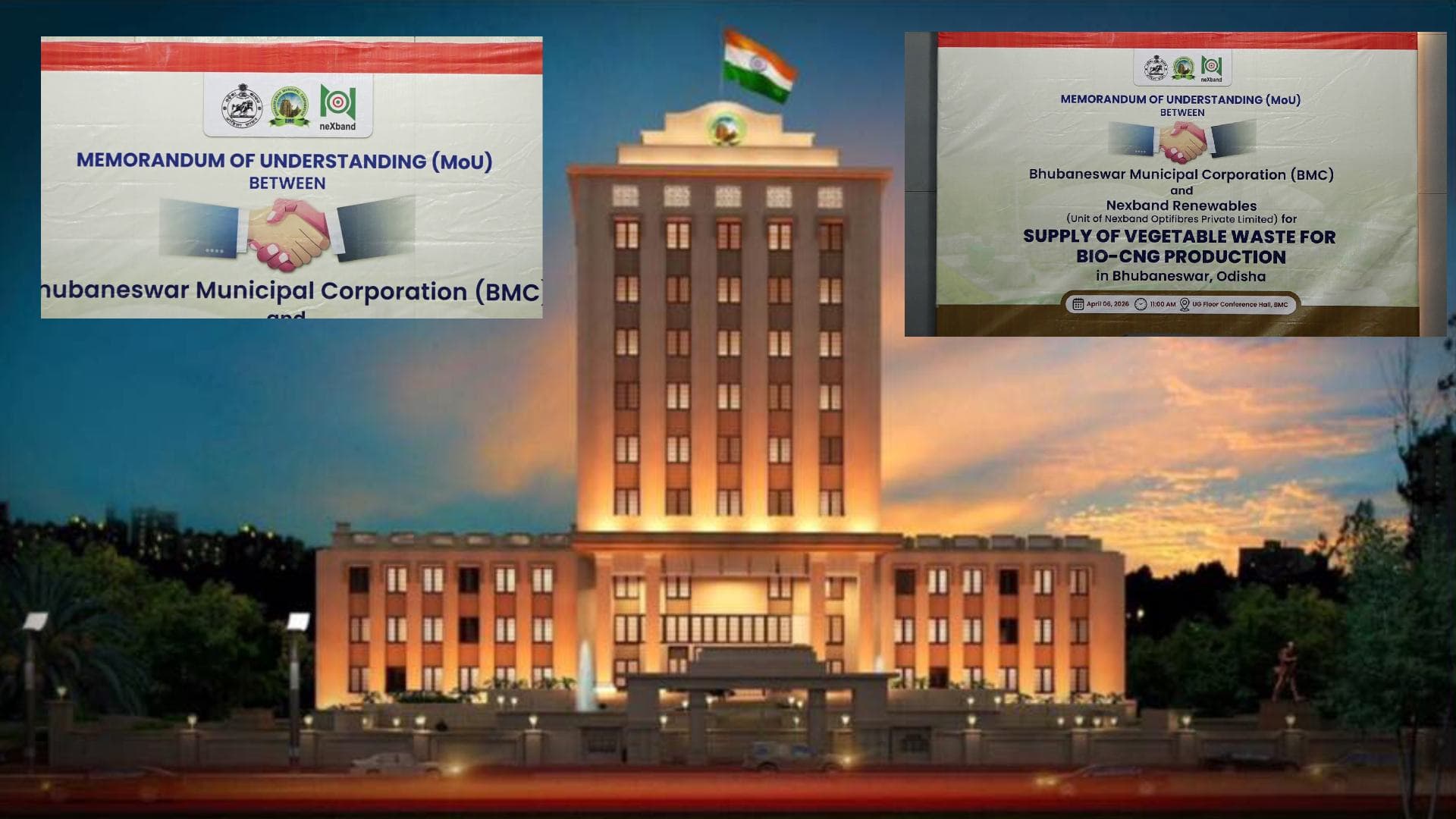
Bhubaneswar Municipal Corporation has signed an MoU with Nexband Renewables to convert daily organic waste into bio-CNG. The initiative will reduce the city’s waste burden, generate clean energy, and strengthen sustainable urban development.
Bhubaneswar, Apr 6:The Bhubaneswar Municipal Corporation (BMC) has taken a significant step toward sustainable urban development by signing a Memorandum of Understanding (MoU) with Nexband Renewables to convert organic waste into Compressed Natural Gas (CNG). This initiative will not only reduce the city’s mounting waste burden but also generate clean energy and bio-fertilizer, strengthening Bhubaneswar’s green footprint.
Under the agreement, BMC will supply around 50 metric tons of organic waste daily to Nexband Renewables’ upcoming bio-CNG plant at Begunia. The plant will process household and market waste, along with Napier grass, to produce renewable energy. This collaboration is expected to ease the load on temporary transfer stations (TTS), improve waste segregation, and enhance cleanliness in market areas.
Also Read: Odisha Announces Tribal Development Councils Across 23 Districts
The signing ceremony at BMC headquarters was attended by BMC Mayor Sulochana Das, Commissioner Chanchal Rana, senior officials, and representatives from Nexband Renewables. The pact, initially valid for one year, is non-commercial in nature and focuses on scientific waste management.
BMC has already established Micro Composting Centres (MCCs) and Material Recovery Facilities (MRFs) for segregated waste processing. The new partnership aims to take this further by adopting advanced technology to transform waste into energy. The initiative will reduce greenhouse gas emissions, cut operational costs, and promote sustainable resource use.
Under the agreement, BMC will supply around 50 metric tons of organic waste daily to Nexband Renewables’ upcoming bio-CNG plant at Begunia. The plant will process household and market waste, along with Napier grass, to produce renewable energy. This collaboration is expected to ease the load on temporary transfer stations (TTS), improve waste segregation, and enhance cleanliness in market areas.
Also Read: Odisha Announces Tribal Development Councils Across 23 Districts
The signing ceremony at BMC headquarters was attended by BMC Mayor Sulochana Das, Commissioner Chanchal Rana, senior officials, and representatives from Nexband Renewables. The pact, initially valid for one year, is non-commercial in nature and focuses on scientific waste management.
BMC has already established Micro Composting Centres (MCCs) and Material Recovery Facilities (MRFs) for segregated waste processing. The new partnership aims to take this further by adopting advanced technology to transform waste into energy. The initiative will reduce greenhouse gas emissions, cut operational costs, and promote sustainable resource use.

📱 Get Argus News App
✨📰 60 Word News🎬 Argus Podcast📺 Live TV and Breaking News🔔 Free Notification Alerts
Download Free:
By channeling organic waste into renewable energy, Bhubaneswar is setting an example for other cities in India. The project highlights the importance of scientific waste management in achieving cleaner urban environments and ensuring long-term sustainability.
Related Topics
Explore more stories