



Viksit Bharat / Back to the Village: Why Rural India is the Next Opportunity
Key Points
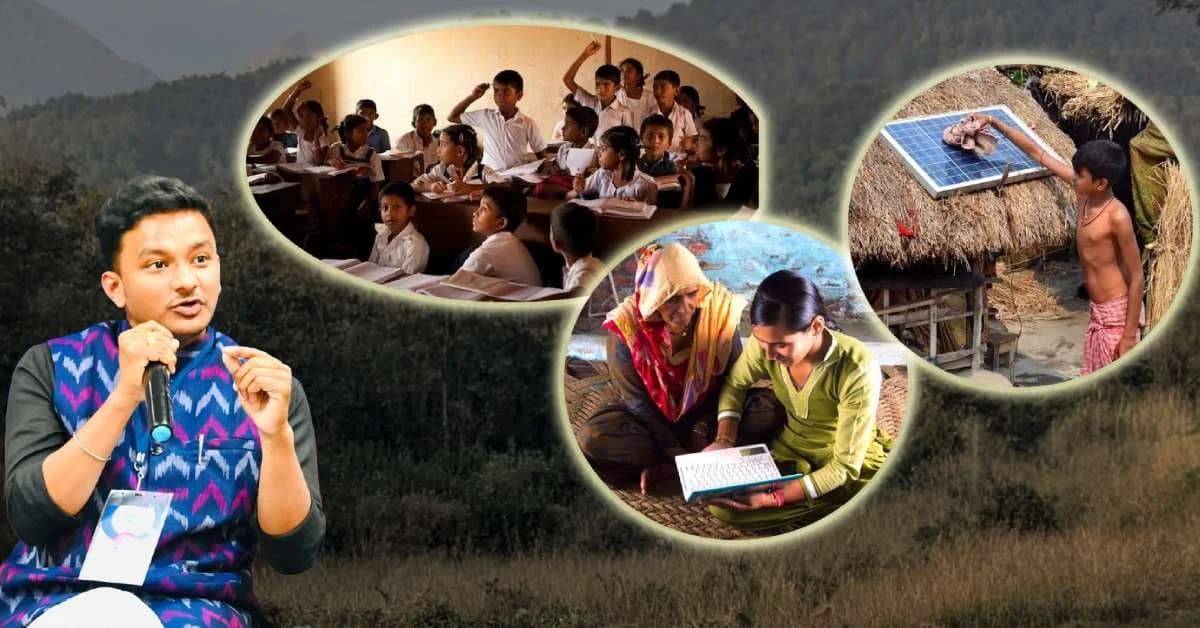
India’s villages are evolving into hubs of innovation, entrepreneurship, tourism, and digital growth. With 65% of the population rural, their transformation is vital for achieving Viksit Bharat 2047.
Bhubaneswar, Sep 21: For decades, millions of young Indians believed that success meant leaving the village behind and moving to the city. Urban centres became symbols of opportunity, education, jobs, and modern lifestyles, while villages were often seen as places people outgrew. But today, that story is beginning to change.
India’s villages are no longer just centres of agriculture. They are transforming into hubs of innovation, entrepreneurship, digital services, tourism, renewable energy, local manufacturing, and social change.
The question is no longer “Why stay in the village?” Instead, it is becoming “What opportunities are waiting there?”
With more than 65% of India’s population living in rural areas, the nation’s greatest strength lies not only in its metropolitan cities but also in its six lakh villages. If India dreams of becoming a developed nation by 2047, rural India must become one of the strongest engines of that journey.

📱 Get Argus News App
✨The most exciting change is connectivity. Roads, electricity, internet access, digital banking, mobile technology, healthcare, and education are reaching places once isolated.
A young entrepreneur in a village can now sell products nationwide through online platforms. A student can attend classes from the world’s best institutions. A farmer can access weather forecasts, market prices, and government services with just a smartphone.
Technology has reduced the distance between rural and urban India.
Agriculture itself is evolving. Modern farming, organic cultivation, food processing, precision agriculture, and agri‑technology are creating new possibilities. Young farmers are using drones, mobile apps, artificial intelligence, and digital marketplaces to increase productivity and income. Farming is gradually becoming knowledge‑driven rather than labour‑intensive.
Yet agriculture is only one part of the rural economy. Villages are rich in traditional crafts, handloom, handicrafts, forest products, cultural heritage, and local cuisine. These are not just traditions to preserve — they are opportunities to build livelihoods.
Around the world, people seek authentic, handmade, sustainable products. Rural artisans possess exactly these skills. A handwoven saree, bamboo craft, tribal painting, or pottery tells a story machines cannot create.
When young people combine these age‑old skills with modern branding, digital marketing, and e‑commerce, local products can reach global markets. Every successful rural enterprise not only creates income but also protects India’s priceless cultural heritage.
Rural tourism is another emerging opportunity. Visitors increasingly want experiences rather than destinations. They want to stay in villages, taste local food, learn crafts, explore nature, and understand rural life.
This creates opportunities for homestays, eco‑tourism, local guides, cultural festivals, and village enterprises. Instead of leaving villages in search of jobs, many young people can create jobs where they already live.
The Government of India has recognised this shift. Initiatives such as Digital India have expanded connectivity, Startup India encourages innovation, Skill India equips youth with employable skills, and Mera Yuva Bharat promotes youth participation in nation‑building.
Together, these programmes create an environment where rural youth can dream bigger without leaving their roots.
But development is not only about infrastructure or employment—it is also about leadership. Every village needs young people who can inspire others, solve local problems, organise community activities, improve education, promote cleanliness, encourage digital literacy, support healthcare awareness, and protect the environment.
Development begins when young citizens stop asking, “What can my village give me?” and start asking, “What can I contribute to my village?”
History shows that some of India’s greatest leaders emerged from small villages. Their surroundings did not limit their dreams; their roots gave them resilience, values, and a deep understanding of society.
Today’s youth can carry forward that legacy by becoming innovators, teachers, entrepreneurs, volunteers, and changemakers in their own communities.
This does not mean every young person must leave the city and permanently return to the village. Rather, it means changing our mindset. Rural India should no longer be viewed as a place people escape from. It should be seen as a place where ideas grow, businesses flourish, and communities prosper.
Even those who build careers in cities can contribute by mentoring rural youth, investing in village enterprises, promoting local products, or supporting community projects.
India’s journey towards becoming a developed nation cannot be completed if its villages are left behind. A strong nation is built when every village becomes healthier, more educated, more skilled, more prosperous, and more connected. The dreams of a developed India and a developed village are inseparable.
The next generation has a unique opportunity. Instead of simply searching for opportunities, they can create them. Instead of following old paths, they can build new ones. Instead of viewing villages as symbols of the past, they can transform them into laboratories of the future.
The village is not where India’s story ends. It is where the next chapter begins. As the nation marches towards Viksit Bharat 2047, the road to progress will not pass through cities alone.
It will travel through every village, every farm, every
school, every entrepreneur, and every young dreamer who believes that real
change begins close to home.