



World Elephant Day / All About Odisha’s Elephant Conservation Story And The Cost Of Conflict
·1 month ago·5 min read
Key Points
Between 2020 and 2026, Odisha recorded 906 human deaths and 513 elephant deaths from human-elephant conflict, with the state deploying AI towers, thermal drones and mobile alerts for early warning.
Bhubaneswar, Aug 12: It was the summer vacation of 2002, and Rajesh Khanna’s Haathi Mere Saathi left a lasting impression on a 5-year-old who watched it on TV while devouring ever-sweet Sundari mangoes. I thought elephants were ‘lovely’ creatures.
Cut to 2017, when a few bike-borne, then-hedonistic college friends and I were en route to Maa Charchika temple in Banki. That trip shattered my notion that elephants are friendly and made me realise the difference between wild and circus elephants when a female leader of the herd charged at us for barely five seconds. Thanks to the 100-metre distance, we escaped, but those five to 10 seconds felt like endgame for all of us.
Years later, that brief encounter remains a personal reminder of the complex relationship between humans and elephants. For thousands of people living around elephant habitats across Odisha, however, such encounters are not anecdotes to recount later -- they can be a matter of life and death.
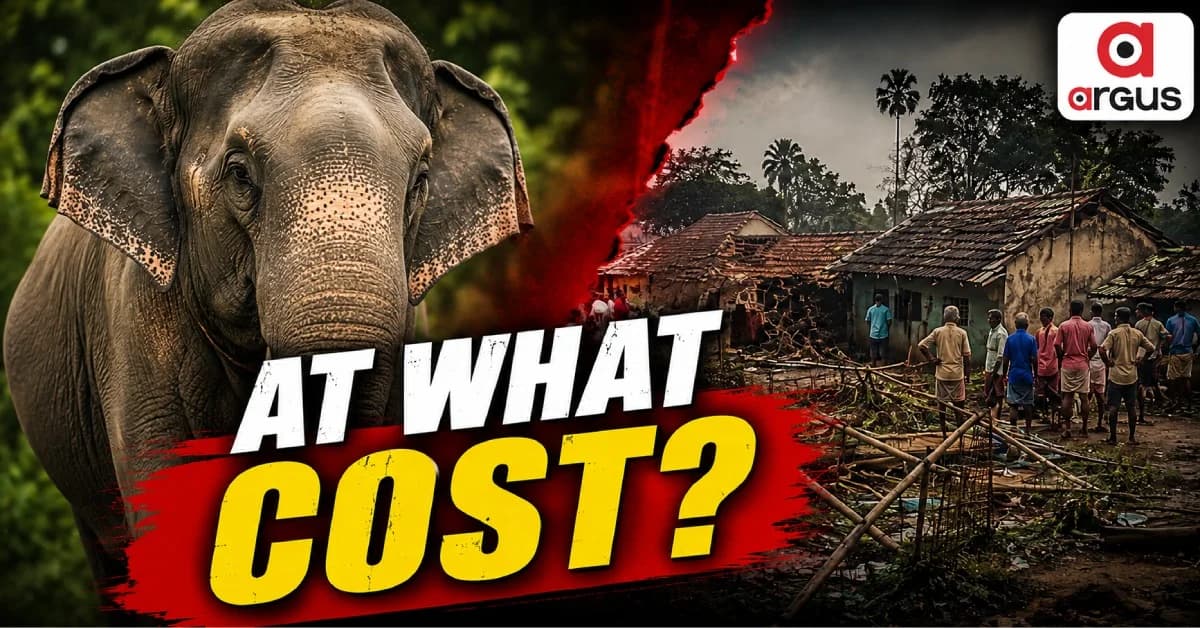
And the numbers tell that story starkly. Between 2020 and 2026, 906 people lost their lives in human-elephant conflict, while 513 elephants also died. The figures underline the difficult balance Odisha faces: protecting an endangered species while safeguarding communities that share its landscape.
Cut to 2017, when a few bike-borne, then-hedonistic college friends and I were en route to Maa Charchika temple in Banki. That trip shattered my notion that elephants are friendly and made me realise the difference between wild and circus elephants when a female leader of the herd charged at us for barely five seconds. Thanks to the 100-metre distance, we escaped, but those five to 10 seconds felt like endgame for all of us.
Years later, that brief encounter remains a personal reminder of the complex relationship between humans and elephants. For thousands of people living around elephant habitats across Odisha, however, such encounters are not anecdotes to recount later -- they can be a matter of life and death.
And the numbers tell that story starkly. Between 2020 and 2026, 906 people lost their lives in human-elephant conflict, while 513 elephants also died. The figures underline the difficult balance Odisha faces: protecting an endangered species while safeguarding communities that share its landscape.

📱 Get Argus News App
✨📰 60 Word News🎬 Argus Podcast📺 Live TV and Breaking News🔔 Free Notification Alerts
Download Free:
A Key State For Asian Elephant Conservation
Odisha is recognised as one of India’s key states for the conservation of the Asian elephant (Elephas maximus), which has been classified as Endangered by the International Union for Conservation of Nature (IUCN).
More than 60% of the world’s wild Asian elephants live in India, placing a significant conservation responsibility on the country. In Odisha, elephants have been recorded in 25 of the state’s 30 districts, making the species an important priority in the state’s biodiversity conservation efforts.
The state’s 2024 simultaneous elephant census estimated 2,098 elephants during summer and 2,103 during winter, indicating that the population has remained stable.
However, scientific studies have estimated the ecological carrying capacity of Odisha’s forests at around 1,700 to 1,800 elephants. This has shaped the state’s management approach, which seeks to maintain elephant numbers within ecological balance while simultaneously reducing human-elephant conflict.
Three Reserves, 11 Major Corridors
As part of its habitat protection strategy, Odisha has notified three elephant reserves -- Mayurbhanj, Mahanadi and Sambalpur.
The state is also protecting 11 major elephant corridors, recognising the importance of keeping movement routes available for elephants while reducing the chances of encounters with human settlements.
Odisha is recognised as one of India’s key states for the conservation of the Asian elephant (Elephas maximus), which has been classified as Endangered by the International Union for Conservation of Nature (IUCN).
More than 60% of the world’s wild Asian elephants live in India, placing a significant conservation responsibility on the country. In Odisha, elephants have been recorded in 25 of the state’s 30 districts, making the species an important priority in the state’s biodiversity conservation efforts.
The state’s 2024 simultaneous elephant census estimated 2,098 elephants during summer and 2,103 during winter, indicating that the population has remained stable.
However, scientific studies have estimated the ecological carrying capacity of Odisha’s forests at around 1,700 to 1,800 elephants. This has shaped the state’s management approach, which seeks to maintain elephant numbers within ecological balance while simultaneously reducing human-elephant conflict.
Three Reserves, 11 Major Corridors
As part of its habitat protection strategy, Odisha has notified three elephant reserves -- Mayurbhanj, Mahanadi and Sambalpur.
The state is also protecting 11 major elephant corridors, recognising the importance of keeping movement routes available for elephants while reducing the chances of encounters with human settlements.
These measures form part of a broader effort to secure elephant habitats and create conditions for long-term coexistence.
Electrocution: A Major Preventable Threat
While conflict can arise from encounters between elephants and people, human activity can also directly threaten elephant survival.
Electrocution has been identified as the most preventable major cause of elephant deaths in the state. Consequently, the government is accelerating the modernisation of electricity infrastructure as part of its efforts to prevent such fatalities.
For human casualties resulting from conflict, the government has increased compensation to Rs 10 lakh, providing enhanced financial assistance to affected families.
Comprehensive Action Plan For Coexistence
Following directions from the Orissa High Court, the Odisha Government has prepared a Comprehensive Action Plan (CAP) for elephant conservation and management.
Under the plan, elephant habitats have been divided into four management zones. The framework brings together science-based, technology-enabled and community-centric interventions, with the stated objectives of strengthening human-elephant coexistence, reducing conflict and ensuring long-term ecological sustainability.
The approach represents an attempt to address elephant conservation not merely through protection of animals, but through coordinated management of habitats, movement, human interaction and response mechanisms.
From HAWK To AI Towers
Technology is now an important part of Odisha’s elephant management strategy.
The HAWK portal is being used for wildlife crime monitoring, PRAHAR for field-level monitoring, iWLMS for integrated wildlife management and ANUKAMPA 2.0 for compensation disbursement.
The state is also deploying AI towers, early-warning systems, thermal drones, radio collars and mobile alert systems to monitor elephant movement continuously.
The objective is to identify elephant movement in advance, alert people living in vulnerable areas and enable authorities to respond before encounters escalate into conflict.
Community Participation At The Ground Level
Technology, however, is being supplemented by a significant community-based response.
The state has engaged 2,142 'Gajasathi' volunteers, along with Bidyut Prahari teams, rapid response teams and extensive awareness programmes.
These initiatives are intended to strengthen ground-level monitoring and response while improving awareness among communities living close to elephant habitats.
Also Read: Viral Stunt Goes Wrong as Kendujhar Youth Grabs Wild Elephant's Tusk for Reel
Strengthening Food, Water And Rescue Support
Habitat management is another component of the conservation strategy.
The state has undertaken bamboo and fruit-tree plantations and the construction of artificial water bodies, alongside measures for wildlife health management and strengthened rescue mechanisms.
The interventions are aimed at strengthening the broader habitat and management ecosystem around elephants while improving the state’s ability to respond when animals are injured, distressed or trapped.
Recognition For Those On The Conservation Frontline
The conservation effort has also brought national recognition for personnel working on the ground.
For their contribution to elephant conservation, the Central Government’s selection committee has selected late Jugal Naik, a squad member of the Intensive Protection of Critical Endangered Area (IPCEA) scheme in the Jarapada Range of Anugola Forest Division, and Prabhudatta Behera from the Saintala area of Balangir Forest Division for the Gaj Gaurav Award–2026.
Both are scheduled to receive the award at a programme in Visakhapatnam, Andhra Pradesh, on August 12, 2026, on the occasion of World Elephant Day.
Beyond Numbers, The Challenge Is Coexistence
From protected reserves and elephant corridors to electricity infrastructure, technology-driven monitoring, community volunteers and habitat interventions, Odisha has put in place a wide-ranging framework for elephant conservation. The challenge, however, is to make these interventions work together on the ground.
Electrocution: A Major Preventable Threat
While conflict can arise from encounters between elephants and people, human activity can also directly threaten elephant survival.
Electrocution has been identified as the most preventable major cause of elephant deaths in the state. Consequently, the government is accelerating the modernisation of electricity infrastructure as part of its efforts to prevent such fatalities.
For human casualties resulting from conflict, the government has increased compensation to Rs 10 lakh, providing enhanced financial assistance to affected families.
Comprehensive Action Plan For Coexistence
Following directions from the Orissa High Court, the Odisha Government has prepared a Comprehensive Action Plan (CAP) for elephant conservation and management.
Under the plan, elephant habitats have been divided into four management zones. The framework brings together science-based, technology-enabled and community-centric interventions, with the stated objectives of strengthening human-elephant coexistence, reducing conflict and ensuring long-term ecological sustainability.
The approach represents an attempt to address elephant conservation not merely through protection of animals, but through coordinated management of habitats, movement, human interaction and response mechanisms.
From HAWK To AI Towers
Technology is now an important part of Odisha’s elephant management strategy.
The HAWK portal is being used for wildlife crime monitoring, PRAHAR for field-level monitoring, iWLMS for integrated wildlife management and ANUKAMPA 2.0 for compensation disbursement.
The state is also deploying AI towers, early-warning systems, thermal drones, radio collars and mobile alert systems to monitor elephant movement continuously.
The objective is to identify elephant movement in advance, alert people living in vulnerable areas and enable authorities to respond before encounters escalate into conflict.
Community Participation At The Ground Level
Technology, however, is being supplemented by a significant community-based response.
The state has engaged 2,142 'Gajasathi' volunteers, along with Bidyut Prahari teams, rapid response teams and extensive awareness programmes.
These initiatives are intended to strengthen ground-level monitoring and response while improving awareness among communities living close to elephant habitats.
Also Read: Viral Stunt Goes Wrong as Kendujhar Youth Grabs Wild Elephant's Tusk for Reel
Strengthening Food, Water And Rescue Support
Habitat management is another component of the conservation strategy.
The state has undertaken bamboo and fruit-tree plantations and the construction of artificial water bodies, alongside measures for wildlife health management and strengthened rescue mechanisms.
The interventions are aimed at strengthening the broader habitat and management ecosystem around elephants while improving the state’s ability to respond when animals are injured, distressed or trapped.
Recognition For Those On The Conservation Frontline
The conservation effort has also brought national recognition for personnel working on the ground.
For their contribution to elephant conservation, the Central Government’s selection committee has selected late Jugal Naik, a squad member of the Intensive Protection of Critical Endangered Area (IPCEA) scheme in the Jarapada Range of Anugola Forest Division, and Prabhudatta Behera from the Saintala area of Balangir Forest Division for the Gaj Gaurav Award–2026.
Both are scheduled to receive the award at a programme in Visakhapatnam, Andhra Pradesh, on August 12, 2026, on the occasion of World Elephant Day.
Beyond Numbers, The Challenge Is Coexistence
From protected reserves and elephant corridors to electricity infrastructure, technology-driven monitoring, community volunteers and habitat interventions, Odisha has put in place a wide-ranging framework for elephant conservation. The challenge, however, is to make these interventions work together on the ground.
Related Topics
Explore more stories