



Health / AIIMS Bhubaneswar Initiates India’s First Cycad Toxicology Research
Key Points
Field visits to Khordha and Dhenkanal to assess health impact
Global experts collaborate to explore neurodegenerative disease links
Bhubaneswar, Nov 3: In a pioneering initiative, AIIMS Bhubaneswar has launched India’s first comprehensive research into the toxicology of Cycad plants, following alarming findings of the neurotoxin BMAA (β-N-methylamino-L-alanine) in species native to Odisha’s forests, officials said on Monday.
The study aims to investigate potential links between traditional consumption of cycad-based foods and rising cases of neurodegenerative diseases such as Parkinsonism, motor neuron disease, and dementia.

📱 Get Argus News App
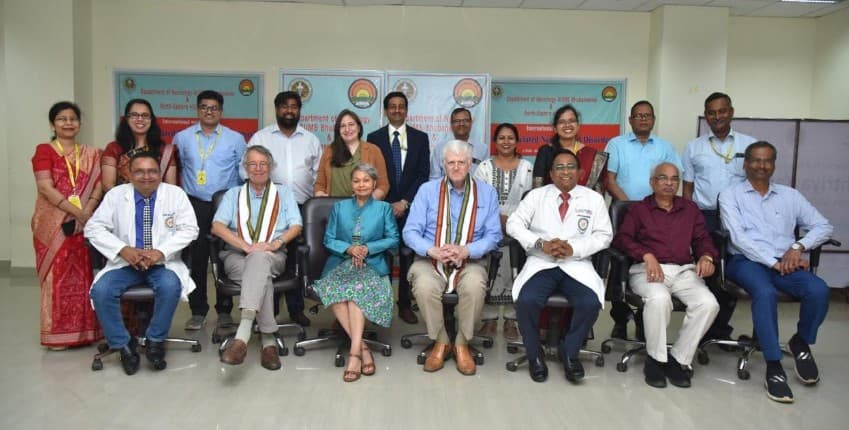
✨The research was inaugurated through an international workshop titled “Cycad-Related Neurological Disorders: A Multi-Dimensional Approach to Its Remediation”, jointly organized by AIIMS Bhubaneswar and North-Eastern Hill University (NEHU), Shillong. The event brought together global experts including Prof. Peter S. Spencer and Prof. Valerie S. Palmer from Oregon Health & Science University, who shared insights from similar studies in Guam and Japan.
Also Read: AIIMS Bhubaneswar Hosts National Workshop on Hand Fracture Fixation
Cycad plants, which have existed since the age of dinosaurs, contain potent toxins like Cycacin, BMAA, and MAM (methylazoxymethanol). While often used ornamentally, in Odisha, certain tribal communities continue to consume cycad seeds in traditional dishes such as pitha, raising public health concerns.
As part of the workshop, field visits were conducted in Khordha and Dhenkanal districts, where experts engaged with villagers and healthcare providers to assess neurological symptoms and dietary practices. The initiative is spearheaded by Prof. Sanjeev Kumar Bhoi (AIIMS BBSR) and Prof. S. K. Barik (NEHU), with support from the Department of Science and Technology, Government of Odisha.
Executive Director of AIIMS Bhubaneswar, Prof. Ashutosh Biswas, lauded the effort as a milestone in translational research and community health awareness. The workshop concluded with a roadmap for interdisciplinary collaboration and public education to mitigate cycad-related health risks.
Related Topics
Explore more stories