



PVTG / A New Chapter for Gunthuli: Modern School Brings Hope to Odisha's PVTG Children
·1 month ago·3 min read
Key Points
A modern educational campus is being built in Gunthuli village, Rayagada, for Lanjia Saura PVTG children, replacing crumbling infrastructure with smart classrooms, e-library, computer lab and science laboratories.
Rayagada: For years, the children of Gunthuli village in Odisha's Rayagada district began each school day in classrooms that told a story of neglect. Cracked walls, ageing roofs, inadequate sanitation and a lack of basic educational facilities had become part of everyday life for students belonging to the Lanjia Saura community, one of India's Particularly Vulnerable Tribal Groups (PVTGs).
Today, that story is taking a different turn.
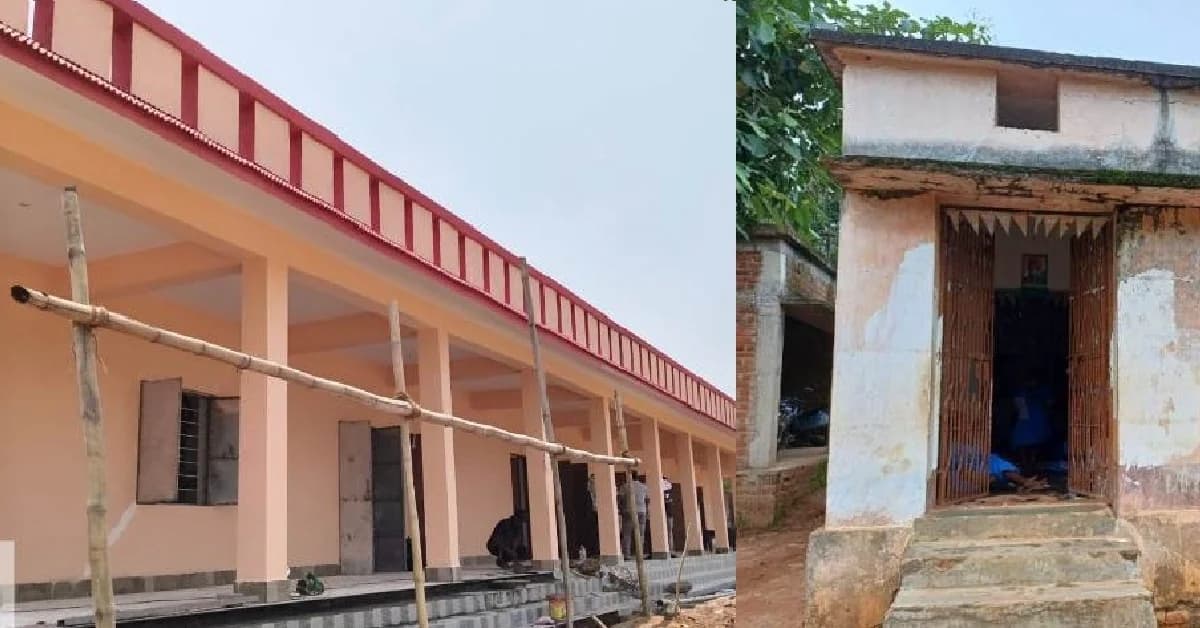
Amid the verdant hills of Gunupur block, a modern educational campus is steadily taking shape, promising to replace crumbling infrastructure with a school designed to meet the aspirations of a new generation of tribal children.
Backed by an investment of Rs 70 lakh, the Gunthuli High School Infrastructure Development Project is being executed by the Gunupur Block administration through a convergence of multiple government schemes and departments. More than a construction exercise, the initiative seeks to bridge the educational divide that has long separated remote tribal communities from quality schooling.
Today, that story is taking a different turn.
Amid the verdant hills of Gunupur block, a modern educational campus is steadily taking shape, promising to replace crumbling infrastructure with a school designed to meet the aspirations of a new generation of tribal children.
Backed by an investment of Rs 70 lakh, the Gunthuli High School Infrastructure Development Project is being executed by the Gunupur Block administration through a convergence of multiple government schemes and departments. More than a construction exercise, the initiative seeks to bridge the educational divide that has long separated remote tribal communities from quality schooling.

📱 Get Argus News App
✨📰 60 Word News🎬 Argus Podcast📺 Live TV and Breaking News🔔 Free Notification Alerts
Download Free:
The project has been conceptualised by Gunupur Block Development Officer Swastik Jamadar, who has been coordinating its implementation. It is being carried forward under the guidance of Rayagada Collector Asutosh C. Kulkarni and Rayagada Zilla Parishad Chief Development Officer Akshaya Kumar Khemundu, with support from various government departments, local institutions and the community.
According to Jamadar, the new campus is expected to be completed by November 2026 and will feature smart classrooms, an e-library, a computer laboratory, science and mathematics laboratories, safe drinking water facilities, hygienic toilets and a playground.
"Our objective is not simply to construct another school building. We want to create an environment where tribal children have access to quality education, modern learning tools and opportunities comparable to those available elsewhere," he said.
The project has brought together the district administration, Panchayati Raj Institutions, the School Management Committee, the School and Mass Education Department, the Department of Women and Child Development, teachers and villagers under a common development framework. Officials say this convergence model has enabled optimum utilisation of public resources while ensuring local participation at every stage.
For the people of Gunthuli, the significance of the project extends far beyond bricks and mortar.
Many parents say the absence of adequate infrastructure had discouraged children from attending school regularly, while some students were forced to seek education outside the village. They hope the new campus will create a safe, motivating and child-friendly learning environment that encourages higher enrolment and reduces dropout rates.
According to Jamadar, the new campus is expected to be completed by November 2026 and will feature smart classrooms, an e-library, a computer laboratory, science and mathematics laboratories, safe drinking water facilities, hygienic toilets and a playground.
"Our objective is not simply to construct another school building. We want to create an environment where tribal children have access to quality education, modern learning tools and opportunities comparable to those available elsewhere," he said.
The project has brought together the district administration, Panchayati Raj Institutions, the School Management Committee, the School and Mass Education Department, the Department of Women and Child Development, teachers and villagers under a common development framework. Officials say this convergence model has enabled optimum utilisation of public resources while ensuring local participation at every stage.
For the people of Gunthuli, the significance of the project extends far beyond bricks and mortar.
Many parents say the absence of adequate infrastructure had discouraged children from attending school regularly, while some students were forced to seek education outside the village. They hope the new campus will create a safe, motivating and child-friendly learning environment that encourages higher enrolment and reduces dropout rates.
The educational transformation is also being strengthened through residential facilities.
Chief Development Officer Akshaya Kumar Khemundu said the Integrated Tribal Development Agency (ITDA) is constructing a 100-bed hostel to accommodate students from remote habitations, ensuring that distance no longer becomes a barrier to continuing education.
Educationists have repeatedly pointed out that quality infrastructure is fundamental to improving learning outcomes, particularly in remote tribal regions where access to educational resources remains limited. Better classrooms, laboratories, digital learning facilities and sanitation not only improve attendance but also enhance student engagement and academic performance.
As the new buildings rise beside the old structures, Gunthuli stands at the threshold of a significant transition. The contrast between the weathered classrooms of the past and the modern campus under construction reflects more than physical development—it symbolises changing opportunities for an entire community.
For the Lanjia Saura children of Gunthuli, the emerging campus represents something they have long waited for: a chance to learn in an environment that values their potential as much as their future.
Chief Development Officer Akshaya Kumar Khemundu said the Integrated Tribal Development Agency (ITDA) is constructing a 100-bed hostel to accommodate students from remote habitations, ensuring that distance no longer becomes a barrier to continuing education.
Educationists have repeatedly pointed out that quality infrastructure is fundamental to improving learning outcomes, particularly in remote tribal regions where access to educational resources remains limited. Better classrooms, laboratories, digital learning facilities and sanitation not only improve attendance but also enhance student engagement and academic performance.
As the new buildings rise beside the old structures, Gunthuli stands at the threshold of a significant transition. The contrast between the weathered classrooms of the past and the modern campus under construction reflects more than physical development—it symbolises changing opportunities for an entire community.
For the Lanjia Saura children of Gunthuli, the emerging campus represents something they have long waited for: a chance to learn in an environment that values their potential as much as their future.