



UNESCO Recognition / 74 Odisha Villages Declared Tsunami Ready, Total Reaches 100
Key Points
Bhubaneswar, Sep 28: Odisha has achieved a significant milestone in disaster preparedness, with 74 more coastal villages declared “tsunami ready” under the UNESCO‑IOC programme, officials said on Monday.
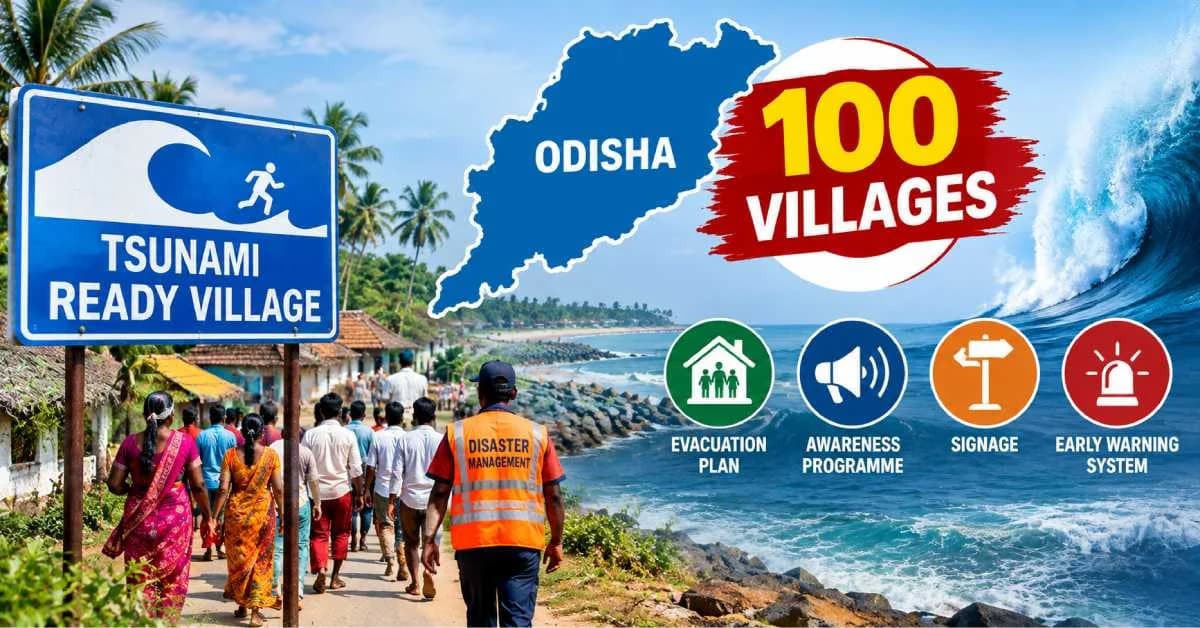
With this, the state now has 100 villages recognized for their readiness, making Odisha the first state in India to reach this benchmark.
The recognition was conferred after verification by the National Tsunami Ready Board (NTRB) in collaboration with the Odisha State Disaster Management Authority (OSDMA). The newly added villages span five districts — Balasore, Bhadrak, Kendrapada, Puri, and Jagatsinghpur — all vulnerable to cyclones and tidal surges.
Officials said the “tsunami ready” certification ensures that communities have evacuation plans, awareness programmes, signage, and early warning systems in place. It also reflects the integration of local preparedness with national and international disaster management frameworks.

📱 Get Argus News App
✨Balakrishnan Nair, Director of the Indian National Centre
for Ocean Information Services (INCOIS), noted that Odisha’s achievement sets a
model for other coastal states. Rajesh Prabhakar Patil, Managing Director of
OSDMA, emphasized that the recognition was the result of sustained community
engagement, mock drills, and coordination with local administrations.
Also Read: Odisha Govt Intensifies Drive Against Illegal Bangladeshi Immigrants
The initiative, part of UNESCO’s Intergovernmental Oceanographic Commission (IOC), aims to build resilient coastal communities worldwide. Odisha’s success underscores its proactive approach to disaster risk reduction, especially given its vulnerability to cyclones and floods.
With 100 villages now certified, the state government plans to extend the programme to more coastal habitations, ensuring that preparedness becomes a community‑driven exercise. Officials said the recognition would not only enhance safety but also boost confidence among residents living in disaster‑prone areas.
Related Topics
Explore more stories