



Bengal Election / Will TMC Face The Same Fate As BJD? A Comparative Political Analysis
·5 months ago·3 min read
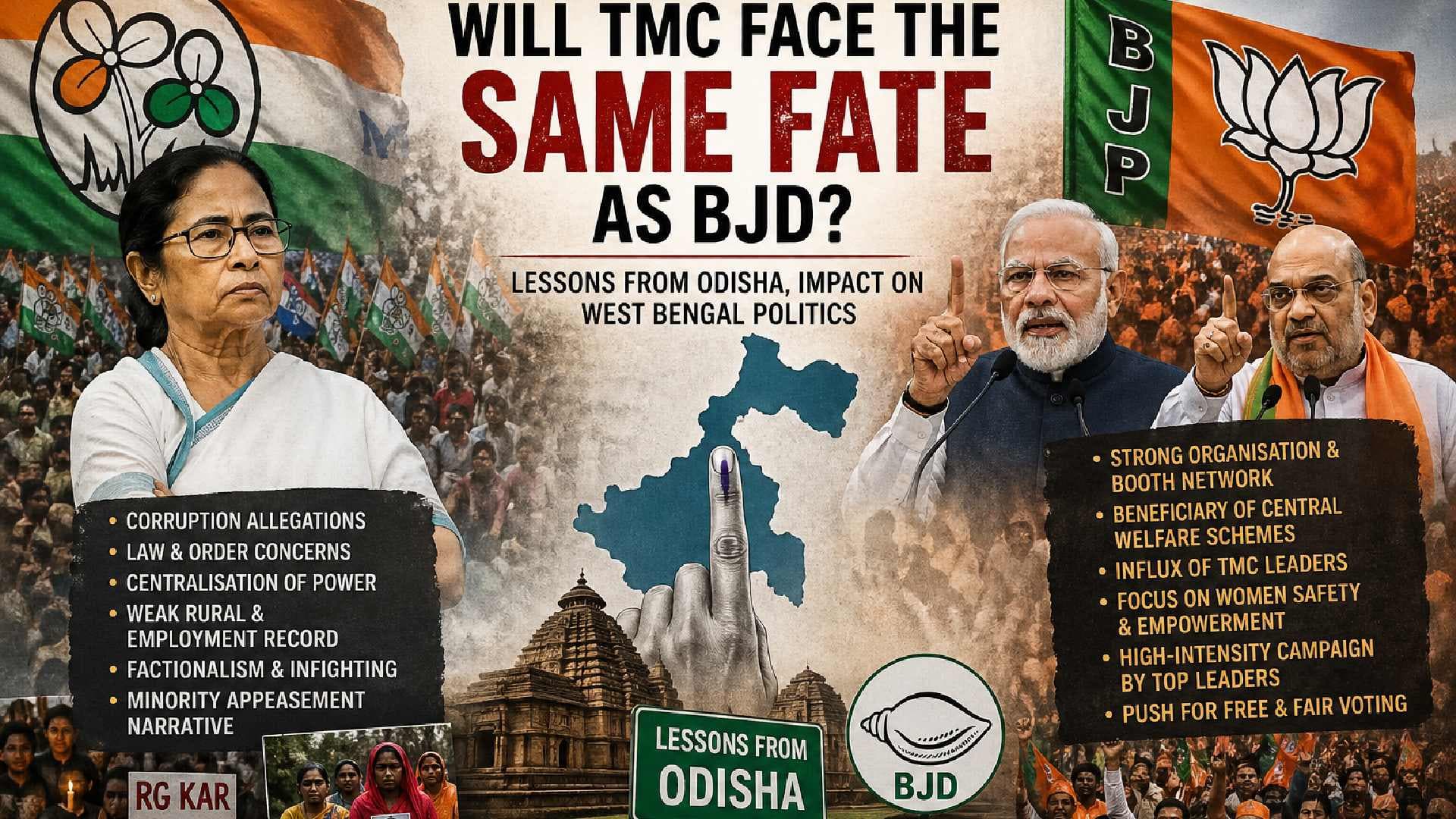
Key Points
Political analysis suggests TMC under Mamata Banerjee faces similar erosion of dominance as BJD in Odisha due to prolonged incumbency, corruption allegations, and centralisation of power.
Bhubaneswar, Apr 30: With the West Bengal Assembly elections concluded and exit polls offering mixed projections, the political discourse has intensified. While some agencies predict a return of the All India Trinamool Congress (TMC) to power, others suggest significant gains for the Bharatiya Janata Party (BJP). Regardless of the final outcome, a broad consensus has emerged: the BJP is likely to improve its vote share compared to 2021.
Why TMC may be losing ground?
Several structural and political factors appear to be eroding TMC’s dominance under Mamata Banerjee:
1. Anti-Incumbency and Governance Fatigue
Like the Biju Janata Dal (BJD) in Odisha, TMC has been in power for over a decade. Prolonged rule often leads to administrative stagnation, reduced responsiveness, and growing public desire for change.
2. Corruption Allegations
Scandals related to teacher recruitment, coal smuggling, and extortion have dented the party’s image. Perceptions of widespread corruption in government offices have contributed to public frustration.
Why TMC may be losing ground?
Several structural and political factors appear to be eroding TMC’s dominance under Mamata Banerjee:
1. Anti-Incumbency and Governance Fatigue
Like the Biju Janata Dal (BJD) in Odisha, TMC has been in power for over a decade. Prolonged rule often leads to administrative stagnation, reduced responsiveness, and growing public desire for change.
2. Corruption Allegations
Scandals related to teacher recruitment, coal smuggling, and extortion have dented the party’s image. Perceptions of widespread corruption in government offices have contributed to public frustration.

📱 Get Argus News App
✨📰 60 Word News🎬 Argus Podcast📺 Live TV and Breaking News🔔 Free Notification Alerts
Download Free:
3. Law and Order Concerns
Incidents such as the RG Kar Medical College controversy and Sandeshkhali-related issues have raised questions about governance and public safety, weakening trust in the administration.
4. Centralisation of Power
The concentration of authority around Mamata Banerjee and her nephew Abhishek Banerjee has led to internal discontent. Many party leaders and workers perceive a decline in internal democracy.
5. Weak Rural and Employment Performance
Limited visible progress in agriculture and insufficient job creation have alienated rural voters and youth.
6. Factionalism at Grassroots
Similar to BJD’s experience in Odisha, TMC faces internal factionalism due to multiple aspirants at the local level, weakening organisational unity.
7. Minority Appeasement Narrative and Polarisation
The BJP has successfully framed TMC’s politics as minority appeasement, contributing to consolidation of Hindu votes in its favour.
Why BJP is expanding in West Bengal?
The BJP’s rise is not incidental—it reflects sustained strategic effort:
1. Organisational strengthening since 2019
After securing around 38% vote share in 2021 and increasing seats dramatically, the BJP invested heavily in booth-level organisation.
2. Welfare Delivery Narrative
Schemes like PM Awas Yojana, Ujjwala, and Direct Benefit Transfers have helped the BJP build credibility among beneficiaries.
3. Influx of TMC Leaders
Defections from TMC have provided BJP with ready-made grassroots networks and local leadership.
Incidents such as the RG Kar Medical College controversy and Sandeshkhali-related issues have raised questions about governance and public safety, weakening trust in the administration.
4. Centralisation of Power
The concentration of authority around Mamata Banerjee and her nephew Abhishek Banerjee has led to internal discontent. Many party leaders and workers perceive a decline in internal democracy.
5. Weak Rural and Employment Performance
Limited visible progress in agriculture and insufficient job creation have alienated rural voters and youth.
6. Factionalism at Grassroots
Similar to BJD’s experience in Odisha, TMC faces internal factionalism due to multiple aspirants at the local level, weakening organisational unity.
7. Minority Appeasement Narrative and Polarisation
The BJP has successfully framed TMC’s politics as minority appeasement, contributing to consolidation of Hindu votes in its favour.
Why BJP is expanding in West Bengal?
The BJP’s rise is not incidental—it reflects sustained strategic effort:
1. Organisational strengthening since 2019
After securing around 38% vote share in 2021 and increasing seats dramatically, the BJP invested heavily in booth-level organisation.
2. Welfare Delivery Narrative
Schemes like PM Awas Yojana, Ujjwala, and Direct Benefit Transfers have helped the BJP build credibility among beneficiaries.
3. Influx of TMC Leaders
Defections from TMC have provided BJP with ready-made grassroots networks and local leadership.
4. Focus on women’s issues
The party has combined narratives of women’s safety, dignity, and empowerment to expand its voter base.
5. High-intensity campaigning
Frequent visits by Narendra Modi and Amit Shah, along with other BJP leaders, created momentum and visibility.
6. Electoral integrity narrative
The BJP has emphasised “free and fair voting,” alleging past electoral malpractices. A perception of stricter enforcement this time may reduce TMC’s traditional advantages.
The Odisha parallel
The comparison with BJD is politically significant. In Odisha, prolonged incumbency, bureaucratic centralisation, and grassroots dissatisfaction gradually weakened the party’s dominance. A similar pattern appears to be emerging in West Bengal.
While the final verdict will be known on May 4, the underlying trends suggest a tightening contest. If the factors that led to BJD’s decline continue to manifest in West Bengal, TMC could face a similar political trajectory—though not necessarily immediate defeat, but a clear erosion of dominance.
The party has combined narratives of women’s safety, dignity, and empowerment to expand its voter base.
5. High-intensity campaigning
Frequent visits by Narendra Modi and Amit Shah, along with other BJP leaders, created momentum and visibility.
6. Electoral integrity narrative
The BJP has emphasised “free and fair voting,” alleging past electoral malpractices. A perception of stricter enforcement this time may reduce TMC’s traditional advantages.
The Odisha parallel
The comparison with BJD is politically significant. In Odisha, prolonged incumbency, bureaucratic centralisation, and grassroots dissatisfaction gradually weakened the party’s dominance. A similar pattern appears to be emerging in West Bengal.
While the final verdict will be known on May 4, the underlying trends suggest a tightening contest. If the factors that led to BJD’s decline continue to manifest in West Bengal, TMC could face a similar political trajectory—though not necessarily immediate defeat, but a clear erosion of dominance.
Related Topics
Explore more stories