



Vande Mataram Rules / Vande Mataram to Precede National Anthem at Official Functions as Centre Issues New Protocol
·7 months ago·4 min read
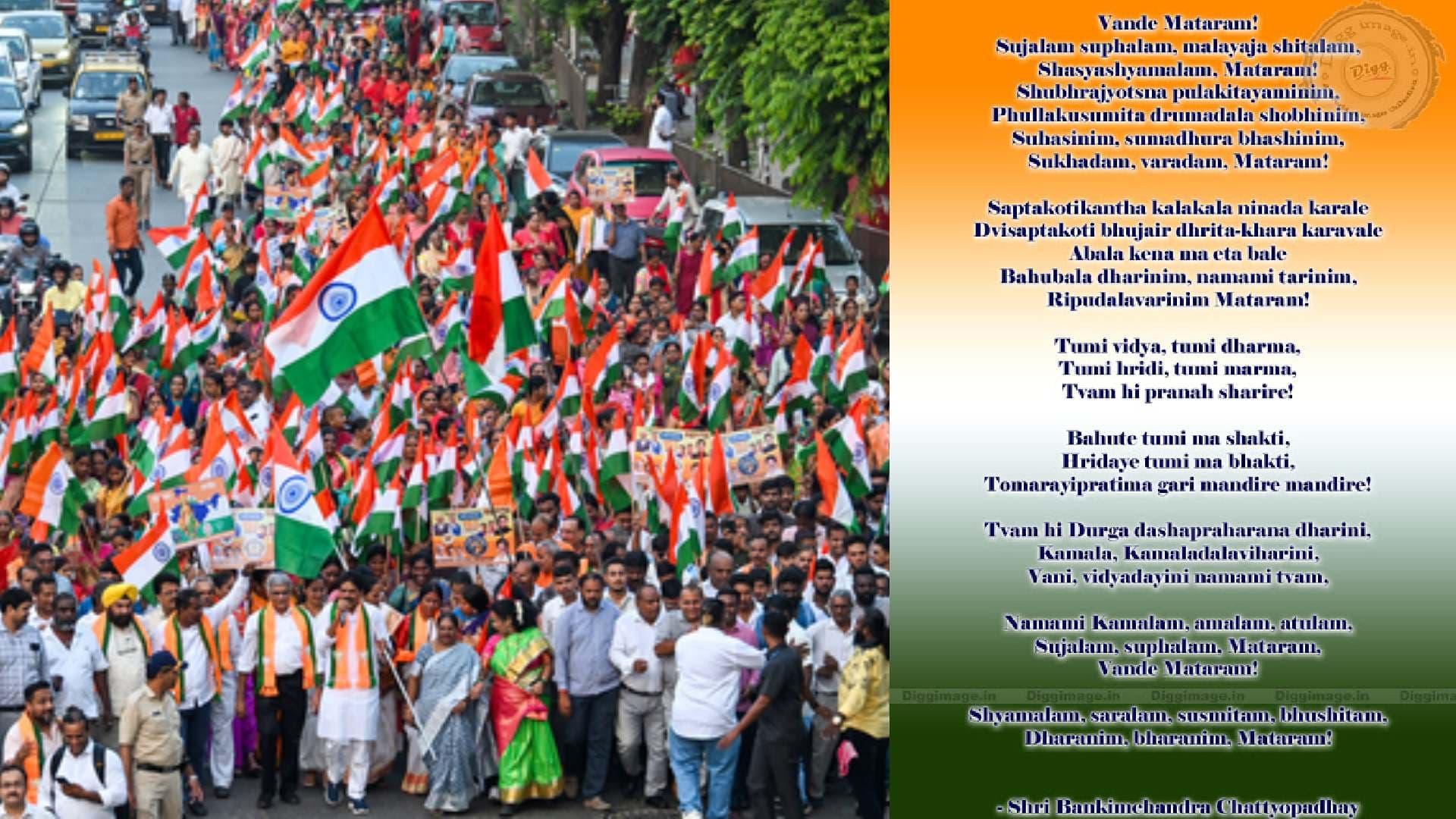
Key Points
- The Union Home Ministry mandates a 3-minute 10-second official version of 'Vande Mataram' for official events.
- New guidelines specify the song must precede the national anthem and list occasions where its rendition is mandatory.
- The move aims to ensure uniformity and respect; a relaxation is given for cinema halls.
New Delhi, Feb 11: The Union Home Ministry issued fresh guidelines regarding the national song Vande Mataram, mandating a six-stanza, 3 minutes and 10 seconds official version to be played or sung at a range of official occasions.
In a 10-page order dated January 28, circulated to all States, Union Territories, ministries and constitutional bodies, the ministry has laid down detailed instructions on when and how the national song is to be rendered, and the decorum to be maintained.
Our source informed that the move is aimed at ensuring uniformity and respect in the rendition of the national song at official events.
Vande Mataram to Precede National Anthem
As per the new guidelines, if both the national song (Vande Mataram) and the national anthem (Jana Gana Mana) are sung or played at a function, Vande Mataram will be rendered first.
In a 10-page order dated January 28, circulated to all States, Union Territories, ministries and constitutional bodies, the ministry has laid down detailed instructions on when and how the national song is to be rendered, and the decorum to be maintained.
Our source informed that the move is aimed at ensuring uniformity and respect in the rendition of the national song at official events.
Vande Mataram to Precede National Anthem
As per the new guidelines, if both the national song (Vande Mataram) and the national anthem (Jana Gana Mana) are sung or played at a function, Vande Mataram will be rendered first.

📱 Get Argus News App
✨📰 60 Word News🎬 Argus Podcast📺 Live TV and Breaking News🔔 Free Notification Alerts
Download Free:
The order states that whenever the official version of the national song is sung or played, the audience shall stand to attention.
However, a specific relaxation has been provided for cinema halls. If the song is played as part of a newsreel or documentary, audiences are not expected to stand, as doing so may interrupt the screening and create confusion rather than add to the dignity of the song.
Also Read: Odisha Parba 2026 to Bring Odia Culture and Tradition to Delhi, From March 13 to 15
Occasions Where Playing Is Mandatory
The ministry has categorised events into three groups.
In the first category - where the national song shall be played - the occasions include:
Civil investiture ceremonies
Arrival and departure of the President at formal state functions
However, a specific relaxation has been provided for cinema halls. If the song is played as part of a newsreel or documentary, audiences are not expected to stand, as doing so may interrupt the screening and create confusion rather than add to the dignity of the song.
Also Read: Odisha Parba 2026 to Bring Odia Culture and Tradition to Delhi, From March 13 to 15
Occasions Where Playing Is Mandatory
The ministry has categorised events into three groups.
In the first category - where the national song shall be played - the occasions include:
Civil investiture ceremonies
Arrival and departure of the President at formal state functions
Immediately before and after the President addresses the nation on All India Radio or television
Arrival and departure of Governors or Lieutenant Governors at formal state functions within their jurisdictions
When the national flag is brought on parade
On any other occasion, as directed by the Government of India
When played by a band, the song will be preceded by a ceremonial drum roll lasting seven paces in slow march, followed by a one-beat pause before commencement.
Mass Singing with Flag Unfurling and Ceremonial Events
In the second category - where the song shall be played and accompanied by mass singing - the occasions include:
Unfurling of the national flag
Cultural and ceremonial functions (other than parades)
Arrival of the President at government or public functions (excluding formal state functions) and before departure
The guidelines state that an adequately trained choir may lead the rendition, supported by a proper public address system. Printed lyrics of the official version may be distributed to participants to enable coordinated mass singing.
Schools and Non-Ceremonial Events
In the third category, the song may be sung at school assemblies and other programmes. Schools have been advised to begin the day with community singing of the national song and to promote respect for the national anthem and the national flag among students.
The order also permits singing of the national song at non-ceremonial occasions that hold significance due to the presence of ministers or other dignitaries, provided proper decorum is maintained.
Also Read: India–US Tech Partnership Gets AI Boost in Silicon Valley
Background of Vande Mataram
Written in the 1870s by Bankim Chandra Chatterjee in Sanskritised Bengali, Vande Mataram became a rallying cry during India’s freedom movement. In 1950, the first two stanzas were adopted as India’s national song.
Unlike the national anthem, Vande Mataram did not previously have a clearly defined official protocol regarding tune, duration or rendition at state functions. The expanded six-stanza version has not traditionally been sung at official events.
The latest directive follows renewed public and parliamentary discussions around the historical and political context of the song, including debates marking its 150th anniversary.
Arrival and departure of Governors or Lieutenant Governors at formal state functions within their jurisdictions
When the national flag is brought on parade
On any other occasion, as directed by the Government of India
When played by a band, the song will be preceded by a ceremonial drum roll lasting seven paces in slow march, followed by a one-beat pause before commencement.
Mass Singing with Flag Unfurling and Ceremonial Events
In the second category - where the song shall be played and accompanied by mass singing - the occasions include:
Unfurling of the national flag
Cultural and ceremonial functions (other than parades)
Arrival of the President at government or public functions (excluding formal state functions) and before departure
The guidelines state that an adequately trained choir may lead the rendition, supported by a proper public address system. Printed lyrics of the official version may be distributed to participants to enable coordinated mass singing.
Schools and Non-Ceremonial Events
In the third category, the song may be sung at school assemblies and other programmes. Schools have been advised to begin the day with community singing of the national song and to promote respect for the national anthem and the national flag among students.
The order also permits singing of the national song at non-ceremonial occasions that hold significance due to the presence of ministers or other dignitaries, provided proper decorum is maintained.
Also Read: India–US Tech Partnership Gets AI Boost in Silicon Valley
Background of Vande Mataram
Written in the 1870s by Bankim Chandra Chatterjee in Sanskritised Bengali, Vande Mataram became a rallying cry during India’s freedom movement. In 1950, the first two stanzas were adopted as India’s national song.
Unlike the national anthem, Vande Mataram did not previously have a clearly defined official protocol regarding tune, duration or rendition at state functions. The expanded six-stanza version has not traditionally been sung at official events.
The latest directive follows renewed public and parliamentary discussions around the historical and political context of the song, including debates marking its 150th anniversary.
Related Topics
Explore more stories