



Budget / Union Budget 2026-27 Hikes Defence Allocation by 15% to Rs 7.8 Lakh Crore
·8 months ago·3 min read
Key Points
- Union Budget 2026–27 allocates Rs 7.8 lakh crore to defence, a 15% increase, with capital outlay for hardware up 21.8% to Rs 2.19 lakh crore.
- Customs duty waived on raw materials for aircraft maintenance parts to boost defence sector and self-reliance.
- Higher spending on fighter jets, warships, missiles to benefit HAL, Mazagon Dock, Bharat Electronics, and private suppliers.
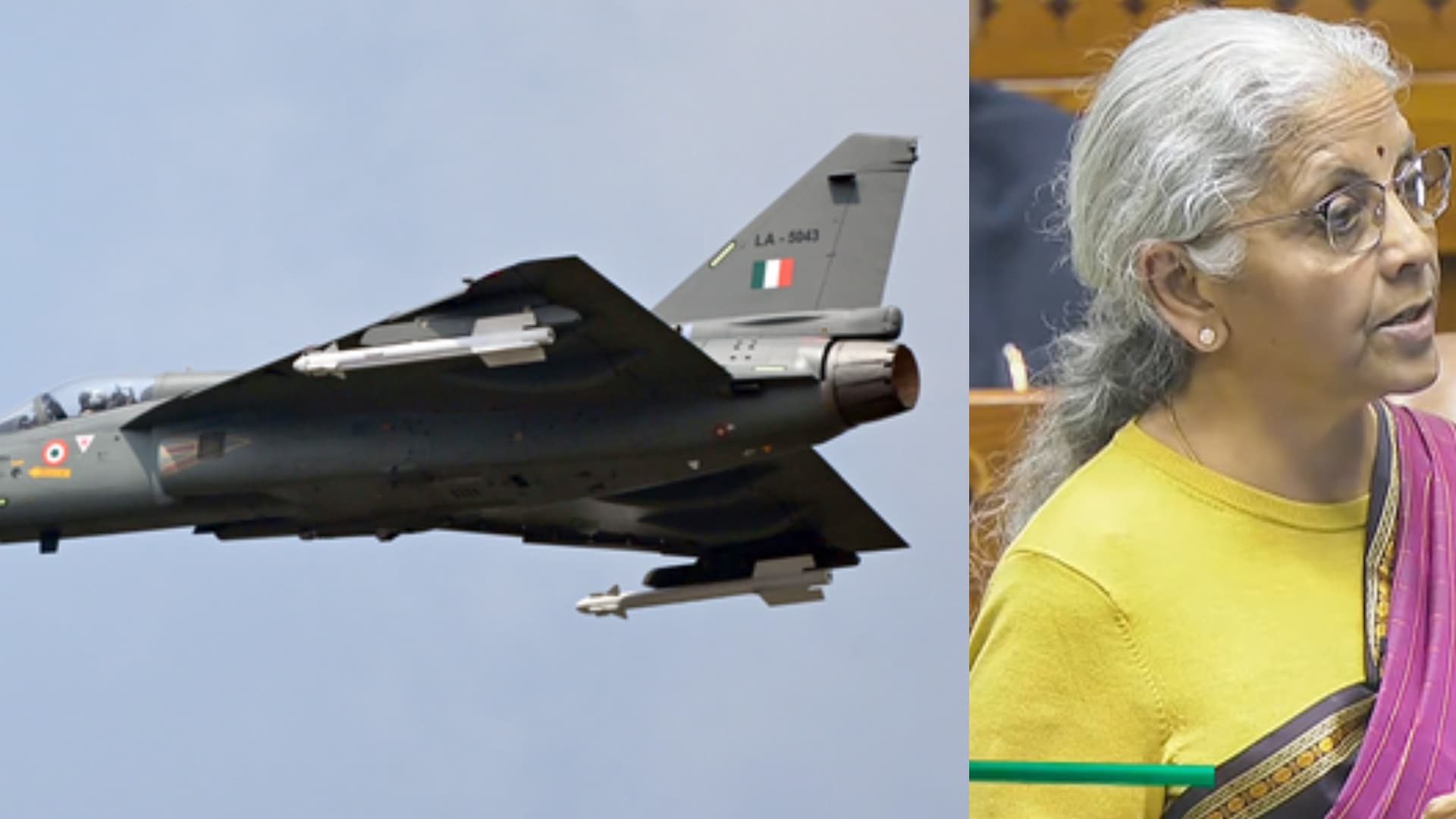
New Delhi, Feb 1: Finance Minister Nirmala Sitharaman announced an allocation of Rs 7.8 lakh crore for the country’s defence sector in the Union Budget for 2026-27, representing a 15 per cent increase over the corresponding figure of Rs 6.81 lakh crore for the previous financial year.
The defence forces have been allocated Rs 2.19 lakh crore for the purchase of military hardware as part of the capital outlay in the Budget, which constitutes a 21.8 per cent increase compared with the Rs 1.80 lakh crore allocated in FY 2025-26.
The increased outlay comes against the backdrop of Operation Sindoor and the changing geopolitical landscape. The approach is also in line with the government's push for an 'Aatmanirbhar Bharat', or self-reliant India, by encouraging indigenous research and manufacturing.
Finance Minister Sitharaman also proposed the waiving of basic customs duty on raw materials imported for the manufacture of parts of aircraft to be used in maintenance, repair, or overhaul requirements, which will benefit units in the defence sector.
The defence forces have been allocated Rs 2.19 lakh crore for the purchase of military hardware as part of the capital outlay in the Budget, which constitutes a 21.8 per cent increase compared with the Rs 1.80 lakh crore allocated in FY 2025-26.
The increased outlay comes against the backdrop of Operation Sindoor and the changing geopolitical landscape. The approach is also in line with the government's push for an 'Aatmanirbhar Bharat', or self-reliant India, by encouraging indigenous research and manufacturing.
Finance Minister Sitharaman also proposed the waiving of basic customs duty on raw materials imported for the manufacture of parts of aircraft to be used in maintenance, repair, or overhaul requirements, which will benefit units in the defence sector.

📱 Get Argus News App
✨📰 60 Word News🎬 Argus Podcast📺 Live TV and Breaking News🔔 Free Notification Alerts
Download Free:
Commenting on the Budget 2026-27, Defence Minister Rajnath Singh said: "This budget, following the historic success of Operation Sindoor, has reinforced our resolve to further strengthen the country's defence system.... This budget strengthens the balance between security, development, and self-reliance."
The approach of the Budget is a continuation of the broader strategic shift to prioritise spending on force modernisation, air defence systems and next-generation platforms.
The increase in capex has been driven by higher allocations for fighter jets, warships, missiles, artillery guns and other state-of-the-art defence equipment.
The higher allocation of the purchase of defence equipment is expected to benefit both defence public sector undertakings and their private-sector suppliers, especially as order books across the sector have expanded sharply.
The public sector companies expected to benefit include Hindustan Aeronautics Ltd, which has an order book mainly from the Indian Air Force, Mazagon Dock Shipbuilders, which produces warships for the Indian Navy, and Bharat Electronics Ltd, which produces electronics equipment for the forces.
Also Read: Budget 2026-27: Odisha Gets National Waterway 5 Boost
The approach of the Budget is a continuation of the broader strategic shift to prioritise spending on force modernisation, air defence systems and next-generation platforms.
The increase in capex has been driven by higher allocations for fighter jets, warships, missiles, artillery guns and other state-of-the-art defence equipment.
The higher allocation of the purchase of defence equipment is expected to benefit both defence public sector undertakings and their private-sector suppliers, especially as order books across the sector have expanded sharply.
The public sector companies expected to benefit include Hindustan Aeronautics Ltd, which has an order book mainly from the Indian Air Force, Mazagon Dock Shipbuilders, which produces warships for the Indian Navy, and Bharat Electronics Ltd, which produces electronics equipment for the forces.
Also Read: Budget 2026-27: Odisha Gets National Waterway 5 Boost
Smaller private sector companies such as MIDHANI, BEML, Bharat Dynamics and various startups in the drones sector are expected to benefit, too, as part of India’s indigenous procurement push.
(IANS)
(IANS)
Related Topics
Explore more stories