



Service / The Government After 5 PM: Who Serves the Citizen When the Office Closes?
Key Points
India’s digital governance is reshaping citizen expectations. Services like UMANG, DigiLocker, CPGRAMS, and ERSS ensure access beyond office hours, making government available when citizens genuinely need it, not just during working hours.
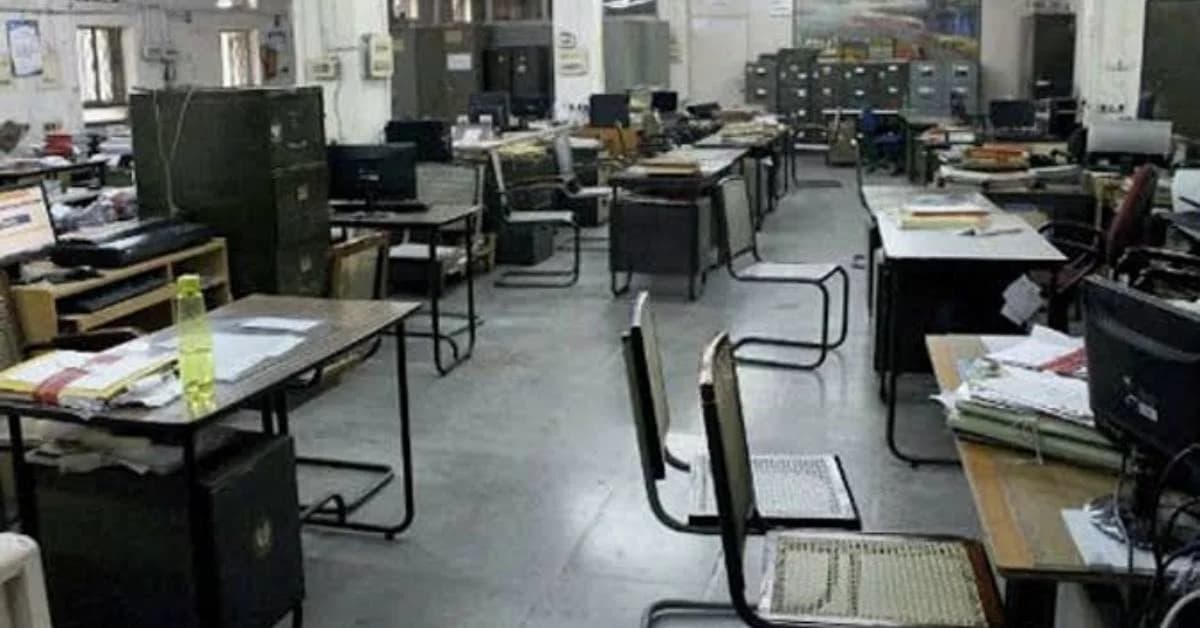
For decades, the relationship between a citizen and government was closely connected to a place and a time. A person visited a government office, submitted an application, waited for a response and returned if something was missing.
The working day of the office often defined the working day of public service. But that relationship is changing. A citizen today may expect to check an application status at 10 PM, download a government document on a Sunday, register a grievance from a village at midnight or seek emergency assistance without knowing which department is responsible.
This raises an interesting question for modern governance: When the government office closes at 5 PM, does public service also stop?
The answer is increasingly no. India is gradually moving towards a model in which many government services remain accessible beyond traditional office hours. This does not mean that government employees must work around the clock. It means that technology, service platforms, call centres, emergency systems and clearly defined institutional processes can keep essential public services available even when physical offices are closed.

📱 Get Argus News App
✨The scale of this transformation is already significant. As of July 2026, around 2,575 government services were available through UMANG, including 880 Central Government and 1,695 State Government services. UMANG had more than 11.66 crore registered users and recorded around 798 crore transactions over the previous three years. DigiLocker had more than 72.43 crore registered users and provided access to thousands of document types and services.
These numbers indicate something larger than the popularity of two digital platforms. They show that citizens are increasingly comfortable interacting with government through digital channels rather than making a physical visit. A certificate, application, document or service request can increasingly begin with a phone rather than a trip to an office.
But the more important change is in citizen expectations.
Once people become accustomed to services being available digitally, their expectations naturally change. If a person can transfer money at midnight, order a product on a Sunday or speak to someone through a digital platform at any time, it is understandable that they may also expect basic government services to be accessible beyond conventional working hours.
This does not mean every government service needs to become a 24×7 human service. Not every file requires an officer sitting at a desk at midnight. The real opportunity is to distinguish between 24×7 accessibility and 24×7 human intervention.
A citizen should be able to submit a request, check information, download an eligible document, register a grievance or access guidance at any time. More complex matters can then be routed to the appropriate official during defined working hours. In this model, technology keeps the door open even when the physical office is closed.
Emergency services are a different matter because time can directly determine outcomes. India's Emergency Response Support System, through the unified emergency number 112, is designed as a nationwide emergency response mechanism. The system can receive distress information through multiple channels and route actionable cases to police, health, fire, disaster, women, children and other relevant response systems. Its computer-aided dispatch architecture and GIS-based monitoring are designed to help field response reach the incident location during critical time periods.
Here, the meaning of “government after 5 PM” becomes very different. It is not about extending office hours. It is about ensuring that a person in distress does not have to wait until morning.
The same principle is visible in grievance redressal. The Centralised Public Grievance Redress and Monitoring System, or CPGRAMS, is available to citizens 24×7 and connects citizens with Central Ministries, Departments, States and Union Territories. The system allows citizens to register grievances and track their resolution digitally. According to the Government's August 2026 backgrounder, the average grievance disposal time in Central Ministries and Departments had fallen from 157 days in 2014 to 15 days in 2025.
The significance of such systems is not merely that a complaint can be submitted online. The bigger change is that the citizen has a mechanism to initiate an interaction with government without being physically present in a government office.
This is particularly important for people who live far from administrative centres. For a citizen in a remote village, travelling to a district headquarters can involve transport costs, lost wages and an entire day's time. A digital service does not eliminate every physical requirement, but when designed properly, it can remove unnecessary journeys.
The rural dimension of this transformation is therefore crucial. Digital governance should not become an urban privilege. As of June 2026, more than 4.07 lakh Common Services Centres were functional at the Gram Panchayat level. These centres provide access to government, banking, financial, insurance, pension and utility-related services and help citizens who may not have the devices, skills or confidence to navigate every digital service independently.
This creates an important model for the future: government can be digital without becoming distant.
A citizen may use a mobile phone directly. Another may visit a Common Services Centre. Someone else may require assistance from a frontline worker. All three can still be part of the same public-service ecosystem.
The next challenge is therefore not simply digitisation. It is service design.
A poorly designed digital system can create a new kind of waiting. The citizen may not be standing in a physical queue but may be stuck because of a failed authentication, unclear instructions, an unanswered chatbot or an application that shows “under process” without explaining what happens next.
The absence of a physical queue does not necessarily mean the absence of friction.
This is where government platforms must increasingly focus on simplicity. Citizens should not need to understand departmental structures to access a service. They should not have to know which office handles a particular issue. The system should guide them to the right service.
Technology can help create this experience. Artificial intelligence, multilingual interfaces, chatbots, voice-based systems and automated notifications can make services easier to navigate. But these technologies should complement human support rather than become barriers between citizens and officials.
The recently launched Ayushman Sarathi PM-JAY WhatsApp chatbot is one example of this direction. Launched in June 2026, it provides beneficiaries with 24×7 access to selected PM-JAY services through WhatsApp, reducing the need for physical visits or dependence on conventional call-centre access for basic requirements.
The larger lesson is simple: the citizen should not have to understand the technology in order to benefit from it.
There is also a cultural change taking place within public administration. Earlier, success could often be measured by whether a file was processed or an application was disposed of. In a digital environment, citizens can increasingly see status, receive notifications and provide feedback. This creates a stronger expectation of transparency.
That expectation can be positive.
When citizens know where their application stands, uncertainty reduces. When they can track a grievance, accountability becomes more visible. When services are available digitally, physical access barriers can decline.
However, this does not make the role of public servants less important. It changes the nature of their role. Routine transactions can increasingly be automated, allowing officials to focus more on complex cases, field verification, policy decisions, grievance resolution and situations requiring human judgement.
The government after 5 PM, therefore, should not necessarily mean a government where every employee works beyond office hours. It should mean a government where essential services remain accessible, emergencies receive timely response and citizens do not have to wait unnecessarily simply because the clock has crossed five.
The ultimate measure should be the citizen's experience.
Can a person access a service when it is needed? Can a grievance be registered without travelling? Can an emergency response be activated quickly? Can a citizen understand what happens next? Can someone without a smartphone still receive assistance? Can technology reduce the distance between the citizen and the state?
These questions are more important than whether a particular government office is physically open at 5 PM.
India's digital transformation is gradually changing the traditional boundaries of public administration. The government of the future may not always be a building that citizens enter. Increasingly, it may be a service that citizens can access from wherever they are.
The goal should not be a government that is permanently online for the sake of technology. The goal should be a government that is available when citizens genuinely need it.
Because for a citizen facing an emergency at 11 PM, a student needing a document on Sunday or a family trying to understand the status of a grievance late at night, the question is not whether the office is open.
The real question is whether the service is. And perhaps this is the most important shift in modern governance: from asking citizens to come to the government, to building systems through which government services can reach citizens wherever and whenever they need them.
Hrudananda Prusty, Author & Policy Professional
Related Topics
Explore more stories