



Strength and Strategy: India-Pakistan Military Analysis
Key Points
A detailed analysis of military capabilities shaping South Asia's security dynamics.
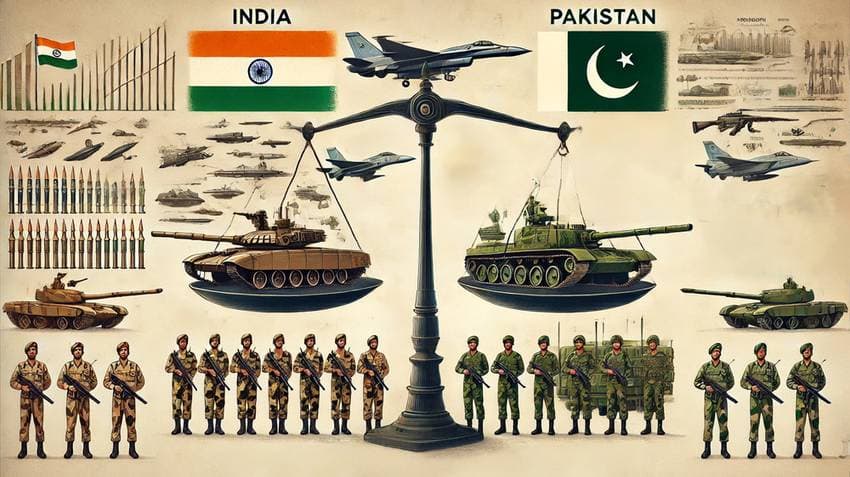
Bhubaneswar: India and Pakistan, two nuclear-armed neighbours, continue to maintain robust military forces, reflecting their strategic priorities and geopolitical challenges.
As of 2025, India ranks 4th globally in the Global Firepower Index, while Pakistan holds the 12th position. This article delves into the comparative strengths and technologies of their armies.
MANPOWER
India boasts a significant advantage in manpower, with 1.46 million active personnel compared to Pakistan's 654,000. Additionally, India's reserve force and paramilitary personnel far outnumber Pakistan's, ensuring greater mobilisation capacity. The manpower of their armies reflects their strategic priorities and geopolitical realities.
India's Manpower Advantage: India, with a population exceeding 1.4 billion, has a vast pool of available manpower. The Indian Army boasts approximately 1.46 million active personnel, making it one of the largest standing armies in the world. Additionally, India has a reserve force of 1.15 million personnel and a paramilitary strength of 2.52 million. This robust manpower ensures India's ability to mobilise and sustain large-scale operations.
Pakistan's Strategic Focus: Pakistan, with a population of around 252 million, maintains a smaller but highly professional military force. The Pakistani Army comprises approximately 654,000 active personnel, supported by a reserve force of 550,000 and a paramilitary strength of 500,000. Despite its smaller size, Pakistan's military is known for its operational readiness and strategic focus.
Key Differences: The disparity in manpower between the two nations is significant. India's larger population and economic resources enable it to maintain a more extensive military force. However, Pakistan compensates for its smaller size with a focus on specialised training and strategic deployment.
TECHNOLOGICAL EDGE
Both the nations have invested significantly in modernising their military technologies. While both India and Pakistan possess formidable capabilities, their approaches to technological advancements differ, reflecting their strategic priorities and resources.
India's Technological Advancements: India has made substantial strides in indigenous defence production under the "Make in India" initiative. The development of advanced systems like the BrahMos supersonic cruise missile, Arjun tanks, and Tejas fighter jets highlights India's focus on self-reliance. Additionally, India has acquired cutting-edge platforms such as the Rafale fighter jets and the S-400 air defence systems, enhancing its air superiority and missile defence capabilities. The Indian Navy's nuclear-powered submarines and aircraft carriers further underscore its technological edge in maritime security.
Pakistan's Strategic Focus: Pakistan, while relying more on foreign acquisitions, has developed a robust defence industry in collaboration with allies like China. The JF-17 Thunder fighter jet, jointly developed with China, is a testament to Pakistan's efforts to modernise its air force. Pakistan has also focused on missile technology, including tactical nuclear weapons, to bolster its deterrence capabilities. The country's emphasis on cost-effective solutions ensures operational readiness despite budget constraints.
Key Differences: India's larger defence budget, approximately $79 billion, enables greater investment in research, development, and procurement of advanced technologies. In contrast, Pakistan's defence budget of around $7.6 billion necessitates a more focused approach to modernisation. India's technological edge is evident in its diverse and advanced platforms, while Pakistan's strength lies in its strategic partnerships and targeted advancements.
AIRPOWER
India and Pakistan have invested significantly in their air forces to bolster national security and maintain strategic deterrence. While both countries possess capable airpower, their approaches and resources differ, reflecting their unique priorities.
India's Superiority: India's air force is one of the most powerful in Asia, ranking 4th globally in terms of airpower. It operates a fleet of 2,229 aircraft, including 513 fighter jets such as the Rafale, Su-30MKI, and indigenous Tejas. These advanced platforms provide India with superior air dominance capabilities. Additionally, India has 130 dedicated attack aircraft, 899 helicopters, and 80 attack helicopters, ensuring versatility in both offensive and defensive operations. The Indian Air Force's six aerial tankers and advanced radar systems further enhance its operational reach and effectiveness.
Pakistan's Strategic Focus: Pakistan's air force, though smaller, is highly professional and strategically focused. It operates 1,399 aircraft, including 328 fighter jets like the JF-17 Thunder and F-16, which are known for their agility and combat readiness. Pakistan also fields 90 dedicated attack aircraft, 373 helicopters, and 57 attack helicopters. While its fleet size is smaller, Pakistan emphasises cost-effective solutions and strategic deployment to maximize its airpower capabilities.
Key Differences: India's larger defence budget of $79 billion enables greater investment in advanced aircraft and support systems, giving it a technological edge. In contrast, Pakistan's defence budget of $7.6 billion necessitates a more focused approach to modernisation. India's diverse fleet and advanced platforms provide it with a strategic upper hand, while Pakistan's strength lies in its efficient use of resources and targeted advancements.
LAND POWER
Both the countries have developed significant land-based military capabilities to address their respective security challenges. While both countries maintain formidable ground forces, their approaches to land power reflect their unique strategic priorities and resources.
India's Dominance: India's land forces are among the largest and most advanced in the world. The Indian Army operates approximately 4,201 tanks, including the indigenous Arjun and Russian-origin T-90 and T-72 tanks. Additionally, India boasts 148,594 armoured vehicles, providing superior mobility and protection for its troops. The Indian Army's artillery strength includes 3,975 towed artillery units and 100 self-propelled artillery systems. While India's mobile rocket systems number 264, they are complemented by advanced missile systems like the Pinaka and BrahMos.
Pakistan's Strategic Focus: Pakistan's land forces, though smaller in scale, operates around 2,627 tanks, including the Al-Khalid and Al-Zarrar tanks, which are locally developed and tailored to the country's terrain. Pakistan also fields 17,516 armoured vehicles, 2,629 towed artillery units, and 662 self-propelled artillery systems. Notably, Pakistan's 600 mobile rocket systems provide a significant boost to its artillery capabilities, emphasising mobility and rapid deployment.
Key Differences: India's larger defence budget of approximately $79 billion enables greater investment in advanced equipment and modernisation programs. In contrast, Pakistan's defence budget of around $7.6 billion necessitates a more focused approach to resource allocation. India's numerical superiority in tanks and armoured vehicles provides it with a strategic advantage, while Pakistan's emphasis on mobile artillery reflects its focus on rapid response and adaptability.
NAVAL STRENGTH
India and Pakistan have developed naval forces to secure their maritime interests and enhance regional security. While both countries maintain capable navies, their approaches and resources differ significantly.
India's Naval Dominance: India's navy is one of the largest and most advanced in Asia, with a fleet of 293 vessels. This includes two aircraft carriers, INS Vikramaditya and INS Vikrant, which serve as floating airbases and enhance India's power projection capabilities. India also operates 18 submarines, including nuclear-powered ones, and 13 destroyers equipped with advanced missile systems. Additionally, India's navy boasts 14 frigates, 18 corvettes, and 135 patrol vessels, ensuring comprehensive maritime security and dominance in the Indian Ocean region.
Pakistan's Strategic Focus: Pakistan's navy, though smaller, is strategically focused on coastal defence and deterrence. It operates a fleet of 121 vessels, including 8 submarines and several missile boats. Pakistan emphasises cost-effective solutions and relies on its submarines for strategic deterrence. While it lacks aircraft carriers and destroyers, Pakistan's navy prioritises mobility and rapid response capabilities.
Key Differences: India's larger defence budget enables greater investment in advanced naval platforms and modernisation programs. In contrast, Pakistan's defence budget necessitates a more focused approach to resource allocation. India's diverse fleet and technological advancements provide it with a strategic upper hand, while Pakistan's emphasis on submarines reflects its focus on asymmetric warfare.
BUDGET & RESOURCES
The two neighbouring nations allocate significant resources to their defence sectors. However, the disparity in their defence budgets and resource availability highlights their differing strategic priorities and economic capabilities.
India's Defence: India's defence budget for 2025-26 stands at approximately $79 billion (₹6.8 lakh crore), reflecting a 9.5% increase over the previous year. This substantial allocation enables India to invest in advanced technologies, modernise its military infrastructure, and maintain a large standing army. India's robust economy supports extensive procurement programs, including indigenous developments like the Tejas fighter jets and BrahMos missiles, as well as acquisitions such as the Rafale fighter jets and S-400 air defence systems. Additionally, India's natural resource reserves, including oil production of 795,000 barrels per day, contribute to its overall strength.
Pakistan's Defence: Pakistan's defence budget for 2025 is significantly smaller, at approximately $7.6 billion (₹691.9 billion). Despite economic challenges, Pakistan prioritises defence spending to maintain operational readiness and strategic deterrence. Pakistan relies heavily on foreign aid and partnerships, particularly with China, to acquire advanced military equipment such as the JF-17 Thunder fighter jets and missile systems. Its oil production, at 101,000 barrels per day, is comparatively limited.
Key Differences: The disparity in defence budgets translates into differences in procurement, modernization, and maintenance capabilities. India's larger budget allows for greater investment in research and development, while Pakistan focuses on cost-effective solutions and strategic partnerships to optimize its resources.
CONCLUSION
While both nations possess formidable capabilities, India's larger scale and technological advancements provide a strategic upper hand. However, the evolving geopolitical landscape necessitates continuous adaptation and vigilance.
read more National news
