



Indian Culture / PM Modi Hails Somnath as 'A Symbol of India’s Indomitable Civilisational Spirit'
·9 months ago·6 min read
Key Points
- PM Narendra Modi marks 1,000 years since the first attack on Somnath temple in January 1026.
- In an article, he describes Somnath as an eternal symbol of India’s civilisational resilience and faith.
- Highlights its repeated reconstruction, modern restoration led by Sardar Patel, and 75 years of the current temple.
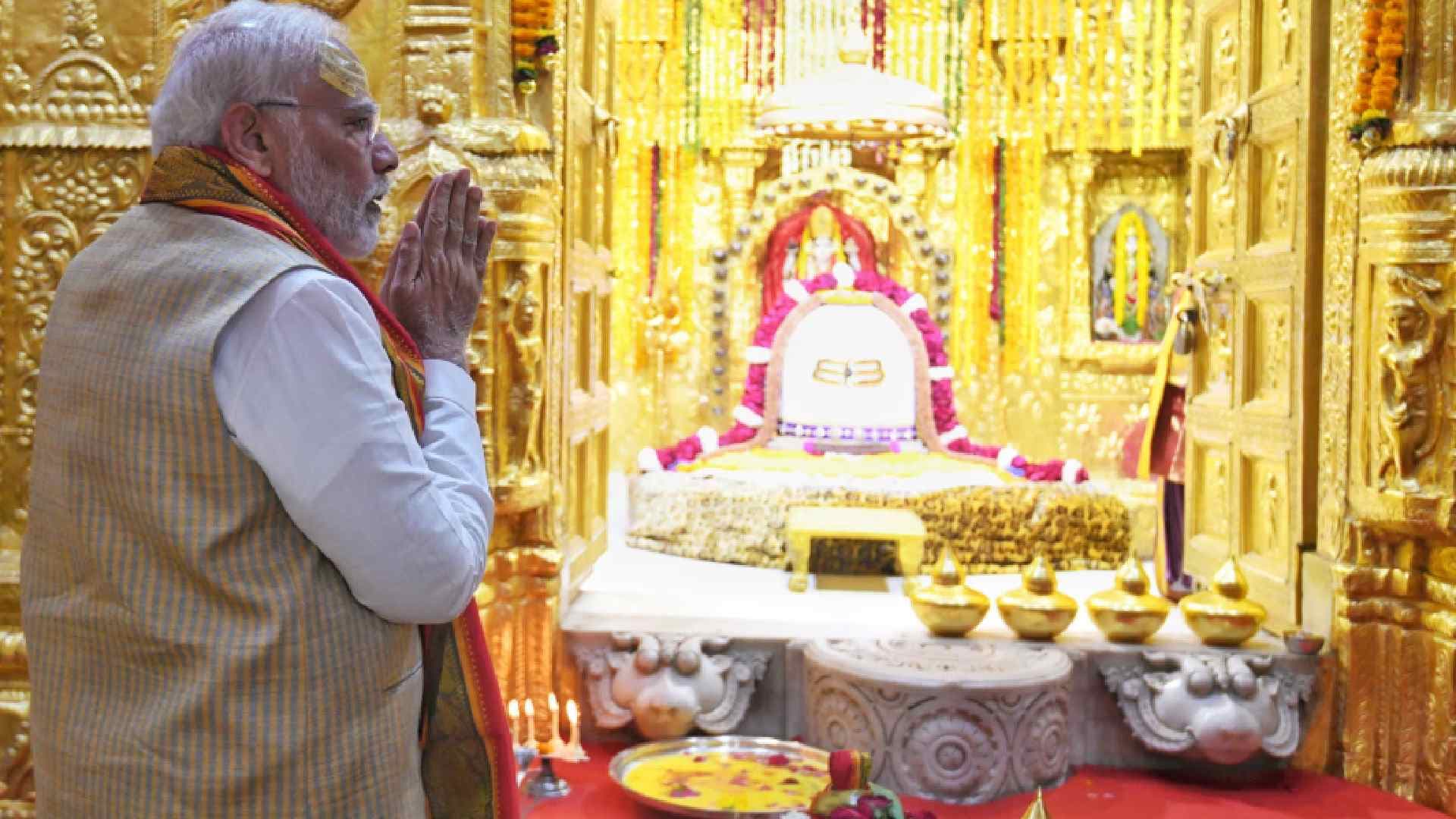
Ahmedabad, Jan 5: As India marks 1,000 years since the first attack on the Somnath temple in January 1026, Prime Minister Narendra Modi, in a reflective article, has described the shrine as a timeless embodiment of India’s civilisational consciousness -- a symbol that has survived destruction, invasion and centuries of upheaval to stand renewed on the nation’s western coast.
Writing on the occasion, the Prime Minister said Somnath is not merely a temple but an “eternal proclamation of India’s soul”, whose continued existence reflects the resilience of India’s faith, culture and people.
PM Modi on Somnath’s Civilisational Primacy
In his article, PM Modi emphasised that Somnath’s importance is rooted in ancient scripture itself. Citing the Dwadasha Jyotirling Stotram, he noted that Somnath is mentioned first among the twelve Jyotirlings — “Saurashtre Somnatham cha” — underlining its preeminence in India’s spiritual geography.
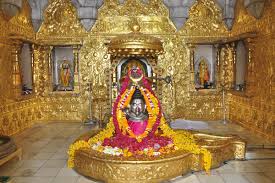
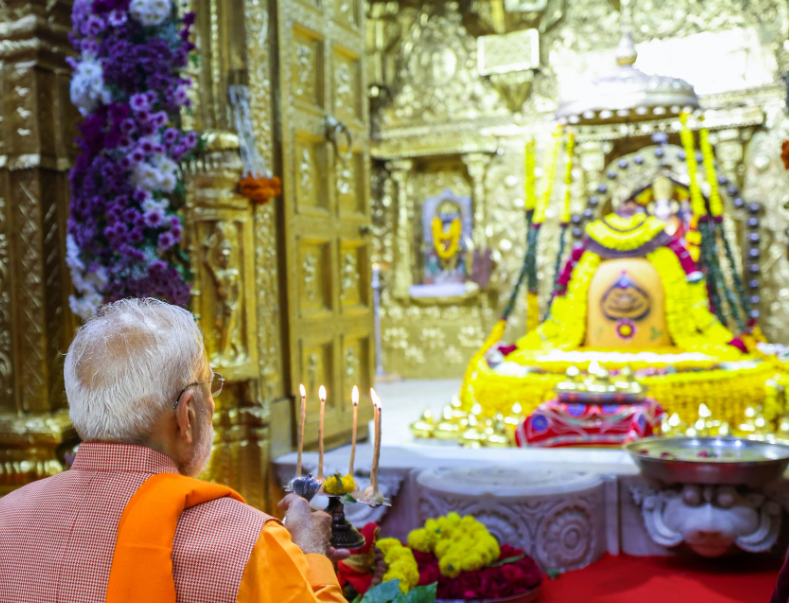
He also recalled the scriptural belief that a devotee who beholds the Somnath Shivling is freed from sins, fulfils virtuous aspirations and attains salvation, reinforcing why the shrine has drawn the devotion of millions over centuries.
Writing on the occasion, the Prime Minister said Somnath is not merely a temple but an “eternal proclamation of India’s soul”, whose continued existence reflects the resilience of India’s faith, culture and people.
PM Modi on Somnath’s Civilisational Primacy
In his article, PM Modi emphasised that Somnath’s importance is rooted in ancient scripture itself. Citing the Dwadasha Jyotirling Stotram, he noted that Somnath is mentioned first among the twelve Jyotirlings — “Saurashtre Somnatham cha” — underlining its preeminence in India’s spiritual geography.
He also recalled the scriptural belief that a devotee who beholds the Somnath Shivling is freed from sins, fulfils virtuous aspirations and attains salvation, reinforcing why the shrine has drawn the devotion of millions over centuries.

📱 Get Argus News App
✨📰 60 Word News🎬 Argus Podcast📺 Live TV and Breaking News🔔 Free Notification Alerts
Download Free:
Somnath Before 1026
According to several historical accounts, in 1026, Gujarat was under the rule of King Bhima I from the Chalukya dynasty.
The temple had employed 350 persons, both male and female, to sing and dance before the linga every day. The income of the temple was collected from 10,000 villages, and from the offerings of the devotees. The temple used to possess vast wealth in gold, silver, pearls, and rich jewels which had been accumulated over the course of centuries.
The 1026 Attack: A Thousand Years On
PM Modi wrote that January 2026 completes exactly 1,000 years since the first major attack on Somnath by Mahmud of Ghazni in 1026, describing it as a violent attempt aimed at destroying a powerful symbol of faith and civilisation.
History says that Mahmud's Somnath expedition was his fifteenth invasion of India. On Friday, January 7, 1026, the Ghaznavids launched a fierce assault on the Somanath fort with a barrage of arrows, causing around 50,000 casualties.
Referring to historical sources, PM Modi noted that accounts of the attack detail widespread cruelty and devastation inflicted upon the shrine and its people — episodes that continue to cause anguish even after a millennium.
Yet, he stressed, Somnath’s story did not end with destruction.
According to several historical accounts, in 1026, Gujarat was under the rule of King Bhima I from the Chalukya dynasty.
The temple had employed 350 persons, both male and female, to sing and dance before the linga every day. The income of the temple was collected from 10,000 villages, and from the offerings of the devotees. The temple used to possess vast wealth in gold, silver, pearls, and rich jewels which had been accumulated over the course of centuries.
The 1026 Attack: A Thousand Years On
PM Modi wrote that January 2026 completes exactly 1,000 years since the first major attack on Somnath by Mahmud of Ghazni in 1026, describing it as a violent attempt aimed at destroying a powerful symbol of faith and civilisation.
History says that Mahmud's Somnath expedition was his fifteenth invasion of India. On Friday, January 7, 1026, the Ghaznavids launched a fierce assault on the Somanath fort with a barrage of arrows, causing around 50,000 casualties.
Referring to historical sources, PM Modi noted that accounts of the attack detail widespread cruelty and devastation inflicted upon the shrine and its people — episodes that continue to cause anguish even after a millennium.
Yet, he stressed, Somnath’s story did not end with destruction.
Not a Story of Ruin, But of Unbroken Resolve
Rejecting the idea that Somnath represents defeat, PM Modi asserted that its history over the past thousand years is defined not by demolition, but by the unbreakable courage of the people of Bharat.
He wrote that despite repeated attacks and a prolonged period of subjugation, Somnath continued to inspire generations who rebuilt the temple each time, often at the cost of supreme sacrifice. According to the Prime Minister, this repeated resurrection reflects the enduring spirit of India’s civilisation.
Coastal Power, Prosperity and Faith
Highlighting the temple’s location, PM Modi wrote that Somnath’s coastal presence gave strength to a society with considerable economic capacity. India’s ancient sea traders and sailors carried stories of its splendour far and wide, making it not only a spiritual centre but also a symbol of cultural and economic vitality.
Repeated Destruction, Repeated Resurrection
Despite centuries of invasions and a prolonged period of subjugation, Somnath’s story did not end in ruin. Efforts to rebuild the temple continued across generations. The present structure of the Somnath temple was completed on May 11, 1951, coinciding with another milestone in 2026 — 75 years of the temple’s modern reconstruction. The historic reopening took place in the presence of India’s first President, Dr Rajendra Prasad. Though Sardar Vallabhbhai Patel, who spearheaded the reconstruction effort after Independence, did not live to witness the moment, his resolve shaped the revival of the shrine. Patel had announced the rebuilding during his visit to Somnath on Diwali in 1947.
Debate and Determination
After Independence, the reconstruction was not without debate. Then Prime Minister Jawaharlal Nehru expressed reservations about official participation in the ceremony, fearing it could affect India’s image. However, Dr Rajendra Prasad remained firm and attended the inauguration, an event that went on to carve a defining chapter in independent India’s history.
PM Modi also acknowledged the contributions of KM Munshi, who supported the reconstruction effort and chronicled Somnath’s journey in his book ‘Somnath: The Shrine Eternal’.
Vivekananda’s Words, Echoed by PM Modi
The Prime Minister recalled Swami Vivekananda’s visit to Somnath in the 1890s and his 1897 Chennai address, where Vivekananda spoke of temples like Somnath as living lessons in civilisation — structures destroyed hundreds of times and resurrected with undiminished vitality.
PM Modi cited Vivekananda’s words to underline what he described as India’s “national life force”.
Somnath Beyond One Faith
Emphasising the temple’s inclusive spiritual influence, PM Modi referred to Jain scholar Kalikal Sarvagya Hemchandracharya, who visited Somnath centuries ago and offered a prayer saluting the supreme element free from worldly attachments.
According to the Prime Minister, Somnath continues to evoke the same sense of inner stillness and awakening even today.
PM Modi as Somnath Trust Chairperson
As Chairperson of the Somnath Temple Trust, PM Modi wrote that Somnath remains a living institution that connects people across time, belief systems and traditions.
He observed that even a thousand years after the 1026 attack, the Arabian Sea still crashes against Somnath’s shores, echoing a saga of repeated resurgence.
Place, Setting and Living Heritage
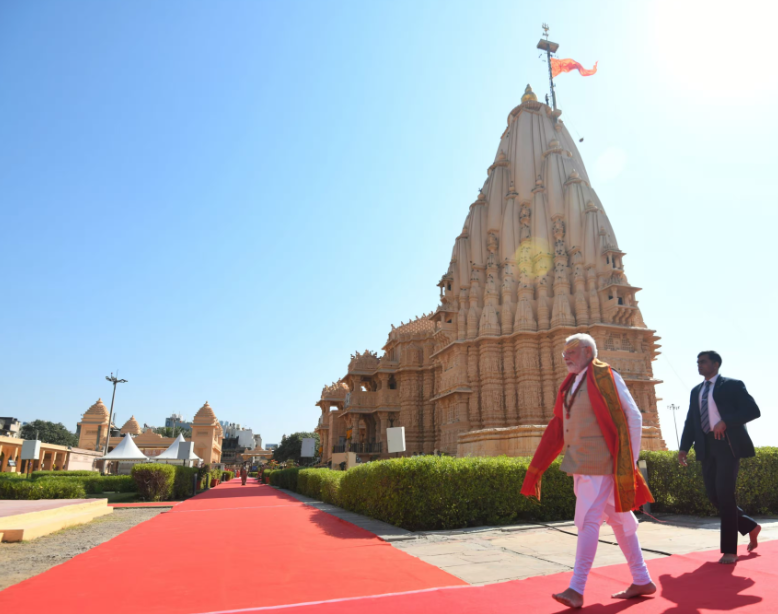
The present-day honey-coloured Somnath temple, intricately carved, stands at the confluence of the Kapila, Hiran and Sarasvati rivers, with waves of the Arabian Sea touching the shore beside it.
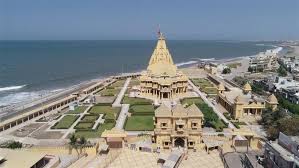
The temple’s timeline is traced back to 649 BC, though it is believed to be older. The complex features landscaped gardens and dioramas depicting the story of Lord Shiva. A daily sound-and-light show at 7:45 pm, narrated in Amitabh Bachchan’s baritone, recounts the shrine’s history.
How to Reach Somnath
Air: Nearest airport at Diu, connected by road to Somnath
Rail: Somnath railway station links the town with major destinations
Road: Regular road connectivity from Veraval, Junagadh and other parts of Gujarat
PM Modi’s Message at 1,000 Years
Concluding his reflection, PM Modi wrote that while the aggressors of the past have faded into obscurity, Somnath stands radiant, reminding the world that hate and fanaticism may destroy temporarily, but faith and conviction create for eternity.
Also Read: Trump Hails ‘Good Man’ PM Modi, Says India ‘Cut’ Russian Oil Imports
He added that if a temple broken a thousand years ago can rise again in full splendour, then India too can reclaim and build upon its ancient strength — moving forward with renewed resolve towards a developed nation rooted in civilisational wisdom.
It can be mentioned here that Prime Minister Narendra Modi will visit the Somnath Temple in Gujarat on January 11. Year-long activities have been planned at Somnath to mark the 'Somnath Swabhiman Parv'.
Rejecting the idea that Somnath represents defeat, PM Modi asserted that its history over the past thousand years is defined not by demolition, but by the unbreakable courage of the people of Bharat.
He wrote that despite repeated attacks and a prolonged period of subjugation, Somnath continued to inspire generations who rebuilt the temple each time, often at the cost of supreme sacrifice. According to the Prime Minister, this repeated resurrection reflects the enduring spirit of India’s civilisation.
Coastal Power, Prosperity and Faith
Highlighting the temple’s location, PM Modi wrote that Somnath’s coastal presence gave strength to a society with considerable economic capacity. India’s ancient sea traders and sailors carried stories of its splendour far and wide, making it not only a spiritual centre but also a symbol of cultural and economic vitality.
Repeated Destruction, Repeated Resurrection
Despite centuries of invasions and a prolonged period of subjugation, Somnath’s story did not end in ruin. Efforts to rebuild the temple continued across generations. The present structure of the Somnath temple was completed on May 11, 1951, coinciding with another milestone in 2026 — 75 years of the temple’s modern reconstruction. The historic reopening took place in the presence of India’s first President, Dr Rajendra Prasad. Though Sardar Vallabhbhai Patel, who spearheaded the reconstruction effort after Independence, did not live to witness the moment, his resolve shaped the revival of the shrine. Patel had announced the rebuilding during his visit to Somnath on Diwali in 1947.
Debate and Determination
After Independence, the reconstruction was not without debate. Then Prime Minister Jawaharlal Nehru expressed reservations about official participation in the ceremony, fearing it could affect India’s image. However, Dr Rajendra Prasad remained firm and attended the inauguration, an event that went on to carve a defining chapter in independent India’s history.
PM Modi also acknowledged the contributions of KM Munshi, who supported the reconstruction effort and chronicled Somnath’s journey in his book ‘Somnath: The Shrine Eternal’.
Vivekananda’s Words, Echoed by PM Modi
The Prime Minister recalled Swami Vivekananda’s visit to Somnath in the 1890s and his 1897 Chennai address, where Vivekananda spoke of temples like Somnath as living lessons in civilisation — structures destroyed hundreds of times and resurrected with undiminished vitality.
PM Modi cited Vivekananda’s words to underline what he described as India’s “national life force”.
Somnath Beyond One Faith
Emphasising the temple’s inclusive spiritual influence, PM Modi referred to Jain scholar Kalikal Sarvagya Hemchandracharya, who visited Somnath centuries ago and offered a prayer saluting the supreme element free from worldly attachments.
According to the Prime Minister, Somnath continues to evoke the same sense of inner stillness and awakening even today.
PM Modi as Somnath Trust Chairperson
As Chairperson of the Somnath Temple Trust, PM Modi wrote that Somnath remains a living institution that connects people across time, belief systems and traditions.
He observed that even a thousand years after the 1026 attack, the Arabian Sea still crashes against Somnath’s shores, echoing a saga of repeated resurgence.
Place, Setting and Living Heritage
The present-day honey-coloured Somnath temple, intricately carved, stands at the confluence of the Kapila, Hiran and Sarasvati rivers, with waves of the Arabian Sea touching the shore beside it.
The temple’s timeline is traced back to 649 BC, though it is believed to be older. The complex features landscaped gardens and dioramas depicting the story of Lord Shiva. A daily sound-and-light show at 7:45 pm, narrated in Amitabh Bachchan’s baritone, recounts the shrine’s history.
How to Reach Somnath
Air: Nearest airport at Diu, connected by road to Somnath
Rail: Somnath railway station links the town with major destinations
Road: Regular road connectivity from Veraval, Junagadh and other parts of Gujarat
PM Modi’s Message at 1,000 Years
Concluding his reflection, PM Modi wrote that while the aggressors of the past have faded into obscurity, Somnath stands radiant, reminding the world that hate and fanaticism may destroy temporarily, but faith and conviction create for eternity.
Also Read: Trump Hails ‘Good Man’ PM Modi, Says India ‘Cut’ Russian Oil Imports
He added that if a temple broken a thousand years ago can rise again in full splendour, then India too can reclaim and build upon its ancient strength — moving forward with renewed resolve towards a developed nation rooted in civilisational wisdom.
It can be mentioned here that Prime Minister Narendra Modi will visit the Somnath Temple in Gujarat on January 11. Year-long activities have been planned at Somnath to mark the 'Somnath Swabhiman Parv'.
Related Topics
Explore more stories