



Indian Railways / PM Modi Flags Off India's First Hydrogen-Powered Train in Haryana
·2 months ago·2 min read
Key Points
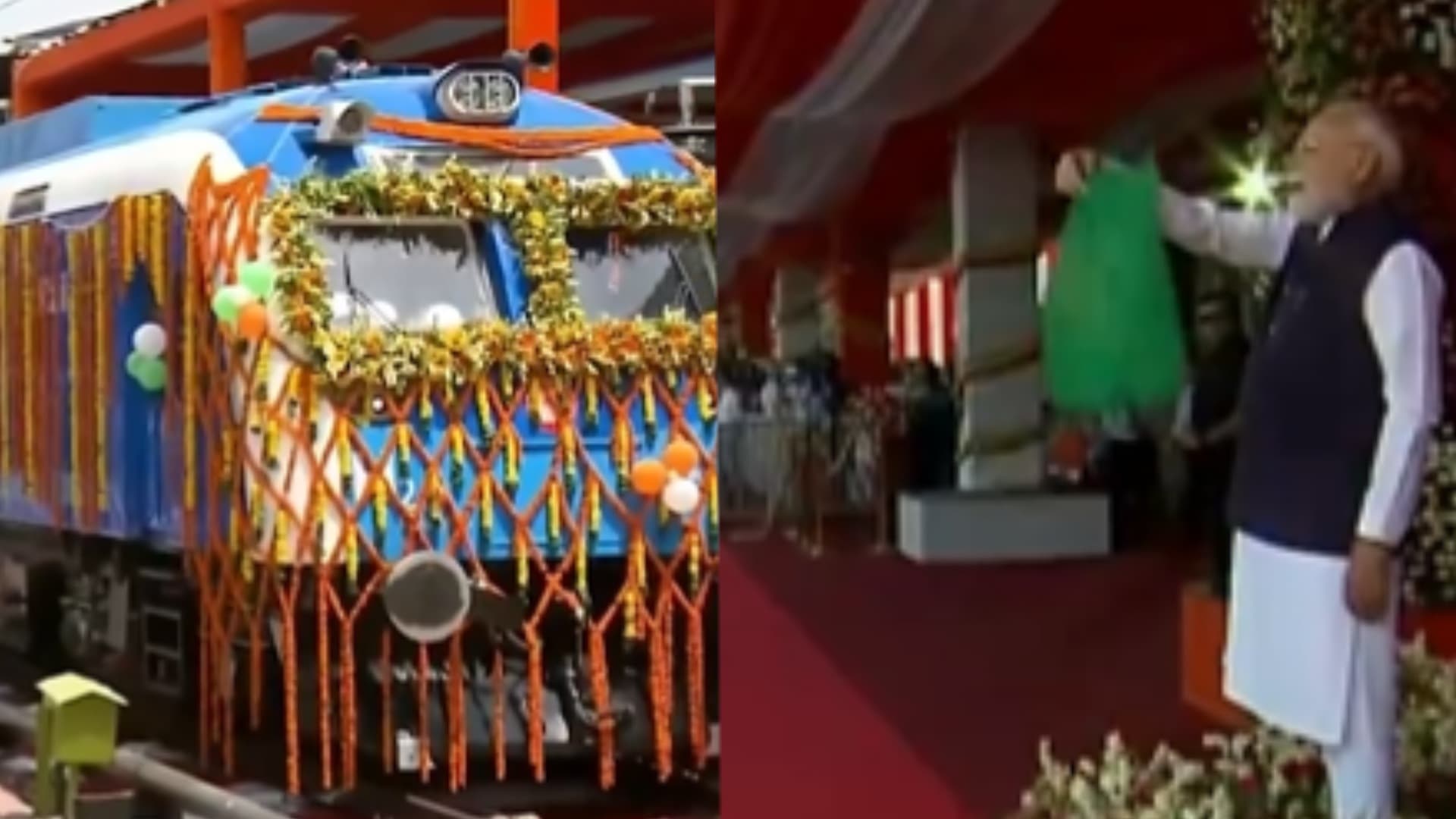
Prime Minister Narendra Modi flagged off India's first hydrogen-powered train from Jind railway station in Haryana, marking a major step toward green rail transportation.
New Delhi, Jul 17: Prime Minister Narendra Modi on Friday flagged off India's first hydrogen-powered train from Jind railway station in Haryana, marking a major step towards green rail transportation.
The train will initially operate on the 89-km Jind-Sonipat section of the Northern Railway, connecting Jind Junction, Gohana Junction and Sonipat. It will also serve intermediate stations and halts, including Jind City, Pandu Pindara Junction, Lalit Khera Halt, Bhambhewa, Isapur Kheri Halt, Butana Halt, Khandrai Halt, Rabrah Halt, Lath Halt, Mohana, Barwasni Halt and Sonipat New.
Unlike conventional electric trains that draw power from overhead lines, the hydrogen fuel cell train generates electricity onboard through a chemical reaction between hydrogen and oxygen. The only by-products are water vapour and heat, making it an environmentally friendly alternative to diesel-powered trains.
Also Read: Gujarat ATS Nabs Five More in Suspected Jaish-e-Mohammed Module Case
According to an official statement, the train carries its own power source, similar to steam and diesel locomotives, but replaces fossil fuels with clean hydrogen technology to generate electricity without combustion or external power supply.
The train will initially operate on the 89-km Jind-Sonipat section of the Northern Railway, connecting Jind Junction, Gohana Junction and Sonipat. It will also serve intermediate stations and halts, including Jind City, Pandu Pindara Junction, Lalit Khera Halt, Bhambhewa, Isapur Kheri Halt, Butana Halt, Khandrai Halt, Rabrah Halt, Lath Halt, Mohana, Barwasni Halt and Sonipat New.
Unlike conventional electric trains that draw power from overhead lines, the hydrogen fuel cell train generates electricity onboard through a chemical reaction between hydrogen and oxygen. The only by-products are water vapour and heat, making it an environmentally friendly alternative to diesel-powered trains.
Also Read: Gujarat ATS Nabs Five More in Suspected Jaish-e-Mohammed Module Case
According to an official statement, the train carries its own power source, similar to steam and diesel locomotives, but replaces fossil fuels with clean hydrogen technology to generate electricity without combustion or external power supply.

📱 Get Argus News App
✨📰 60 Word News🎬 Argus Podcast📺 Live TV and Breaking News🔔 Free Notification Alerts
Download Free:
The train is equipped with multiple safety systems capable of detecting hydrogen leaks, heat, flames and smoke.
It has an operational speed of 75 kmph and a design speed of 110 kmph, making it both efficient and safe for passenger operations.
Hydrogen-powered trains remain at an early stage of deployment worldwide. Germany was the first country to introduce commercial hydrogen passenger trains, while France, Italy, China and Japan are conducting pilot projects or limited operations. Most such trains globally comprise two to four coaches and are primarily used for regional passenger services.
It has an operational speed of 75 kmph and a design speed of 110 kmph, making it both efficient and safe for passenger operations.
Hydrogen-powered trains remain at an early stage of deployment worldwide. Germany was the first country to introduce commercial hydrogen passenger trains, while France, Italy, China and Japan are conducting pilot projects or limited operations. Most such trains globally comprise two to four coaches and are primarily used for regional passenger services.
Related Topics
Explore more stories