



Delhi Air Pollution / Delhi AQI Crosses 400 in Several Areas, Sirsa Blames Punjab Stubble Burning
·2 hours ago·3 min read
Key Points
Delhi's air pollution continues to worsen, with AQI crossing 400 in several areas, prompting Environment Minister Manjinder Singh Sirsa to blame Punjab's stubble-burning incidents. Meanwhile, the Delhi government has introduced restrictions on vehicles, construction activities, parking and office attendance under its winter pollution control plan.
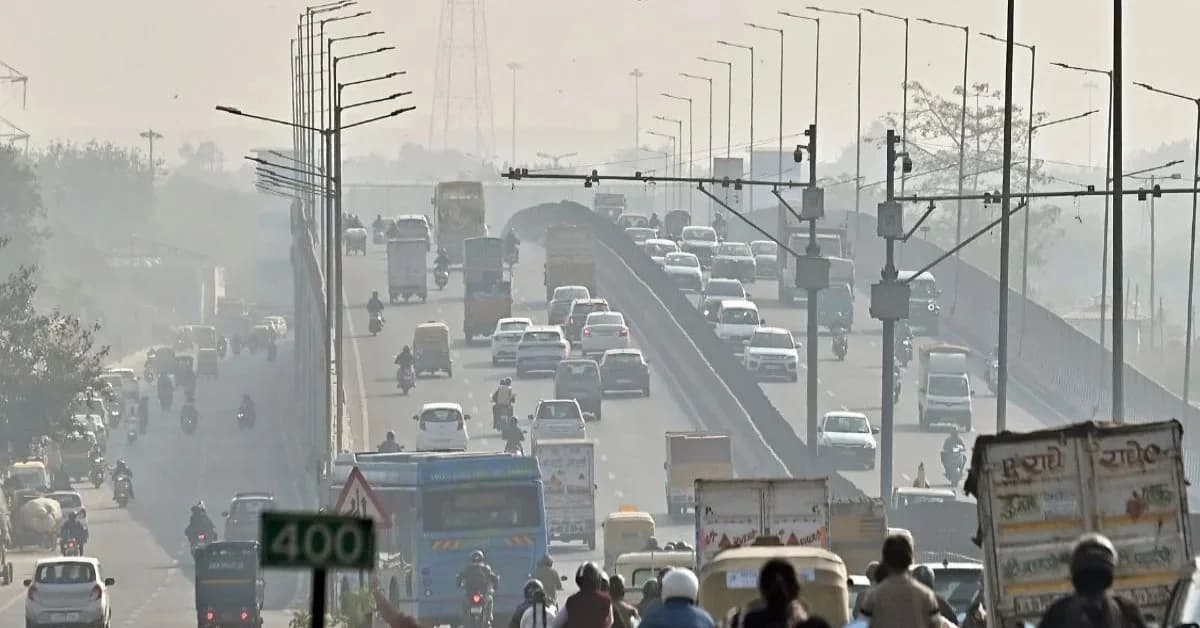
New Delhi, Nov 5: Air pollution in the national capital continues to worsen, with the AQI crossing the 400 mark at several locations. A thick blanket of smog has engulfed parts of Delhi, making breathing difficult for residents and raising serious health concerns. Amid the deteriorating air quality, Delhi Environment Minister Manjinder Singh Sirsa has blamed stubble burning in Punjab for contributing to the pollution crisis.
With pollution levels continuing to rise, the Delhi government has also introduced several restrictions under its winter pollution control plan to improve air quality and reduce emissions.
Delhi Environment Minister Manjinder Singh Sirsa questioned Punjab Chief Minister Bhagwant Mann's statements regarding the paddy harvesting situation in the state. According to the Delhi minister, while Mann had reportedly claimed that paddy harvesting had not yet started, government data cited by Sirsa suggested that around 70 per cent of the harvesting had already been completed.
He further claimed that Punjab recorded 584 stubble-burning incidents on November 3 alone.

📱 Get Argus News App
✨📰 60 Word News🎬 Argus Podcast📺 Live TV and Breaking News🔔 Free Notification Alerts
Download Free:
Citing pollution data from areas such as Bathinda and Talwandi Sabo, Sirsa questioned the Punjab government's efforts to control agricultural fires. He also accused the Aam Aadmi Party (AAP) government of putting public health at risk by failing to effectively address the issue.
The Delhi Environment Minister also questioned the sudden deterioration in the capital's air quality. According to the figures cited by Sirsa, Delhi's AQI stood at 60 on October 30 before increasing to 117 on October 31. He questioned how pollution levels could rise so sharply within a short period.
Meanwhile, several parts of the national capital are now experiencing severe air pollution, with AQI readings crossing 400.
Residents have complained of eye irritation, breathing difficulties and discomfort as a thick layer of smog continues to affect visibility and air quality. However, stubble burning is not the only contributor to Delhi's pollution. Vehicle emissions, industrial activities, construction dust and unfavourable weather conditions also play significant roles in worsening air quality.
Meanwhile, the Rekha Gupta-led Delhi government has rolled out its winter pollution control plan from November 1 to tackle the worsening air quality.
Under the new measures, vehicles without a valid PUC certificate will not be allowed to purchase fuel at petrol pumps. Restrictions have also been imposed on the entry of petrol and diesel vehicles registered outside Delhi that do not meet BS-VI emission standards. The government has introduced several additional measures to reduce vehicular emissions and dust pollution.
Key measures include:
- Work from home: 50 per cent of employees in government and private offices are to work from home.
- Higher parking charges: Parking fees have been doubled to discourage unnecessary private vehicle usage.
- Construction restrictions: Construction and demolition activities generating dust have been restricted.
- Road dust control: Water sprinkling and mechanical road-sweeping machines are being used to reduce dust.
- Anti-smog guns: Anti-smog guns are being deployed at pollution hotspots.
- Ban on waste burning: Authorities are focusing on preventing the burning of garbage in open areas.
- Pollution hotspot monitoring: Special attention is being given to areas reporting high pollution levels.
Related Topics
Explore more stories