



Indian Higher Education Institutes In QS Rankings Doubled In Last 5 Years: Dharmendra Pradhan
Key Points
India now has 54 institutions in QS World University Rankings 2026, up from just 27 in 2021 and 11 in 2015.
Major government initiatives like NEP 2020, ANRF, and ONOS have fueled research, innovation, and global competitiveness.
New Delhi, Aug 18: The number of higher education institutes (HEIs) in the QS World University Rankings (QS-WUR) has doubled in the last five years -- rising from 27 in 2021 to 54 in 2026, the government informed the Parliament on Monday.
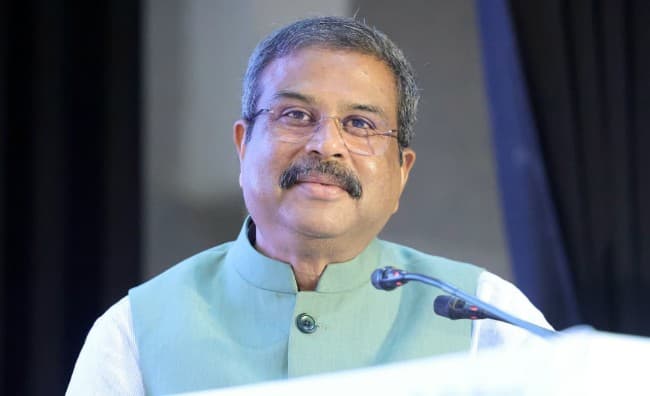
In a reply to the Lok Sabha, Union Education Minister Dharmendra Pradhan informed that the country has recorded its strongest presence in QS-WUR 2026. He also shared the status of higher education in the country.

📱 Get Argus News App
✨“The number of Indian HEIs featured in the QS World University Rankings has doubled in the past five years, rising from 27 in QS WUR 2021 to 54 in QS WUR 2026,” Pradhan said.
“Fifty-four Indian Institutions have been ranked in the QS WUR 2026. This is India’s highest ever representation, marking a growth from 11 institutions in QS WUR 2015 to 54 in QS WUR 2026. Eight Indian institutions have been ranked for the first time, which is the highest number for any country in this edition, both within the G20 and globally,” he added.
The rankings underscore "sustained policy initiatives, strengthened research and innovation capacity, and the steadily rising global profile of India’s higher education system,” Pradhan said.
Also Read: Dharmendra Pradhan Urges Odisha Youths To Become Entrepreneurs At Ravenshaw Convocation
The Minister noted that to enhance the quality of higher education, the government has undertaken several measures, including the provision of quality infrastructure, strengthening of the research and innovation ecosystem, promotion of industry-academia linkages, etc.
“These initiatives have been complemented by robust accreditation and ranking mechanisms by the National Board of Accreditation (NBA) and the National Institutional Ranking Framework (NIRF), respectively, which galvanised the Indian Higher Education Institutions (HEIs) to a more
competitive environment. The improved quality of education, in turn, contributed to significant improvements in the performance of Indian HEIs in international rankings, including the QS WUR,” Pradhan said.
He also informed that the government has made concerted efforts to improve the quality of education in the country.
Since 2014, the augmentation of the higher education ecosystem has been undertaken by the establishment of new Central Higher Educational Institutions (CHEIs) in the fields of technical education, management, science education and research, information technology, and humanities.
CHEIs are envisaged to function as pace-setter institutions to provide academic leadership to other institutions in the region.
“Since 2014, 16 Indian Institutes of Information Technology (IIIT), eight Central Universities (CU), eight Indian Institute of Management (IIM), seven Indian Institute of Technology (IIT), two Indian Institute of Science Education and Research (IISER), and one National Institute of Technology (NIT) have been established,” Pradhan said.
Further, in alignment with the principles of NEP 2020, Anusandhan National Research Foundation (ANRF) has been established as an apex body to provide high-level strategic direction for research, innovation, and entrepreneurship in the fields of natural sciences, including mathematical sciences, engineering and technology, environmental and earth sciences, health and agriculture. The total estimated cost of Anusandhan National Research Foundation for five years is Rs 50,000 crores.
The government has also approved a new Central Sector Scheme, One Nation One Subscription (ONOS).
ONOS envisages expanding access to scholarly journals to a vast diaspora of students, faculty, researchers, and scientists of all disciplines, of all HEIs under the management of the Central or state government, and research and development institutions of the Central government, through a national subscription coordinated by a central agency.
“More than 6,300 such institutions are covered under this scheme. A total of about Rs 6,000 crore has been allocated for the scheme for three calendar years, 2025, 2026, and 2027,” Pradhan said. (IANS)