



India-Israel Ties: A Modern Alliance with Ancient Roots
Key Points
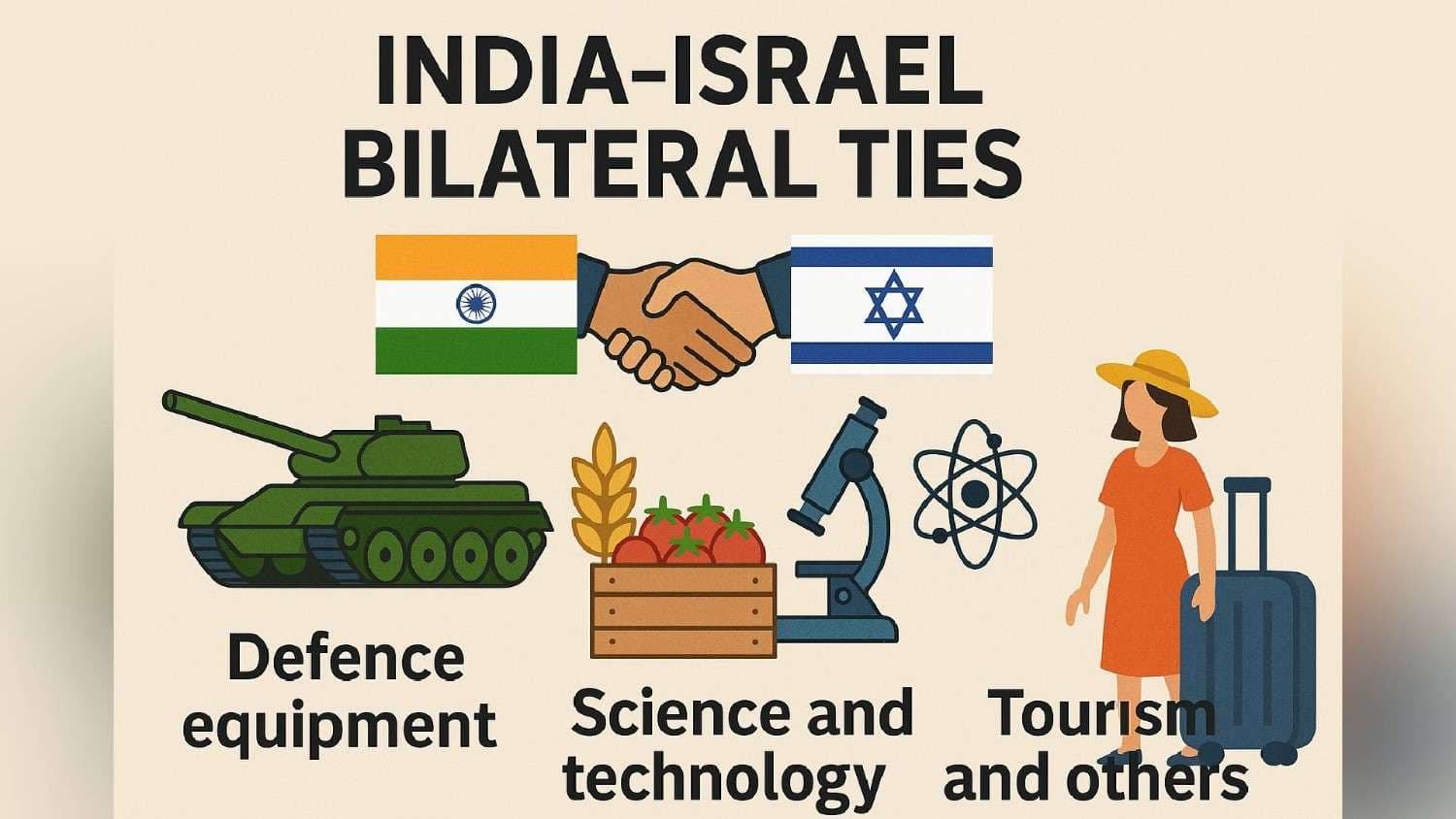
Israel is a key defence partner, supplying advanced military tech and intelligence support.
Israeli farming techniques have revolutionized Indian agriculture through joint projects.
Bilateral trade and R&D collaborations are driving economic and technological growth.
Bhubaneswar, Jun 24: India and Israel, two democracies with shared values and complementary strengths, have cultivated a robust and dynamic partnership over the past three decades.
While India officially recognized Israel in 1950, full diplomatic relations were only established in 1992. Since then, the relationship has evolved into a multifaceted alliance spanning defence, agriculture, innovation, and people-to-people ties.
One of the most significant pillars of this partnership is defence cooperation. Israel is among India’s top arms suppliers, providing cutting-edge technologies such as drones, missile systems, and surveillance equipment. Joint military exercises and intelligence sharing have further deepened strategic trust.
In agriculture, Israel’s expertise in water management and desert farming has transformed Indian farming practices. The Indo-Israel Agricultural Project has established over 30 Centres of Excellence across India, introducing advanced irrigation and crop management techniques to Indian farmers.
The two nations also collaborate extensively in science and technology, with the India-Israel Industrial R&D and Technological Innovation Fund (I4F) supporting joint research in fields like AI, cybersecurity, and healthcare. Bilateral trade, excluding defence, reached over $10 billion in 2023, with both sides exploring a Free Trade Agreement to further boost economic ties.
Culturally, the Indian Jewish diaspora in Israel and growing tourism and academic exchanges have strengthened people-to-people connections. Despite differing positions on some global issues, India and Israel have adopted a pragmatic approach, focusing on mutual interests and long-term cooperation.
INDIA & ISRAEL: THE HISTORY
India and Israel share a complex yet steadily evolving relationship that spans ancient trade routes to modern strategic alliances. Here's a detailed look at their historical trajectory:
Ancient and Cultural Ties
Early Trade: Evidence of Indo-Mediterranean trade dates back to the second millennium BCE, with goods like spices, peacocks, and textiles exchanged between the Indian subcontinent and the Levant.
Jewish Communities in India: Jewish migration to India began over 2,000 years ago. Communities like the Cochin Jews, Bene Israelis, and Baghdadi Jews settled in Kerala, Maharashtra, and Kolkata, respectively, and were welcomed without persecution.
Post-Independence and Diplomatic Hesitation (1947–1991)
Initial Reluctance: India voted against the UN Partition Plan for Palestine in 1947 and opposed Israel’s admission to the UN in 1949, largely due to its support for the Palestinian cause and its alignment with the Non-Aligned Movement and Arab nations.
Recognition Without Relations: India officially recognized Israel in 1950, but full diplomatic ties were delayed. Israel opened a consulate in Mumbai in 1953, but India refrained from deeper engagement due to geopolitical sensitivities.
Establishment of Full Diplomatic Relations (1992)
Turning Point: In 1992, India and Israel established full diplomatic relations, opening embassies in Tel Aviv and New Delhi. This marked the beginning of a new era of cooperation in defense, agriculture, and technology.
Strategic and Economic Deepening (2000s–Present)
Defense Cooperation: Israel became one of India’s top defence suppliers, providing drones, missile systems, and surveillance tech. India has spent billions on Israeli defence equipment since the Kargil War in 1999.
Agriculture and Water: Israeli expertise in drip irrigation and desert farming has transformed Indian agriculture through joint projects and Centres of Excellence.
Innovation and Trade: Bilateral trade (excluding defence) reached over $10 billion in 2023. The two countries collaborate in cybersecurity, AI, and renewable energy.
High-Level Visits: Prime Minister Narendra Modi’s 2017 visit to Israel—the first by an Indian PM—cemented the relationship. Israeli leaders have also made reciprocal visits, reinforcing ties.
Recent Developments
Geopolitical Shifts: India has balanced its ties with Israel and Arab nations through a “de-hyphenation” policy, engaging both sides independently. Amid recent Middle East tensions, India has shown increasing strategic alignment with Israel.
Public Sentiment: Surveys show strong mutual goodwill—India is among the most pro-Israel countries globally, and Israelis hold favourable views of India.
BENEFITS OF THE RELATION
India and Israel enjoy a dynamic and mutually beneficial relationship that spans defence, technology, agriculture, and trade. Here's how both nations gain from this strategic partnership and how it impacts their economies:
Benefits to India
Defence and Security: Israel is one of India’s top defence suppliers, providing advanced systems like drones, missile defence, and surveillance tech. This enhances India’s military capabilities and supports indigenous defense manufacturing under the Make in India initiative.
Agricultural Innovation: Israeli expertise in drip irrigation, water conservation, and desert farming has transformed Indian agriculture. Over 30 Centres of Excellence across India train farmers in high-yield, sustainable practices.
Technology and R&D: India benefits from Israeli innovation in AI, cybersecurity, and biotech. Joint ventures and the India-Israel Industrial R&D and Innovation Fund (I4F) support collaborative research.
Benefits to Israel
Market Access: India is Israel’s second-largest trading partner in Asia and seventh globally. Israeli companies gain access to a vast consumer base and a growing tech ecosystem.
Investment Opportunities: Indian firms like Adani and Reliance have invested in Israeli infrastructure and tech, while Israeli startups find fertile ground in India’s expanding digital economy.
Strategic Leverage: Ties with India help Israel diversify its diplomatic and economic partnerships in Asia, especially amid shifting Middle East dynamics.
ECONOMIC IMPACT
Trade Growth: Bilateral trade (excluding defence) reached $6.53 billion in FY24, with India exporting petroleum products, gems, and engineering goods, and importing electronics, fertilizers, and defence components.
Job Creation and Innovation: Collaborations in agriculture, health, and tech foster job creation, skill development, and innovation in both countries.
Investment Flows: Over 300 Israeli companies operate in India, while Indian firms are expanding their footprint in Israel’s innovation hubs.
CONCLUSION
As global geopolitics shift, the India-Israel relationship stands as a testament to how shared innovation, strategic alignment, and cultural respect can shape a resilient and forward-looking partnership. This partnership is not just transactional—it’s transformational. It blends Israel’s innovation with India’s scale, creating a synergy that fuels economic growth and strategic resilience on both sides.
read more National news
