



Gujarat Cabinet expands 'Vatan Prem Yojana', opens more village projects to public funding
Key Points
Gandhinagar: The Gujarat government has approved a series of amendments to its 'Vatan Prem Yojana', allowing more than 20 categories of development works to be undertaken in villages and widening eligibility for individuals, organisations, and trusts to contribute towards rural infrastructure projects.
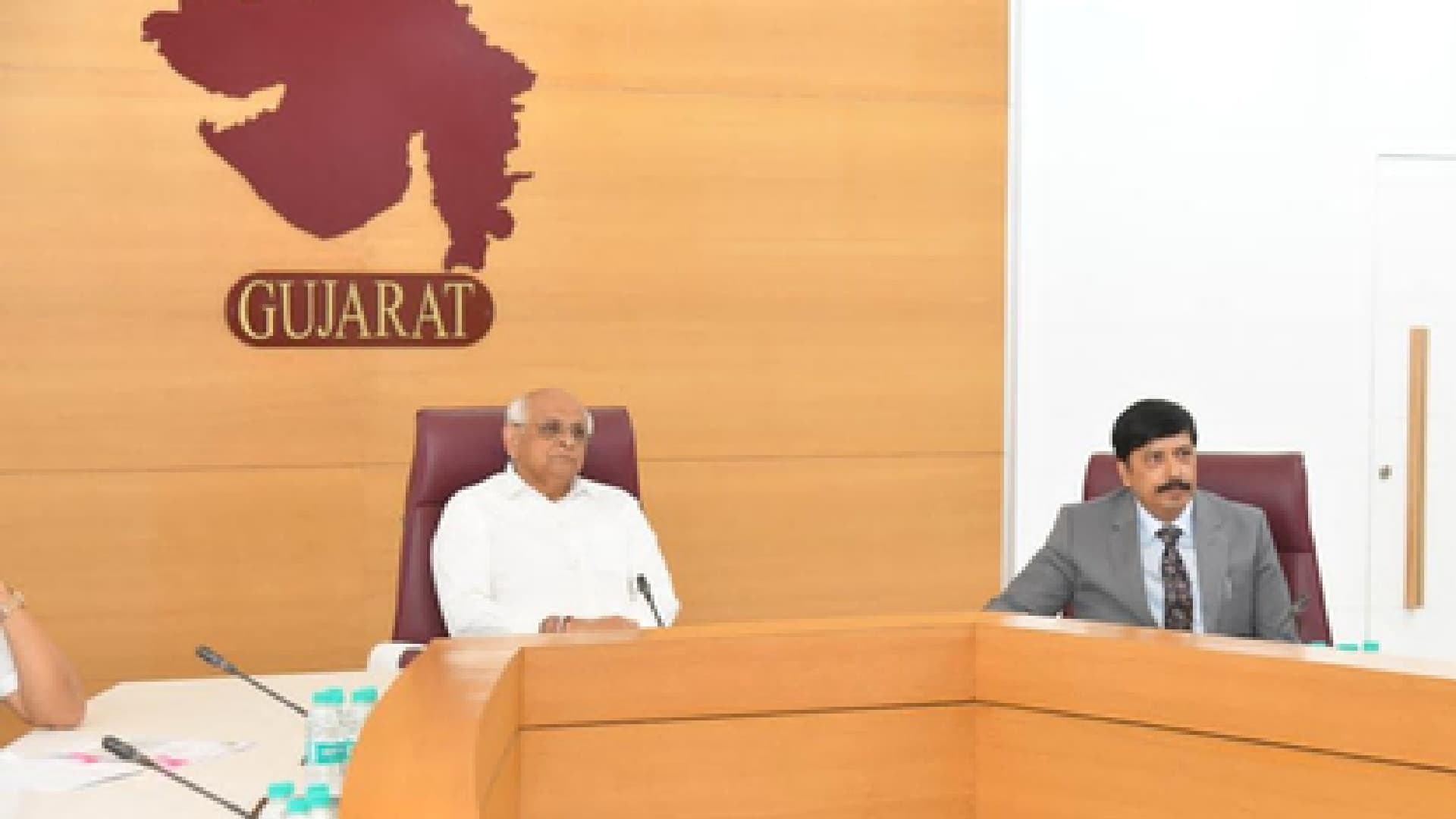
The changes were approved at a state cabinet meeting chaired by Chief Minister Bhupendra Patel on Wednesday.
Announcing the decisions taken at the meeting, government spokesperson and minister Jitu Vaghani said the amendments were aimed at making villages in Gujarat “more convenient and prosperous” through increased public participation and faster project approvals.
Vaghani noted that the "ambitious" state government scheme had been revised to encourage greater involvement from people connected to villages in Gujarat, including those living outside the district, state, or country.

📱 Get Argus News App
✨“Any donor or person belonging to a village and residing outside the district, state, or country will be able to voluntarily contribute in order to repay their debt to their native place and participate in the service of their birthplace,” he said.
He added that public amenities in villages would be created through a combination of donor contributions and state government grants.
Following the amendments, “any individual, organisation, trust or association having an emotional attachment with the village area” would also be able to participate as donors under the scheme.
Under the revised framework, development works have been divided into 'Category A and Category B' projects, with separate contribution structures depending on whether the work is carried out through a government agency or an agency selected by the donor.
For works implemented through a government agency, the government will contribute 60 per cent and donors 40 per cent for Category A projects.
In Category B projects, the government contribution will be 40 per cent while donors will contribute 60 per cent.
Where the implementing agency is chosen by the donor rather than the government, the state contribution for Category A projects will be 40 per cent, and the donor contribution will be 60 per cent.
For Category B projects under this arrangement, the government will contribute 20 per cent, and donors will contribute 80 per cent.
The state government has also expanded the range of permissible works under the scheme.
These include construction of smart classrooms, computer laboratories and libraries in government schools; facilities for primary and community health centres and veterinary hospitals; anganwadi centres; kitchens and sheds for mid-day meal schemes; internal village roads; drainage systems; street lights; CCTV camera systems; wastewater treatment facilities; beautification of ponds on the lines of the Amrit Sarovar model; solar rooftop projects; ST bus stands; milk cooperative buildings; and community toilets.
The government clarified that works such as developing gardens under the 'Panchvati Yojana' or projects limited only to deepening ponds would not be permitted under the scheme.
Vaghani also announced changes to the approval process to reduce delays in project clearances.
Financial powers have been delegated to three levels of committees under the revised system.
District-level committees chaired by District Development Officers will be authorised to approve projects worth up to Rs 20 lakh.
Head-of-department-level committees, chaired by the Development Commissioner, will approve projects valued at above Rs 20 lakh and up to Rs one crore.
Projects exceeding Rs one crore will be approved by department-level committees chaired by the Additional Chief Secretary or Secretary of the Panchayat Department.
“The Cabinet meeting today approved these amendments and directed their immediate implementation,” Vaghani said.
He added that the government believed the revised structure would encourage Non-Resident Gujaratis (NRGs) and local donors to participate more actively in the development of their native villages and help rural areas progress towards becoming “global villages”.
(IANS)
Related Topics
Explore more stories