



Operation Sindoor vs 1971 Shimla Agreement: PM Modi’s Masterstroke Drags Indira Gandhi’s Approach Into Criticism
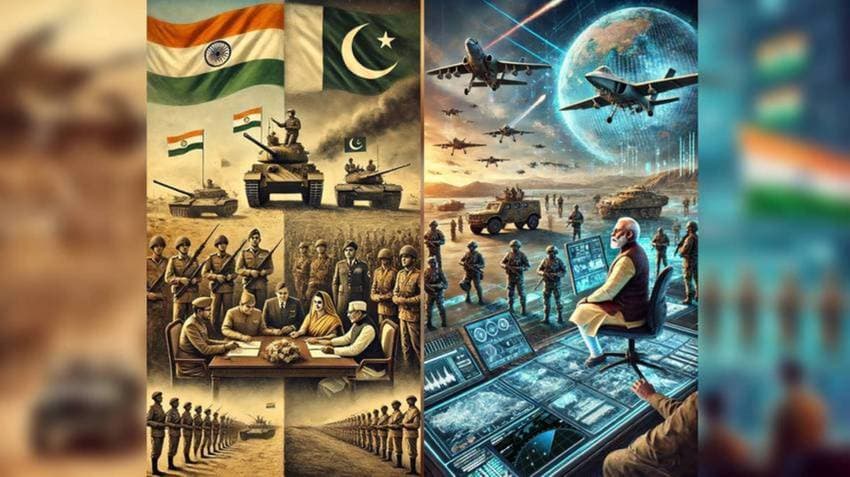
Key Points
India’s military strategy has evolved from full-scale wars to precision strikes, ensuring national security while maintaining economic stability.
Bhubaneswar, May 12: India’s approach to military conflicts has transformed significantly over the decades.
The 1971 Indo-Pak War, led by then Prime Minister Indira Gandhi, resulted in the creation of Bangladesh and marked one of the largest military surrenders since World War II. However, despite India’s military advantage, the Shimla Agreement of 1972 saw India returning 93,000 Pakistani PoWs and 15,000 sq km of captured territory, raising questions about lost leverage.
Fast forward to 2025, India’s precision strikes under Operation Sindoor showcased a modern military doctrine, targeting terror camps and Pakistani military installations without engaging in prolonged warfare. The ceasefire agreement was brokered only after India inflicted significant losses, forcing Pakistan’s military into panic mode, with reports suggesting nuclear readiness.
Unlike 1971, where India conceded strategic advantages, 2025’s approach focuses on economic dominance, strategic deterrence, and controlled military engagements. The Viksit Bharat 2047 initiative underscores India’s long-term vision, ensuring national security without compromising economic growth.
HISTORICAL CONTEXT: INDIRA GANDHI’S APPROACH IN 1971
The 1971 Indo-Pak war was a defining moment in South Asian history, leading to the creation of Bangladesh and marking one of the largest military surrenders since World War II.
India captured 93,000 Pakistani soldiers as Prisoners of War (PoW), yet returned them under the Shimla Agreement of 1972. While India adhered to diplomatic protocols, Pakistan failed to reciprocate, retaining 54 Indian soldiers, including high-ranking officers. Additionally, India returned 15,000 sq km of captured territory to Pakistan, a move aimed at fostering peace.
Critics argue that India could have leveraged its military advantage to resolve the Kashmir issue, reclaim Pakistan-occupied Jammu and Kashmir (PoJK), and support Balochistan’s independence, given Pakistan’s weakened state at the time.
INDIA’S RECENT MILITARY OPERATIONS UNDER MODI
Fast forward to 2025, India has demonstrated its military prowess through precision strikes targeting Pakistan’s strategic assets. In a series of operations, India reportedly:
- Bombed 11 Pakistani airbases, including Rawalpindi HQ, causing significant losses estimated at $10 billion+.
- Destroyed 9 terror camps, eliminating 100+ terrorists, including masterminds behind the Kandahar hijack and 26/11 Mumbai attacks.
- Neutralized half a dozen US and China-made fighter jets, along with hundreds of Turkish and Chinese drones deployed by Pakistan.
These actions have reshaped the India-Pakistan military equation, signaling India’s firm stance against terrorism and cross-border aggression. The Indian Air Force (IAF) has effectively countered Pakistan’s Chinese-built air defense systems, further exposing vulnerabilities in Pakistan’s military infrastructure.
Strategic Implications For India’s Future Defence Policies
India’s recent military operations highlight a shift towards proactive defence strategies, ensuring national security and regional stability. The destruction of terror camps and Pakistani military assets sends a strong message to adversaries, reinforcing India’s commitment to counter-terrorism.
While the Shimla Agreement was aimed at diplomatic resolution, India’s modern defence approach underscores the necessity of military deterrence in safeguarding national interests. The evolving geopolitical landscape suggests that India will continue to strengthen its defence capabilities, ensuring strategic dominance in South Asia.
COMPARING THE 1971 WAR AND OPERATION SINDOOR
The 1971 Indo-Pak War and Operation Sindoor are two significant military engagements involving India and Pakistan, but they differ vastly in their strategic objectives, geopolitical context, and execution.
1971 War: A Conventional Military Conflict
Non-Nuclear States: Both India and Pakistan were non-nuclear at the time, meaning there was no threat of mass destruction or economic collapse due to nuclear warfare.
Socialist India: India, under Prime Minister Indira Gandhi, followed a socialist economic model, with no major economic ambitions tied to the war.
Planned Over Nine Months: The war was strategically planned over nine months, with India supporting the Bangladeshi liberation movement.
Outcome: India successfully liberated Bangladesh, but did not leverage its military advantage in Western Pakistan, leading to territorial concessions under the Shimla Agreement.
Operation Sindoor: A Modern Precision Strike
Nuclear States in Conflict: India, a nuclear power, conducted precision strikes against another volatile nuclear state, Pakistan.
Rare Nuclear Conflict: In recent history, nuclear-armed neighbors have rarely engaged in direct military conflict, except Iran and Israel.
Targeted Terror Camps: The primary objective was to destroy terror camps in Pakistan and Pakistan-occupied Kashmir (PoK) without declaring war.
Retaliatory Strategy: India retaliated against Pakistani aggression, targeting 11 military installations, eliminating 100+ terrorists, and downing 6+ US and China-made fighter jets.
Key Takeaways
- The 1971 War was a full-scale conventional war, aimed at liberating Bangladesh.
- Operation Sindoor was a precision military operation, focused on counter-terrorism and strategic deterrence.
- The geopolitical stakes in Operation Sindoor were higher, given the nuclear capabilities of both nations.
- India’s approach in 2025 reflects a modern military doctrine, emphasising precision strikes and strategic retaliation.
INDIA’S STRATEGIC DECISION: CEASEFIRE vs PROLONGED CONFLICT
Why India Halted Military Operations and Agreed to a Ceasefire?
In 2025, military confrontations are not solely about territorial gains, but about economic stability, precision strikes, and global influence. Unlike 1971, when full-fledged warfare was a viable option, today's geopolitical landscape demands calculated actions that align with economic and strategic priorities.
Avoiding Economic Disruption: A prolonged war with Pakistan would derail India’s economic growth, disrupt Foreign Direct Investments (FDIs), and slow down job creation — negatively impacting the country’s development trajectory.
China’s Interest in India’s Instability: As global manufacturing shifts away from China, a prolonged conflict could prevent India from emerging as a key manufacturing hub, securing Beijing’s economic dominance.
Precision Strikes vs Long Military Engagements: Unlike traditional warfare, modern conflicts focus on precision military operations that weaken adversaries without engaging in prolonged war.
The Role of Pakistan, China, and the US Deep State
Pakistan, economically fragile and politically unstable, has nothing to lose from prolonged military engagements. However, China and the US Deep State have vested interests in India’s prolonged involvement:
- Pakistan serves as a front for major global powers to sell weapons and destabilize India.
- A long military conflict would weaken India’s global position, similar to how the West pushed Russia into a multi-year war with Ukraine.
Opposition’s Narrative and War Politics
Indian opposition parties, which remained passive after the 26/11 Mumbai attacks, are now pushing for war to:
- Disrupt the government's economic policies by forcing it into a long military conflict.
- Create public discontent if the government refuses to escalate the war, labeling it as weakness.
WHAT IS THE RIGHT APPROACH FOR INDIA?
India should take strategic lessons from China, which has:
- Avoided prolonged military conflicts since 1962 while maintaining global influence.
- Used aggressive posturing in the South China Sea and Indian Ocean to expand geopolitical control.
- Focused on becoming the world’s second-largest economy while preserving military dominance.
By maintaining economic strength, global influence, and precise military strategy, India can secure its future without falling into prolonged conflicts.
INDIA’S CEASEFIRE vs SHIMLA AGREEMENT: A STRATEGIC SHIFT IN WARFARE
India’s New Approach to Conflict Resolution with Pakistan
India has recently come to a mutual understanding with Pakistan: no direct military engagements will take place unless Pakistan initiates an attack or a terror strike.
Unlike the Shimla Agreement of 1972, which resulted in India returning captured territory without leveraging its position, the 2025 ceasefire follows a different path. India has halted direct confrontation, yet its efforts in Balochistan and Pakistan-occupied Jammu and Kashmir (PoJK) continue strategically.
This ceasefire was agreed upon only after India inflicted massive damage on Pakistan's military infrastructure. Reports indicate that the United States brokered the deal, as both China and the U.S. faced embarrassment over the loss of their fighter jets supplied to Pakistan.
Pakistan’s Nuclear Panic
With India’s precision strikes reaching dangerously close to Pakistan’s nuclear stockpile, reports suggest panic among Pakistani military leadership, forcing them to prepare for nuclear readiness.
Historically, nuclear weapons are a last resort, as seen in Russia’s ongoing war with Ukraine, where despite years of engagement, nuclear strikes have not been used.
Following the Pahalgam terror attack, Pakistan accelerated its nuclear tests, suggesting that its damaged defense infrastructure left it contemplating extreme measures. Despite knowing that any nuclear misadventure would trigger India’s complete retaliation, Pakistan’s instability forced global powers to step in and prevent escalation.
COMPARING THE SHIMLA AGREEMENT TO 2025’S CEASEFIRE
The Shimla Agreement (1972) stands in contrast to India’s current geopolitical stance:
1972: India had no nuclear threat but gave up leverage, returning 15,000 sq km of captured Pakistani land.
2025: India halted military engagement, but retains control over its strategic efforts in PoJK and Balochistan.
Did Indira Gandhi yield due to international pressure, political motives, or diplomatic strategy? The answer remains unclear until PM Modi speaks on this chapter of history.
INDIA’S LONG-TERM VISION: VIKSIT BHARAT 2047
India’s primary objective today is economic dominance and global leadership under the Viksit Bharat 2047 initiative. Meanwhile, Pakistan’s economic struggles continue, relying on billion-dollar loans to sustain its population’s basic needs.
As global rivals attempt to slow down India’s rise, China and competing economies will actively seek ways to divert India into prolonged conflicts.
WHAT IS THE RIGHT STRATEGY FOR INDIA?
- A Final Solution for Pakistan? – Yes, but wisely.
- Engage in War When Necessary – India must choose its battles carefully, ensuring conflicts serve long-term goals rather than entrapment.
- War Against China? – If necessary, India should prioritize engagements based on strategic outcomes rather than distractions.
- Imploding Pakistan Instead of Direct War – Instead of conventional warfare, India should continue economic, intelligence, and strategic operations that weaken Pakistan internally.
The world now knows that India’s military capability is sufficient to neutralise a nuclear-armed terror state if needed. The right geopolitical playbook ensures India remains firm, strategic, and economically dominant while shaping the future of global power structures.
read more National news
