



Delhi AQI improves to 239 after overnight spike to 393, haze continues to blanket capital
·1 hour ago·3 min read
Key Points
Delhi recorded an AQI of 239 at 8:40 a.m. on Friday, marking an improvement from the overnight peak of 393. Despite the decline, haze continued to blanket the capital, with several monitoring stations reporting poor air quality and elevated particulate pollution levels.
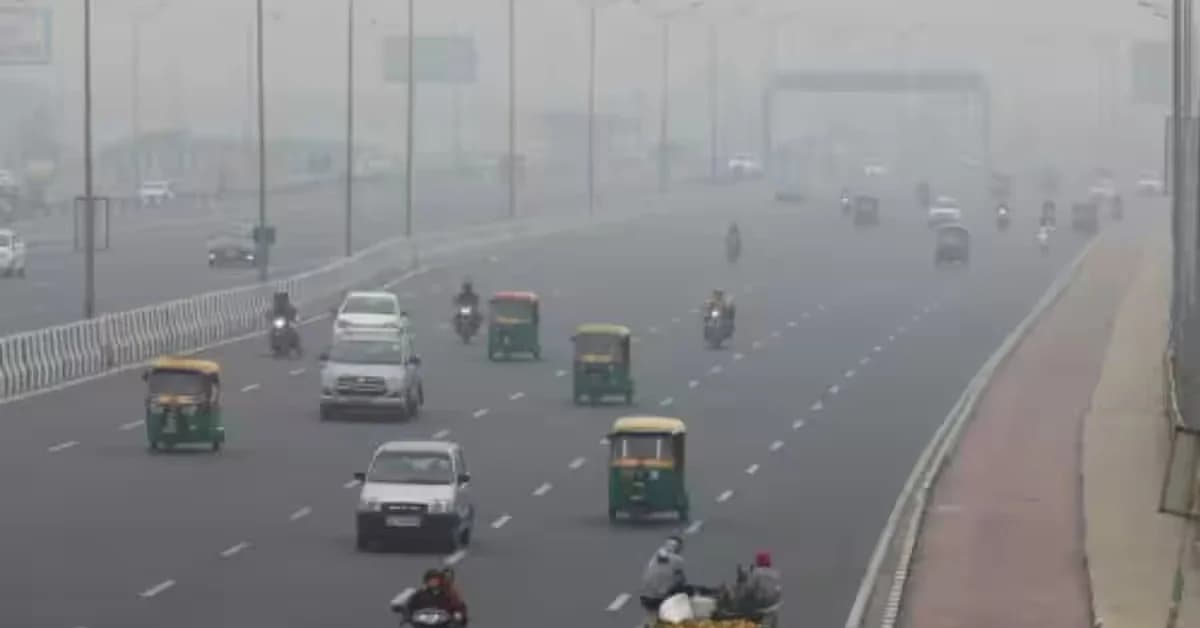
New Delhi, Nov 27: A layer of haze continued to envelop the national capital on Friday morning, with Delhi recording an Air Quality Index (AQI) of 239 at 8:40 a.m., indicating a significant improvement from the severe pollution levels witnessed overnight.
According to monitoring data, the AQI had reached 393 at around 2 a.m. on Friday before declining steadily in the early morning hours. At 6:11 a.m., the AQI stood at 273, nearly 120 points below its overnight peak.
Several monitoring stations across the city continued to report poor air quality. Among them, Ghoga recorded an AQI of 289, while CRRI Mathura Road and North Campus registered 292 each. Other locations with elevated readings included ITO (285), Sirifort (280), Wazirpur (273), Bawana (266), Punjabi Bagh (260), Burari (259), Chandni Chowk (259), and Narela (239).
DTU recorded an AQI of 304, while Rohini registered 233 and Anand Vihar 239. Other monitoring stations included Karala (244), Nangloi (238), Tikri Kalan (164), Chhawla (243), NIH Narela (253), Badarpur (218), IGI Airport (T3) (289), Burari Crossing (287), and Alipur (239).

📱 Get Argus News App
✨📰 60 Word News🎬 Argus Podcast📺 Live TV and Breaking News🔔 Free Notification Alerts
Download Free:
Delhi's air quality had improved considerably on Thursday afternoon, with the AQI dropping to 121 at 5:01 p.m., the lowest reading recorded during the preceding 24 hours. However, pollution levels began rising again in the evening, crossing the 300 mark around 8 p.m. before reaching 393 shortly after 2 a.m. on Friday. The readings remained above 300 until after 5 a.m., according to AQI.in.
Data for the seven-day period ending November 26 showed that Delhi's AQI peaked at 465 at 6 a.m. on November 20. The lowest reading during this period was 170, recorded at noon on November 26. Early morning pollution levels remained particularly high on several days, frequently ranging between 350 and 450.
At 6:11 a.m. on Friday, the PM10 concentration stood at 274 micrograms per cubic metre, against the World Health Organization's recommended guideline of 45 micrograms per cubic metre.
Meanwhile, a report stated that between October 1 and November 25, Delhi ranked as the most polluted city among the 10 major NCR cities in terms of both PM2.5 and PM10 concentrations. During the corresponding period last year, the national capital had ranked third and fourth, respectively.
(IANS)
Related Topics
Explore more stories