



Politics / Congress Draws Blank in MLC Elections, Raising Questions Over Rahul's Leadership Pitch
·59 mins ago·4 min read
Key Points
Congress failed to win a single seat in the biennial MLC elections across four states, raising doubts about its organisational strength and efforts to project Rahul Gandhi as the face of a united Opposition. The results highlighted the continuing influence of regional parties.
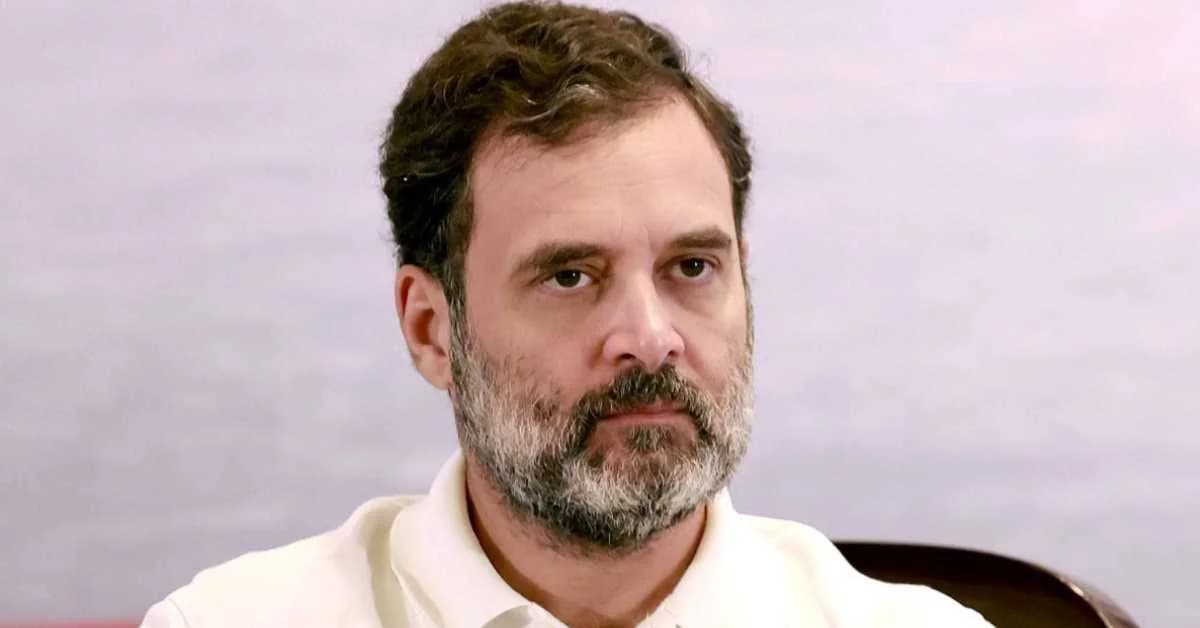
New Delhi, Oct 28: The Congress party's efforts to project Rahul Gandhi as the principal face of a united Opposition bloc have suffered a setback after the party failed to secure a single seat in the biennial Legislative Council (MLC) elections held across Bihar, Karnataka, Maharashtra and Uttar Pradesh. The results, though emerging from limited-franchise constituencies of graduates and teachers, have raised fresh questions about the Congress' organisational reach and its claim to leadership within the anti-BJP camp.
Though the general public as a whole is not directly involved in choosing MLC representatives, specific sections of society do share their preferences.
These elections were limited franchise contests involving graduates and teachers rather than the broader electorate, yet are often viewed as indicators of organisational strength, cadre mobilisation and political influence among politically aware sections. And on all three counts, the Congress has little reason to celebrate.
The outcome of achieving a zero across all 28 seats contested would thus serve as a rough bump on its road to political recovery, with warning bells sounding particularly loudly in Karnataka where it is in power.

📱 Get Argus News App
✨📰 60 Word News🎬 Argus Podcast📺 Live TV and Breaking News🔔 Free Notification Alerts
Download Free:
The Bharatiya Janata Party (BJP)-led National Democratic Alliance (NDA) in Karnataka, with Janata Dal (Secular) a constituent, secured a clear 4-0 sweep in the state, leaving the ruling Congress in a quandary.
The BJP retained the North-East Teachers’, South-East Graduates’ and West Graduates’ constituencies, while the JD(S) captured the Bengaluru Teachers' seat from the Congress.
This outcome is especially significant since the party had hoped to project its state government as a model for a broader national resurgence. Instead, the results suggest that even where Congress holds power, regional dynamics and opposition alliances remain capable of limiting its influence. JD(S), though diminished in Assembly politics, demonstrated that regional players continue to possess pockets of durable support.
Results elsewhere also delivered an uncomfortable political message for the Congress. Far from signalling a revival of the party's mass appeal, the elections have underlined its continued inability to build up anti-BJP sentiment or establish itself as the undisputed leader of a united Opposition.
In Uttar Pradesh, the principal contest was between the BJP and the Samajwadi Party (SP), where the former secured victories in multiple constituencies, while the latter won key teachers’ seats and remained the primary Opposition force.
Bihar offered a similar sobering picture, with the Congress suffering a symbolic defeat in Darbhanga Teachers' constituency, where Jan Suraaj Party (JSP) candidate Suresh Prasad Rai defeated sitting Congress MLC Madan Mohan Jha.
The state’s overall results reflected a fragmented Opposition landscape, with the BJP and its ally Janata Dal (United) winning several seats, the RJD registering a victory, JSP opening its account, and independents securing wins.
Thus, Tejashwi Yadav's RJD continues to command the central anti-BJP role in the state, while Prashant Kishor’s JSP is seen attempting to build an alternative space, and Congress increasingly appearing squeezed between stronger regional actors.
In Maharashtra, counting trends indicated a mixed battle between the ruling Mahayuti alliance and the opposition Maha Vikas Aghadi (MVA), with candidates from both camps leading in different constituencies.
Yet here too, the dominant opposition faces were regional leaders from the Shiv Sena (UBT) and NCP (Sharad Pawar) camps rather than the Congress. The results reinforce a reality that has come to define Opposition politics of late: regional satraps continue to carry greater electoral weight than the grand old party of India in most states.
Also Read: BJP to Launch Month-Long Nationwide Padyatras to Counter INDIA Bloc’s Nov. 1 Rally
Though MLC results do not determine future Assembly or Lok Sabha outcomes, they do reflect the current balance of political influence. And that balance again suggests that India's opposition space remains decentralised, state-driven and heavily dependent on regional leaders.
For the BJP, these elections provided evidence that Congress’ national narrative is yet to translate into strength on the ground.
For the Opposition, the Congress may still be an essential component of any anti-BJP coalition, but these elections indicate Rahul Gandhi is far from becoming the bloc’s unquestioned leader.
(With inputs from IANS)
Related Topics
Explore more stories