



Delhi AQI / AQI rises to 330, Jahangirpuri records severe 451 ahead of Diwali
·1 hour ago·3 min read
Key Points
Delhi's air pollution has worsened ahead of Diwali, with the average AQI reaching 330 on Tuesday morning. Jahangirpuri recorded the highest AQI of 451, while eight monitoring stations reported severe pollution levels. Authorities have implemented GRAP Stage 2 measures across Delhi-NCR to control rising pollution.
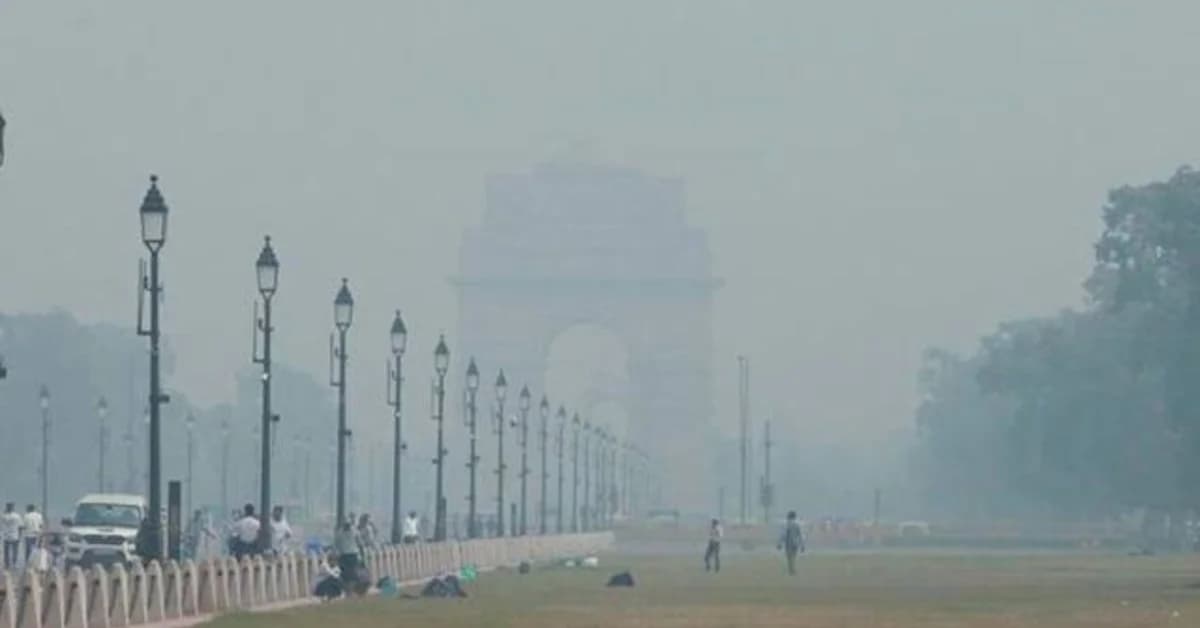
New Delhi, Nov 3: A thick layer of smog enveloped the national capital on Tuesday morning, with air quality deteriorating to the ‘very poor’ category just days ahead of Diwali. Jahangirpuri recorded the highest Air Quality Index (AQI) at 451, placing it in the ‘severe’ category.
Delhi's average AQI stood at 330 at 8 a.m., according to data from the Central Pollution Control Board (CPCB). As many as eight monitoring stations recorded readings above 400, indicating ‘severe’ air quality.
According to CPCB, Mundka recorded an AQI of 397, Tikri Kalan 275, NSUT Jaffarpur 324, North Campus, Delhi University 384, Chandni Chowk 354, Pusa 387, DTU 409, Rohini 431, Bawana 409, Karala 299, Burari Crossing 383, Major Dhyan Chand National Stadium 350, Commonwealth Sports Complex 349, NSIT Dwarka 270, Punjabi Bagh 424 and Jahangirpuri 451.
According to CPCB classifications, an AQI between zero and 50 is considered ‘good’, 51-100 ‘satisfactory’, 101-200 ‘moderate’, 201-300 ‘poor’, 301-400 ‘very poor’ and 401-500 ‘severe’.

📱 Get Argus News App
✨📰 60 Word News🎬 Argus Podcast📺 Live TV and Breaking News🔔 Free Notification Alerts
Download Free:
The impact of the deteriorating air quality was also visible in neighbouring areas, with high-rise buildings in Noida and Gurugram barely visible through the thick haze. With Diwali less than a week away, the worsening pollution levels have raised concerns about a further decline in air quality across the Delhi-NCR region.
The deterioration comes after Delhi recorded its first ‘very poor’ AQI reading of the season on Monday. The index stood at 312 at 9 a.m. before rising to 324 by 4 p.m. and further increasing to 331 by Tuesday morning, according to the Commission for Air Quality Management (CAQM).
The CAQM on Monday invoked Stage 2 measures under the GRAP across Delhi-NCR after the city's air quality slipped into the ‘very poor’ category.
Under GRAP Stage 2, authorities will step up efforts to control dust pollution and promote public transport. The measures include regular mechanical sweeping of roads, water sprinkling, deployment of anti-smog guns and increased parking charges to discourage the use of private vehicles.
Also Read: Delhi wakes up to 'Very Poor' air quality, AQI at 314
Earlier, Stage 1 measures under GRAP were implemented across Delhi-NCR on October 21 after the air quality deteriorated to the ‘poor’ category.
Meanwhile, the Supreme Court has permitted the use of green firecrackers in Delhi-NCR on November 7 and 8, between 6 a.m. and 7 a.m., and 8 p.m. and 10 p.m., ahead of Diwali on November 8. A complete ban on firecrackers will come into effect again from November 9.
(IANS)
Related Topics
Explore more stories