



24 hours of hope ends in horror: Delhi open manhole claims 4-year-old's life
Key Points
A four-year-old boy's death after falling into an open Delhi sewer has exposed alleged civic negligence, triggering grief, outrage and a blame game as authorities investigate the fatal lapse.
New Delhi, Nov 12: A frantic 24-hour search involving the NDRF, police, fire services and other agencies ended in heartbreak on Wednesday when a four-year-old boy who had fallen into an open sewer line in Outer Delhi was found dead at a water treatment plant nearly 7 km from where he went missing.
For Shahjahan (35), the loss is almost impossible to comprehend. Sitting on a steel bench at Sanjay Gandhi Memorial Hospital, she breaks down repeatedly while calling out her son Imran's name.
Exhausted after more than a day of waiting and hoping, she alternates between silence, tears and anguished cries. Beside her sits her six-year-old son, helplessly watching his mother grieve.
Hours earlier, Shahjahan had been shown the remains of four-year-old Imran, who slipped into an open manhole on Tuesday afternoon. His body parts were recovered on Wednesday from a water treatment facility in Nilothi.

📱 Get Argus News App
✨Also read: Kedarnath Dham doors closed for winter: over 19.20 lakh devotees visit shrine this year
Investigators suspect the child's body was torn apart by large rotating machinery used to filter and process wastewater at the sewage treatment plant through which the sewer line passes.
The incident occurred when the family visited Das Garden, a popular recreational spot in Baprola. Imran's father, Khurshid Alam, a construction worker, often brought his wife and two sons to the park while working nearby.
Located amid a neighbourhood of ageing buildings inhabited largely by daily-wage workers, the park is one of the few open spaces where local children can play. "I work as a labourer nearby. He wanted to come to the park, so I brought my family along and left the children with their mother. They would have gone home by evening," Alam said.
According to the family, the accident happened when Imran stepped away to relieve himself. Das Garden and a barren plot of land lie on opposite sides of a service road. The plot, under which the Najafgarh drain runs, is overgrown with shrubs and partially flooded with sewage water. It is enclosed by a boundary wall, but a section of the wall is missing, leaving easy access to the site.
Alam said his wife and son entered the vacant plot through the opening. About 10 metres inside stood an uncovered manhole nearly 50 feet deep.
"He went towards the manhole to relieve himself. The hole was covered with some plastic sheet. He stepped on it and slipped inside. His brother screamed. That's when I came running," Alam said.
The manhole is connected to a sewer line running parallel to the Najafgarh drain. While the drain eventually empties into the Yamuna, the sewer line stretches around 7 km through areas including Ranhola before reaching a water treatment plant in Nilothi, Nihal Vihar.
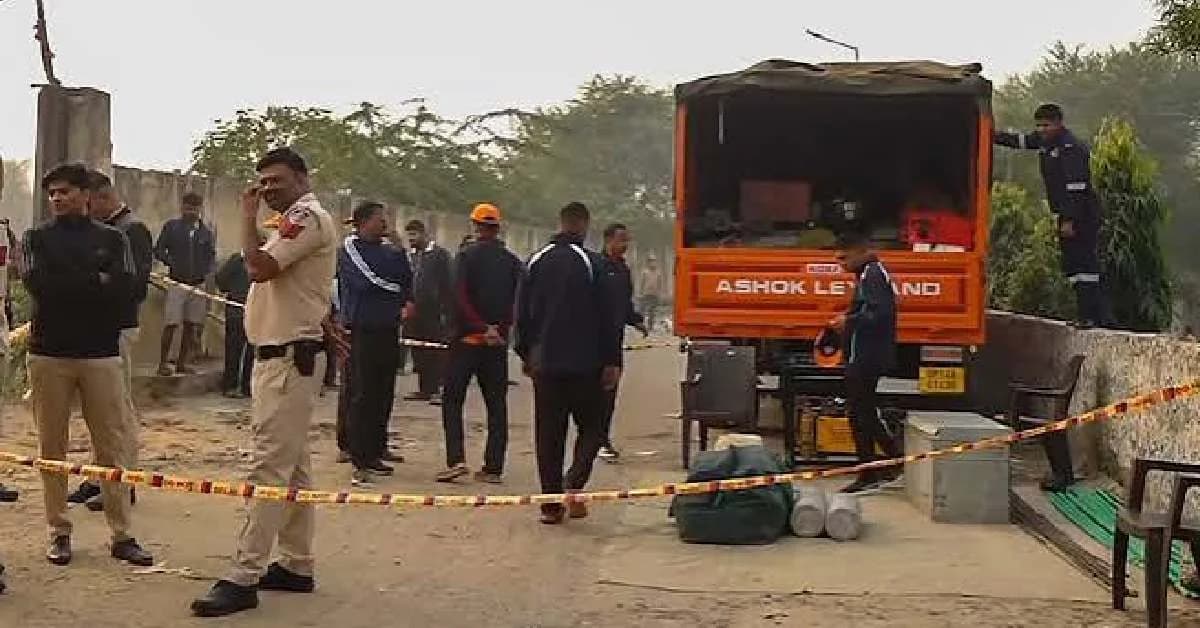
At 3.21 pm on Tuesday, residents alerted the police. Teams from Ranhola police station rushed to the spot and launched a search operation. As hours passed without success, personnel from the National Disaster Response Force (NDRF), Delhi Fire Services and the Border Security Force (BSF) joined the effort. The operation continued late into the night before resuming at daybreak on Wednesday.
Rescue teams searched through the sewer network using floodlights, ropes and specialised equipment in a desperate attempt to locate the child. At around 11 am on Wednesday, Imran's body parts were discovered near the end of the sewer line at the water treatment plant.
The tragedy has triggered a blame game between authorities.
Residents claim the manhole had remained open for more than six months despite repeated complaints. "We complained to the authorities over five months ago to close the manhole. But no action was taken," said a resident of Das Colony.
Officials of the Delhi Jal Board (DJB) said an inspection found that the iron cover of the sewer manhole had been damaged, allegedly by "miscreants or anti-social elements". They maintained that all manhole covers along the Interceptor Sewer Line are normally secured using nuts and bolts and cannot be removed without specialised tools.
The DJB also claimed that police had previously restricted access to the stretch, suggesting that entry was not permitted without prior authorisation. However, Delhi Police denied imposing any such restrictions. Police sources said stray animals frequently entered the premises because a section of the boundary wall lacked a gate.
A government official said a detailed inquiry would be conducted to determine how the fatal lapse occurred and who was responsible for the damaged manhole cover and inadequate fencing.
As officials trade responsibility, Imran's family is left grappling with an unimaginable loss.
His uncle, Pappu, remembered the child's love for the park. "He just wanted to keep coming back. Yesterday also, he came… He loved to play here."
For Khurshid Alam, the tragedy has left a wound that words
cannot heal. "They brought him wrapped like a bundle. Hands, legs,
everything separated. Now, I have to go and collect the pieces tomorrow," he
said.
Related Topics
Explore more stories