



Geopolitics / Rubio Shields Trump’s Russia Waiver, Puts India at Centre of US Strategy
Key Points
Marco Rubio defends Trump’s 60‑day Russia sanctions waiver, citing India’s energy reliance and global conflicts, stressing the need for time to balance sanctions, tariffs, and economic pressures amid volatile markets.
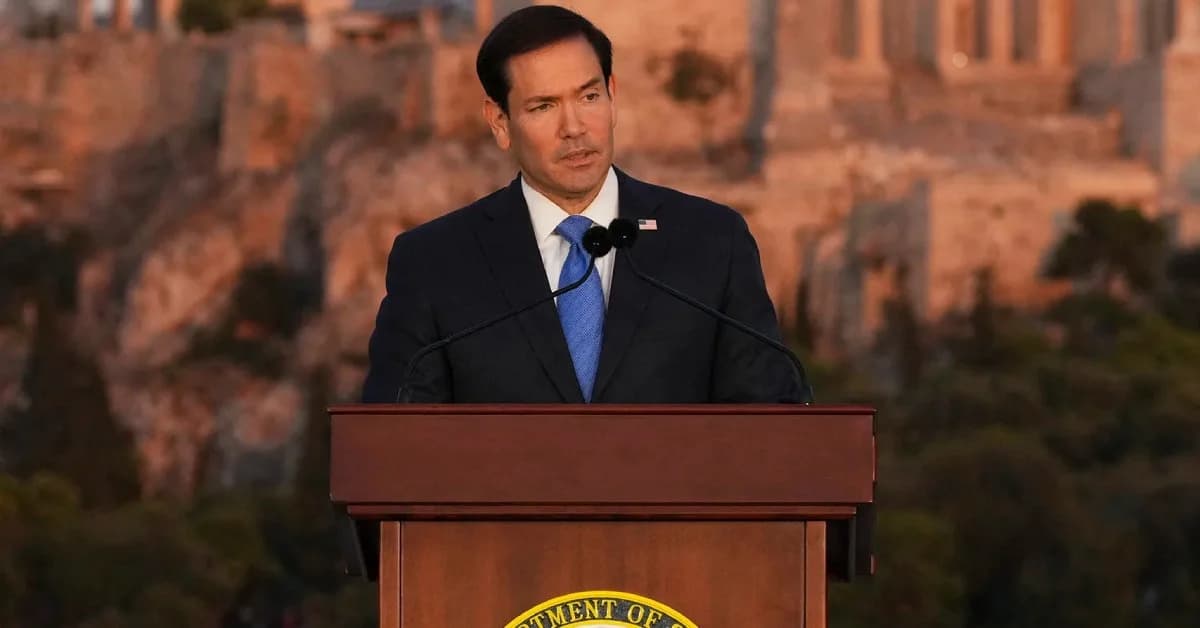
Washington, Oct 18: At a time when Washington faces mounting global energy turbulence, US Secretary of State Marco Rubio stepped forward to defend President Donald Trump’s decision to grant a 60‑day waiver on Russia‑related sanctions.
Framing the move as a pragmatic pause rather than a concession, Rubio emphasized that the administration needed breathing space to weigh the economic consequences of enforcing both tariffs and sanctions amid overlapping crises in Ukraine and the Middle East.
His remarks came in response to criticism from Republican Senator Ted Cruz, who labelled the waiver a mistake that would benefit Russian President Vladimir Putin. Rubio countered by highlighting the complexity of the sanctions regime.
Also read: Teen Assailant Arrested after Failed Mass Shooting at US Hindu Temple

📱 Get Argus News App
✨“Well, there are other countries – the problem is these sanctions were not just sanctions on Russia. They include tariffs on a number of countries – India, for example, and others,” he said.
He explained that Trump wanted to use the 60‑day period to examine the consequences of enforcing both sanctions and tariffs simultaneously.
Rubio singled out India as a key example, acknowledging its efforts to diversify energy purchases while noting the difficulty of abruptly shifting away from Russian supplies.
“And then you’ve got countries like India, for example, that have voluntarily diversified their energy portfolio but are still getting a substantial amount of energy from Russia because it’s hard to pivot from one day to the next, but they’re also an important ally and partner of the United States,” he said.
The Secretary of State pointed to several developments affecting international energy markets, including conflict involving Iran, disruptions around the Strait of Hormuz, Houthi attacks on Saudi Arabia, and damage to infrastructure during the Russia‑Ukraine war.
He argued these overlapping crises were driving up global prices and complicating decisions about sanctions enforcement. “So, the President – we need that period of time to sort of study all this and figure out what the right combination is,” Rubio explained.
Asked whether the waiver and a separate arrangement involving Russian diesel amounted to concessions to Putin, Rubio rejected the suggestion.
“Well, that diesel was going to be sold one way or the other,” he said, adding that restricting American access would not prevent Russian fuel from reaching international markets.
He recalled that the United States had previously issued a 60‑day waiver involving Russian oil when shipping through the Strait of Hormuz faced difficulties.
Rubio warned that overlapping conflicts were creating economic pressures far beyond the countries directly involved. “So yeah, these conflicts around the world are starting to crash into each other, and they’re having an impact not just on global oil and diesel prices, but on economics,” he said.
He acknowledged that Americans were paying higher energy prices but suggested that other nations faced even more severe challenges.
India, meanwhile, has maintained that its energy procurement decisions are guided by national requirements, affordability, and supply security.
Russian crude became a significant part of India’s import basket after global energy markets were disrupted by Russia’s invasion of Ukraine in February 2022.
(IANS)