



West Asia Conflict / Donald Trump Reviews Iran Proposal, Warns of Possible Strikes amid Strait of Hormuz Standoff
Key Points
Trump reviews Iran’s 14‑point proposal while warning
military action remains possible. Meanwhile, Iran asserts full control over the
Strait of Hormuz, escalating tensions and reshaping Gulf geopolitics amid
fragile diplomacy.
Washington, May 3: US President Donald Trump has confirmed that he is reviewing a new proposal from Iran aimed at easing hostilities, while simultaneously warning that military options remain on the table should Tehran act against American interests.
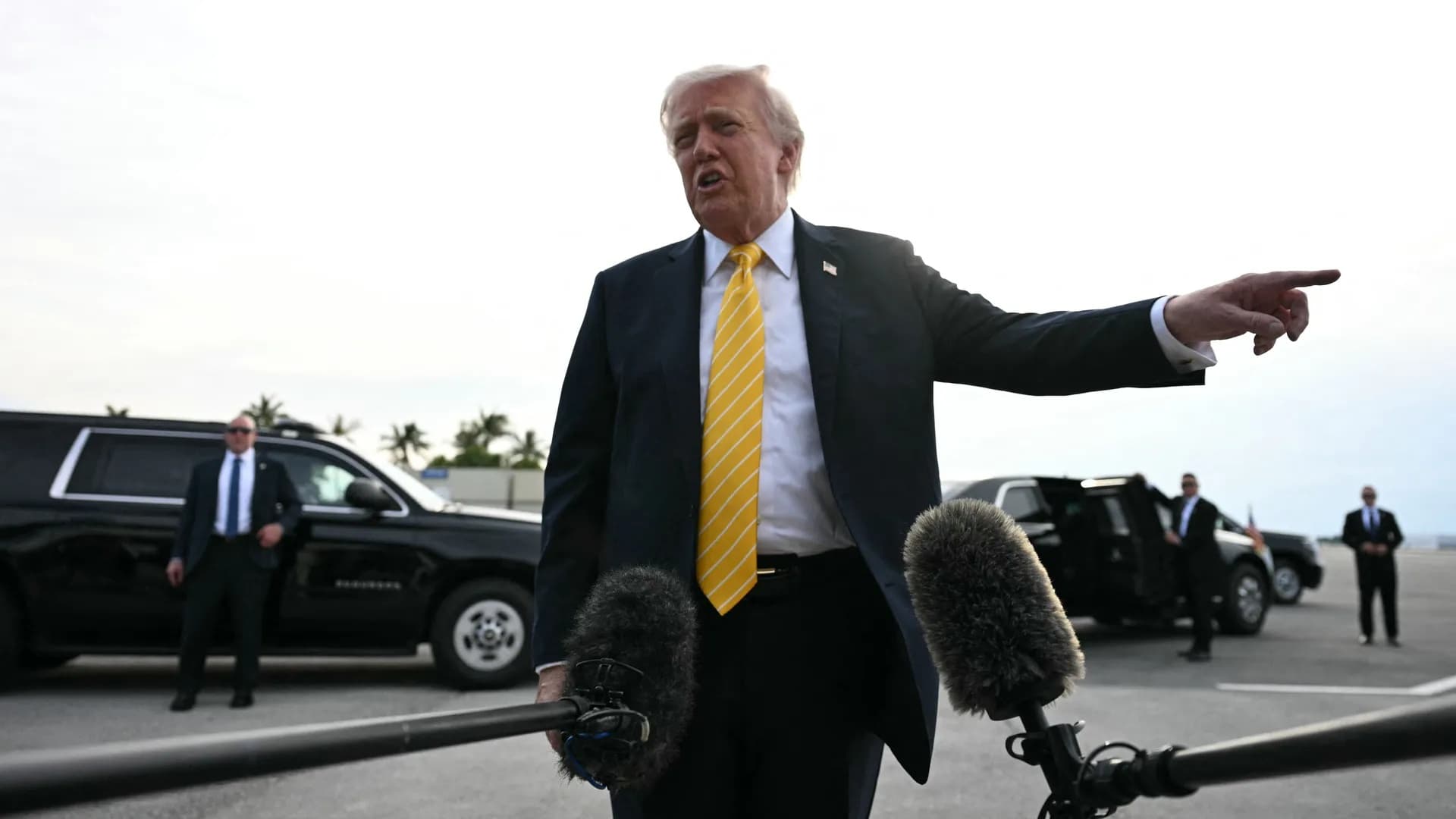
His remarks, delivered to reporters before boarding a flight from Palm Beach to Miami, underscore Washington’s dual-track approach of pressure and diplomacy at a time of heightened tensions in the Persian Gulf.
“They told me about the concept of the deal. They’re going to give me the exact wording now,” Trump said, noting that he is awaiting the final draft before making any decision.
He added that Iran appears eager to negotiate, describing the country as “decimated” and struggling internally. “They wanna make a deal, they’re having a hard time figuring out who their leader is,” he remarked.

📱 Get Argus News App
✨Also read: Pentagon Plans to Withdraw 5,000 US Troops from Germany
Trump confirmed that the proposal reportedly contains 14 points, though he declined to outline specific conditions. He did, however, signal openness to eliminating what he estimated as the remaining 15 per cent of Iran’s missile capability. “I’d like to eliminate it. Yeah. I’d like to. It’d be a start,” he said.
At the same time, Trump cautioned that military action remains possible. “If they misbehave, if they do something bad… it’s a possibility that could happen. Certainly,” he said. He also defended ongoing US enforcement measures in the region, describing them as stable and uncontested: “It’s a very friendly blockade. Nobody’s even challenging it.”
Separately, Trump announced plans to further reduce US troop levels in Germany, cutting beyond the previously stated figure of 5,000.
He also criticized congressional oversight of military actions, arguing that it undermines America’s negotiating leverage. “It’s hurting our negotiating ability, which is infinite right now,” he said.
On his Truth Social platform, Trump struck a sharper tone, writing: “I will soon be reviewing the plan that Iran has just sent to us, but can’t imagine that it would be acceptable in that they have not yet paid a big enough price for what they have done to Humanity, and the World, over the last 47 years.”
Iran’s Countermove: Control Over Strait of Hormuz
While Washington weighs Tehran’s proposal, Iran’s military leadership has made clear that it is asserting full control over the Strait of Hormuz, one of the world’s most critical maritime chokepoints. Army spokesman Mohammad Akraminia declared that no vessel — whether friend or foe — can transit the strait without Iran’s explicit permission.
“Controlling the Strait of Hormuz is an inherent right of Iran, of which the country had not made use for years,” Akraminia said in remarks broadcast by Iranian media. He emphasized that both the Islamic Revolution Guard Corps in the west and the national army in the east are jointly enforcing this authority.
Iran’s tightening grip began on February 28, when it barred safe passage to vessels affiliated with Israel and the United States following joint strikes on Iranian territory. The move has raised concerns about global energy security, as the strait is a vital artery for oil shipments.
Iran’s Supreme Leader Mojtaba Khamenei reinforced this stance, declaring that a “new chapter” is being drawn in the Persian Gulf. He announced plans for a fresh “legal framework” to govern the strait, promising progress and comfort for regional nations. Khamenei envisioned a future for the Gulf “free of America,” devoted to peace, prosperity, and regional independence.
A Fragile Balance
As both sides maneuver, the world watches closely. The
stakes are immense: the outcome could determine not only the trajectory of
US-Iran relations but also the stability of global energy markets and the
broader security architecture of the Middle East.
Related Topics
Explore more stories