



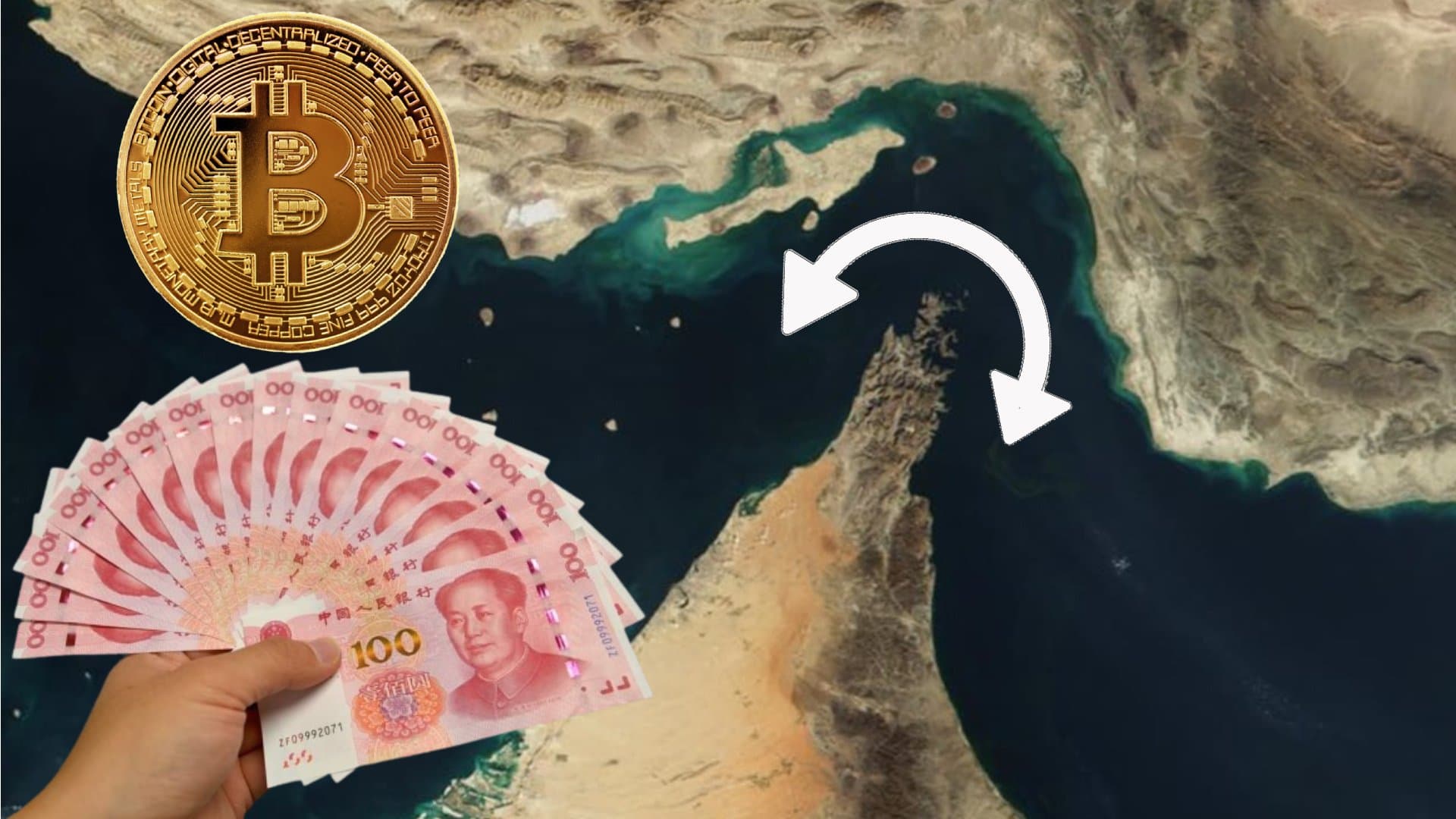
West Asia Conflict / Bitcoin, Chinese Yuan to Replace Dollar! Iran Seeks New Toll System for Strait of Hormuz Passage
Key Points
Iran’s new toll system in the Strait of Hormuz demands crypto or yuan payments, disrupting global trade, raising costs, and complicating ceasefire negotiations with the US and Gulf producers.
New Delhi, Apr 9: A controversial system has been introduced by the Islamic Revolutionary Guard Corps (IRGC) of Iran for vessels seeking passage through the Strait of Hormuz during the two‑week ceasefire with the United States.
According to reports from The Wall Street Journal and The Financial Times, ships are being asked to pre‑arrange transit approvals, submit cargo details in advance, and pay tolls in either cryptocurrency or Chinese yuan. Crews have even reported radio broadcasts warning that vessels without authorization risk being targeted.
Iran’s Demands:
- Provide cargo and vessel information via email
- Transit clearance to be processed by Iranian authorities
- Transit fees to be settled beforehand in cryptocurrency or Chinese yuan
- Ships required to navigate the northern route close to Iran’s shoreline, between Qeshm and Larak
- Preferential passage for aligned cargo, with stricter scrutiny for others
Industry representatives suggest tariffs could reach $1 per barrel for laden tankers, while empty ships may pass freely. For supertankers, bills could run into millions depending on size and cargo.

📱 Get Argus News App
✨Also read: Iran Closes Strait of Hormuz again afterAttack on Lebanon
Rationale for Using Crypto and Chinese Yuan
- Dollar transactions nearly impossible due to heavy US and European sanctions on Iran.
- Cryptocurrency offers anonymity and difficulty of tracing
- Chinese yuan settlements bypass Western banking systems
Regional officials say yuan collections have already begun, raising concerns among Gulf producers about shifting oil trade influence away from Western financial channels.
Traffic Collapse
Shipping activity has plummeted. Before the conflict, about 135 vessels transited daily; now only 10-15 pass case by case. Roughly 300-400 tankers are waiting in the Gulf, turning it into what executives describe as a “car park.” Seaborne crude and LNG flows — once 38% and 19% of global trade respectively — are severely disrupted.
Tensions: Legal & Geopolitical
International law permits tolls in artificial canals like Suez or Panama but forbids charges in natural straits such as Hormuz. Gulf nations argue Iran’s plan breaches navigation freedoms under the UN Convention. Oman, opposite Iran across the channel, has rejected fee‑sharing proposals, according to mediators cited by the Wall Street Journal.
Iran’s Leverage
Analysts argue that Iran has shifted its wartime dominance into peacetime leverage. By controlling vessel movement during the ceasefire, Tehran maintains steady pressure on global markets without direct conflict. The foreign minister confirmed armed forces will oversee transit, a declaration echoed by US officials to emphasize Hormuz’s pivotal role in negotiations.
Market Disruptions
- Disruption extends beyond crude oil exports
- Fertilizers, petrochemicals, and helium for semiconductor production also affected
- Food shipments through Hormuz disrupted
- Freight insurance premiums rising sharply
- Food prices already reacting to delays
- Traders warn approval system too slow to restore normal flows even if ceasefire holds
Peace Talks Complicated
The US insists on a fully open strait, while Gulf producers demand unimpeded exports. Iran, however, seeks monitoring power and revenue.
This clash now sits at the heart of truce negotiations.
Maritime risk advisers caution that under the current regime, there is no
practical way to clear the vessel backlog within two weeks, making the Strait
of Hormuz a flashpoint for both global trade and diplomacy.
Related Topics
Explore more stories