



Internet Infrastructure / Beneath the Waves: How Middle East Conflict Could Slow India’s Internet
·6 months ago·2 min read
Key Points
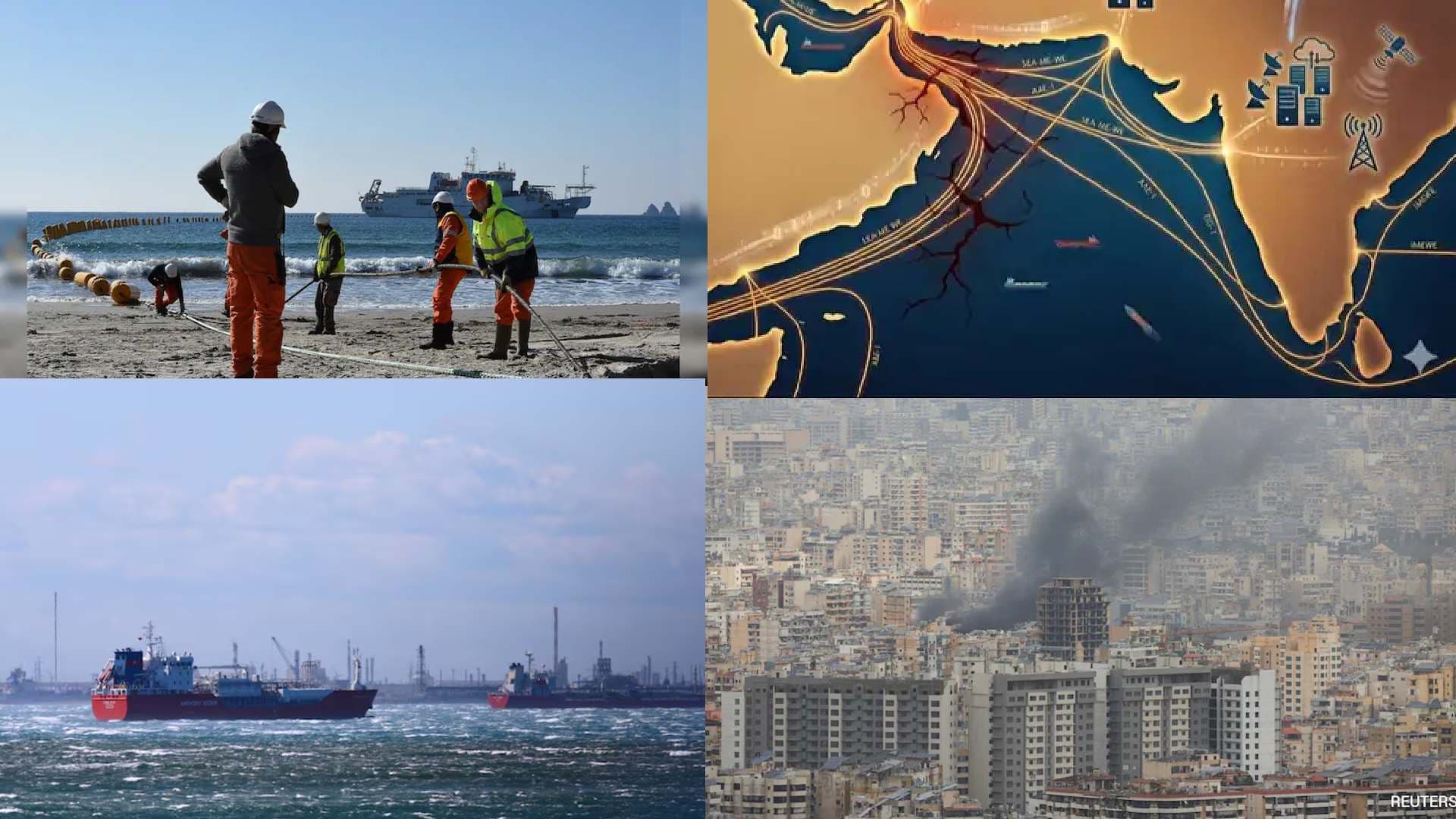
As the US-Israeli war against Iran intensifies, concerns are rising over undersea fibre-optic cables in the Red Sea and Strait of Hormuz. These cables carry 99% of global internet traffic, and India is particularly vulnerable, with 60% of its connectivity routed through the Gulf. Any disruption could slow speeds, delay financial transactions,
New Delhi, Apr 2: The escalating conflict in the Middle East has sparked fears of an invisible but critical threat—damage to undersea fibre-optic cables that power the world’s internet. As the US-Israeli war against Iran unfolds, attention has turned to the Strait of Hormuz and the Red Sea, where these submarine cables form the backbone of global connectivity.
According to the International Telecommunication Union, nearly 99% of international internet traffic flows through submarine cables. While Iran has not directly threatened this infrastructure, concerns are mounting as Iran-backed Houthis have previously warned of cutting cables in the Red Sea. With around 17 cables passing through the region, each transmitting about 100 gigabytes of data, the stakes are high.
India’s dependency on these routes makes the situation even more pressing. Roughly 60% of India’s internet traffic travels from Mumbai through the Gulf to Europe, while the rest is routed eastward via Chennai, Singapore, and the Pacific. This leaves the majority of India’s digital network exposed to geopolitical tensions. Past incidents of cable cuts in the Red Sea already highlight the vulnerability, but the current war has amplified risks.
Read More: Iran Will Be Hot "Extremely Hard" Over Next Two To Three Weeks: Trump
Experts caution that damage to cables would not cause a total blackout, since internet traffic can be rerouted through other paths. However, rerouting increases congestion, leading to slower speeds, buffering, and delays in financial transactions. Enterprises such as global capability centres could face outages or reduced efficiency.
According to the International Telecommunication Union, nearly 99% of international internet traffic flows through submarine cables. While Iran has not directly threatened this infrastructure, concerns are mounting as Iran-backed Houthis have previously warned of cutting cables in the Red Sea. With around 17 cables passing through the region, each transmitting about 100 gigabytes of data, the stakes are high.
India’s dependency on these routes makes the situation even more pressing. Roughly 60% of India’s internet traffic travels from Mumbai through the Gulf to Europe, while the rest is routed eastward via Chennai, Singapore, and the Pacific. This leaves the majority of India’s digital network exposed to geopolitical tensions. Past incidents of cable cuts in the Red Sea already highlight the vulnerability, but the current war has amplified risks.
Read More: Iran Will Be Hot "Extremely Hard" Over Next Two To Three Weeks: Trump
Experts caution that damage to cables would not cause a total blackout, since internet traffic can be rerouted through other paths. However, rerouting increases congestion, leading to slower speeds, buffering, and delays in financial transactions. Enterprises such as global capability centres could face outages or reduced efficiency.
Experts explain that, "If this choking continues and traffic grows, the choke effect will be much more visible". Repairing submarine cables can take months, even up to a year, making disruptions costly for telecom operators and internet companies. For India, the war’s impact beneath the sea could ripple across its digital economy, underscoring how geopolitical conflicts now extend into the hidden arteries of global connectivity.

📱 Get Argus News App
✨📰 60 Word News🎬 Argus Podcast📺 Live TV and Breaking News🔔 Free Notification Alerts
Download Free:
Related Topics
Explore more stories