



Science / Indian Scientists Redefine Bacterial Transcription, Opening New Pathways Against TB
·6 months ago·2 min read
Key Points
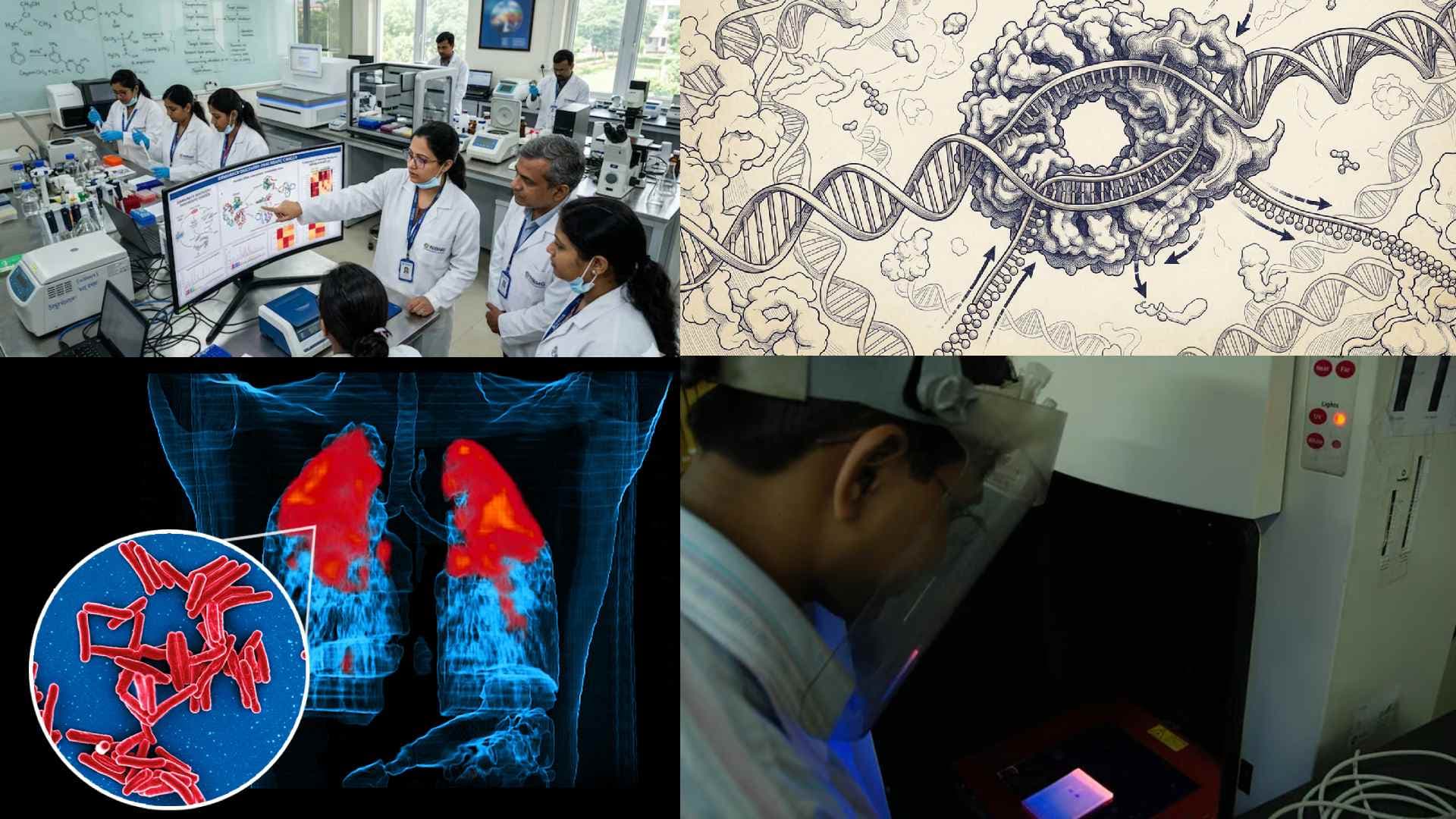
Indian scientists have challenged a long-standing model of bacterial transcription, showing that sigma factors in TB bacteria behave differently than previously believed. This breakthrough reveals how Mycobacterium tuberculosis sustains stress-response genes, offering new hope for combating drug-resistant strains.
New Delhi, April 2: Tuberculosis (TB), one of the world’s deadliest infectious diseases, may soon face a new line of attack thanks to groundbreaking research by Indian scientists. A team from the Bose Institute, Kolkata, has overturned a decades-old assumption about how bacteria regulate gene expression, offering fresh insights that could lead to innovative strategies against TB and other bacterial infections.
For years, molecular biology textbooks taught that a protein called the o (sigma) factor binds RNA polymerase to initiate transcription and then detaches once RNA stretching begins. This process, known as the “σ-cycle,” was believed to be universal across bacteria, including Mycobacterium tuberculosis.
However, researchers discovered that not all sigma factors behave the same way. Their study, published in the international journal Nucleic Acids Research, shows that while some sigma factors dissociate during transcription, others remain firmly attached to RNA polymerase throughout the process.
Read More: AIIMS Bhubaneswar, NAMS Organise Regional CME on Organ Transplantation and Artificial Intelligence in Healthcare
For years, molecular biology textbooks taught that a protein called the o (sigma) factor binds RNA polymerase to initiate transcription and then detaches once RNA stretching begins. This process, known as the “σ-cycle,” was believed to be universal across bacteria, including Mycobacterium tuberculosis.
However, researchers discovered that not all sigma factors behave the same way. Their study, published in the international journal Nucleic Acids Research, shows that while some sigma factors dissociate during transcription, others remain firmly attached to RNA polymerase throughout the process.
Read More: AIIMS Bhubaneswar, NAMS Organise Regional CME on Organ Transplantation and Artificial Intelligence in Healthcare

📱 Get Argus News App
✨📰 60 Word News🎬 Argus Podcast📺 Live TV and Breaking News🔔 Free Notification Alerts
Download Free:
This finding challenges the long-held “universal o-cycle” model and reveals that TB bacteria use a more complex mechanism to regulate gene expression. In particular, the discovery that of remains bound to RNA polymerase suggests a previously unknown method by which the bacterium ensures sustained expression of stress-response genes. This adaptation helps TB bacteria survive inside the human host under extreme stress conditions, including during drug treatment.
The implications are significant. With drug-resistant TB strains posing a growing global threat, understanding these transcription mechanisms could pave the way for new therapeutic approaches. By targeting the unique behavior of sigma factors, scientists may develop drugs that disrupt TB’s survival strategies, making treatments more effective.
The Ministry of Science and Technology emphasized that this breakthrough not only reshapes fundamental biology but also strengthens India’s role in global TB research. As TB continues to challenge health systems worldwide, this discovery offers hope for more precise and powerful interventions in the fight against the disease.
The implications are significant. With drug-resistant TB strains posing a growing global threat, understanding these transcription mechanisms could pave the way for new therapeutic approaches. By targeting the unique behavior of sigma factors, scientists may develop drugs that disrupt TB’s survival strategies, making treatments more effective.
The Ministry of Science and Technology emphasized that this breakthrough not only reshapes fundamental biology but also strengthens India’s role in global TB research. As TB continues to challenge health systems worldwide, this discovery offers hope for more precise and powerful interventions in the fight against the disease.
Related Topics
Explore more stories