



Homoeopathy Medicine / Homoeopathy’s Growing Pulse: India Celebrates Sustainable Health in 2026
·5 months ago·3 min read
Key Points
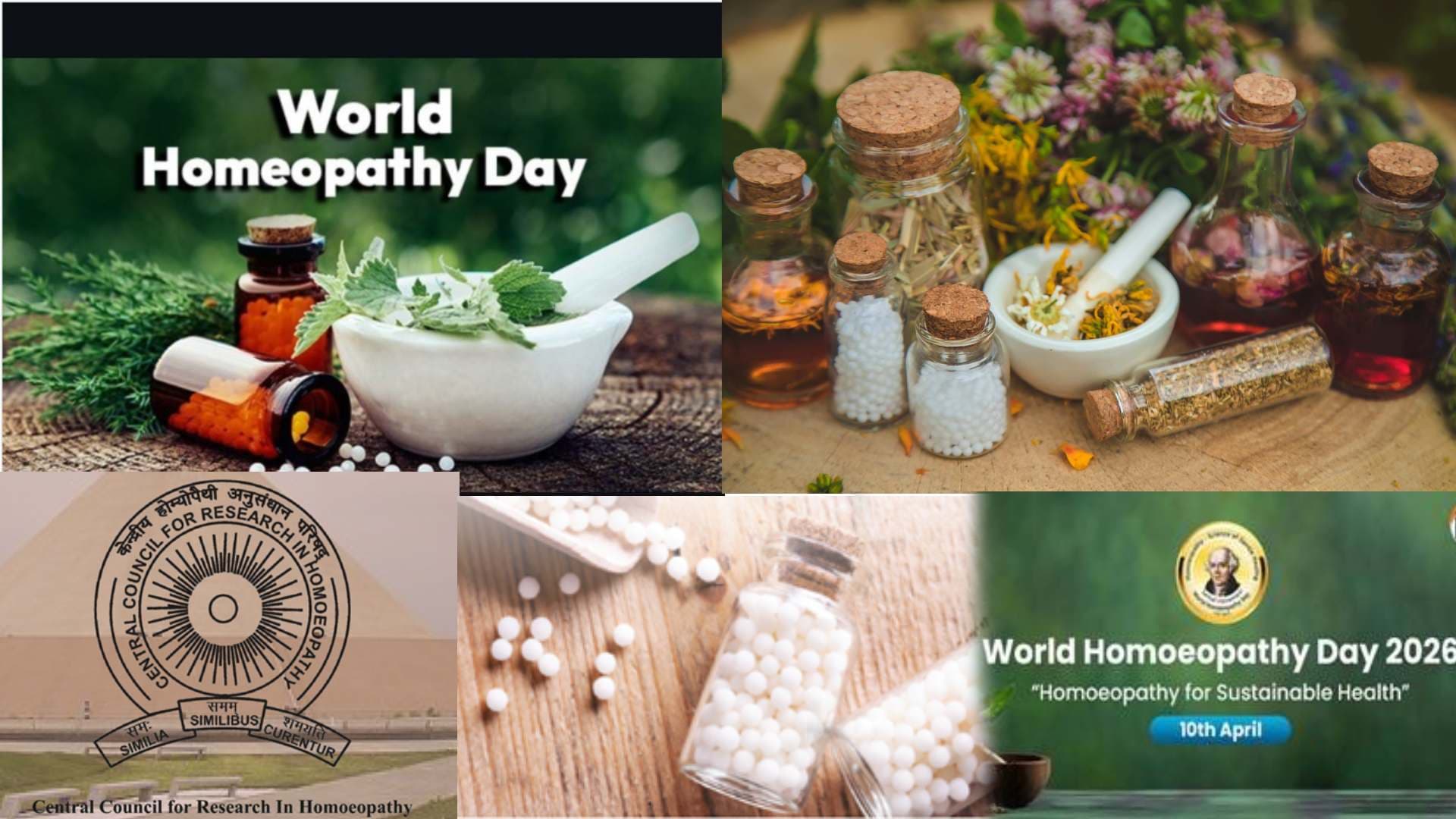
World Homoeopathy Day 2026, observed on April 10, celebrates the legacy of Dr Samuel Hahnemann with the theme “Homoeopathy for Sustainable Health.” India, home to one of the largest homoeopathic workforces globally, continues to strengthen this system through education, research, and public health initiatives under the Ministry of AYUSH.
New Delhi, Apr 9: World Homoeopathy Day, observed annually on April 10, commemorates the birth anniversary of Dr Samuel Hahnemann, the founder of homoeopathy. The 2026 theme, “Homoeopathy for Sustainable Health”, highlights the growing role of this system in preventive and holistic care. India, which today boasts one of the largest homoeopathic workforces globally, has seen remarkable growth in this field since its introduction in the early 19th century.
Homoeopathy first entered India around 1810 through German missionaries, and its acceptance grew significantly after John Martin Honigberger successfully treated Maharaja Ranjit Singh in 1839. By the mid-19th century, homoeopathy had spread across regions, with hospitals and dispensaries established in Tamil Nadu, Bengal, and other parts of the country. Influential figures such as Rajendra Lal Dutta and Mahendra Lal Sircar further strengthened its credibility, paving the way for its expansion among both elites and the general population.
The principles of homoeopathy, derived from Hahnemann’s Organon of Medicine, rest on two foundations: “like cures like” and the “law of minimum dose.” Remedies are prepared from natural sources - plants, minerals, and animal substances - through dilution and succussion, and are tailored to the patient’s overall condition rather than just the disease. This individualised approach has made homoeopathy a preferred system for chronic disease management and preventive healthcare in India.
Post-Independence, the government institutionalised homoeopathy through regulatory and research bodies. The Central Council of Homoeopathy (1973) and the Central Council for Research in Homoeopathy (1978) were established to regulate education, professional standards, and scientific research. Today, India has 34 dedicated research centres, 277 educational institutions, and over 3.45 lakh registered practitioners. The National Commission for Homoeopathy, formed in 2021, continues to oversee education, ethics, and practitioner registration, while the Pharmacopoeia Commission ensures drug quality and safety.
Homoeopathy first entered India around 1810 through German missionaries, and its acceptance grew significantly after John Martin Honigberger successfully treated Maharaja Ranjit Singh in 1839. By the mid-19th century, homoeopathy had spread across regions, with hospitals and dispensaries established in Tamil Nadu, Bengal, and other parts of the country. Influential figures such as Rajendra Lal Dutta and Mahendra Lal Sircar further strengthened its credibility, paving the way for its expansion among both elites and the general population.
The principles of homoeopathy, derived from Hahnemann’s Organon of Medicine, rest on two foundations: “like cures like” and the “law of minimum dose.” Remedies are prepared from natural sources - plants, minerals, and animal substances - through dilution and succussion, and are tailored to the patient’s overall condition rather than just the disease. This individualised approach has made homoeopathy a preferred system for chronic disease management and preventive healthcare in India.
Post-Independence, the government institutionalised homoeopathy through regulatory and research bodies. The Central Council of Homoeopathy (1973) and the Central Council for Research in Homoeopathy (1978) were established to regulate education, professional standards, and scientific research. Today, India has 34 dedicated research centres, 277 educational institutions, and over 3.45 lakh registered practitioners. The National Commission for Homoeopathy, formed in 2021, continues to oversee education, ethics, and practitioner registration, while the Pharmacopoeia Commission ensures drug quality and safety.

📱 Get Argus News App
✨📰 60 Word News🎬 Argus Podcast📺 Live TV and Breaking News🔔 Free Notification Alerts
Download Free:
World Homoeopathy Day is marked by seminars, clinical discussions, awareness campaigns, and student competitions across the country. These events aim to promote knowledge exchange, public outreach, and greater awareness of homoeopathy’s role in sustainable healthcare. Government initiatives under the Ministry of AYUSH, such as the National AYUSH Mission, AYURSWASTHYA, and AYURGYAN, further support infrastructure, research, and professional training. The cultivation of medicinal plants under the National Medicinal Plants Board also strengthens the ecosystem, contributing to rural livelihoods and the AYUSH industry.
Homoeopathy has played a complementary role in epidemic preparedness, with interventions during outbreaks of Japanese Encephalitis, chikungunya, and dengue, and even during the COVID-19 pandemic. With stronger regulation, expanding research, and integration into public health initiatives, homoeopathy continues to evolve as a vital component of India’s pluralistic healthcare framework.
Homoeopathy has played a complementary role in epidemic preparedness, with interventions during outbreaks of Japanese Encephalitis, chikungunya, and dengue, and even during the COVID-19 pandemic. With stronger regulation, expanding research, and integration into public health initiatives, homoeopathy continues to evolve as a vital component of India’s pluralistic healthcare framework.
Related Topics
Explore more stories