



Ebola Outbreak 2026: Why India Faces Lower Immediate Risk Despite Global Alarm, Govt Tightens Surveillance
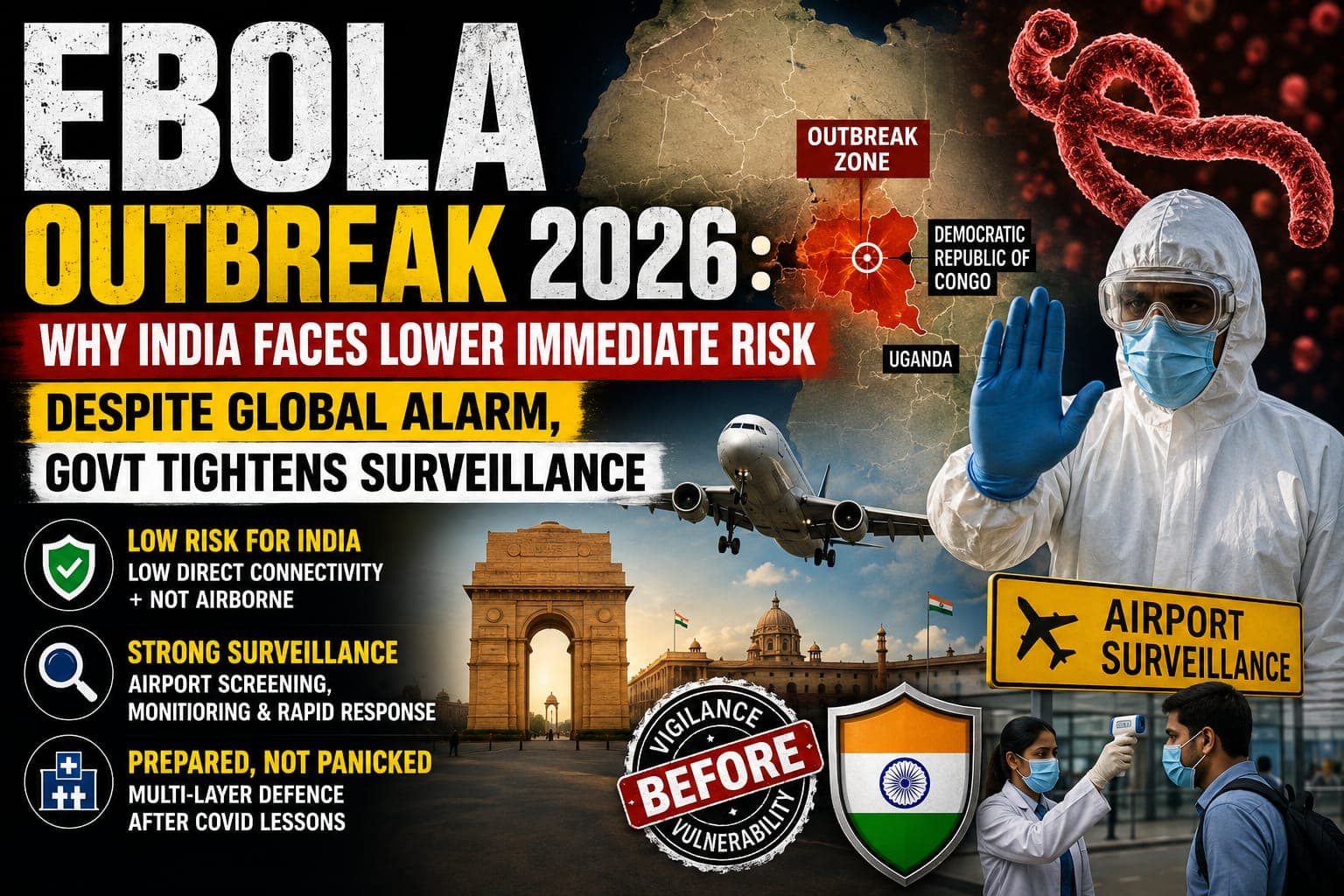
Key Points
Bhubaneswar: As the deadly Ebola outbreak in Central Africa triggers global concern, India has moved swiftly to activate health surveillance systems and issue fresh travel advisories.
The first casualty to the outbreak has been the postponement of India – African Union Summit scheduled to be held in New Delhi from May 28-31.
The government has also released an advisory suggesting 21 days isolation from passengers returned from Central Africa trip.
Another Covid-19 Looming?

📱 Get Argus News App
✨Unlike the rapid international spread witnessed during the Covid-19 pandemic, the low risk comes from the fact that India currently faces a comparatively lower immediate threat from Ebola — largely because direct air connectivity between Ebola-hit African regions and India remains limited.
The Union government on Thursday issued advisories for passengers travelling from or transiting through Ebola-affected countries, asking them to report symptoms immediately and seek urgent medical care if signs emerge after arrival.
Why India’s Risk is Structurally Lower
Unlike respiratory viruses such as Covid-19 that spread rapidly through mass global aviation networks, Ebola’s transmission dynamics are fundamentally different.
India has relatively low passenger traffic with the outbreak zones in Central Africa. There are no major direct commercial flights connecting Indian cities to the affected regions in eastern Congo or interior Uganda. Most travellers require multi-stop transit routes through Gulf hubs or African connecting airports.
This lower travel density significantly reduces the probability of frequent imported cases.
Public health experts say that while global connectivity means no country is fully insulated, Ebola lacks the explosive international mobility advantage that fuelled Covid-19.
And the most clinching has been that Ebola is not airborne.
The virus spreads only through direct contact with infected bodily fluids such as blood, vomit, sweat or contaminated surfaces. A patient becomes infectious only after symptoms appear.
That makes airport-based screening and rapid isolation far more effective compared to highly transmissible airborne pathogens.
India’s Multi-Layer Ebola Preparedness Strategy
Even with the lower immediate risk, the Centre is not taking chances.
The Directorate General of Health Services (DGHS) has advised all travellers arriving from Ebola-hit countries to monitor symptoms and immediately contact health authorities if fever, vomiting or weakness develops after arrival.
Government preparedness measures now include:
· Enhanced airport surveillance at major international terminals
· Monitoring of passengers with African travel history
· Isolation readiness in designated hospitals
· Emergency review meetings with states
· Strengthened laboratory testing capability
· Rapid-response public health teams
· Contact-tracing preparedness
Officials are particularly focusing on transit travellers arriving through Middle Eastern aviation hubs, where indirect Africa-India passenger movement is more common.
Why Authorities Still Remain Alert
Experts warn that Ebola outbreaks become dangerous when early infections go undetected.
WHO has stated that the current outbreak circulated silently for several weeks before confirmation, allowing transmission chains to expand inside local communities.
The concern for India is not large-scale spread immediately, but the possibility of a delayed imported infection through indirect travel routes.
Health officials say even one missed case entering crowded urban settings could trigger localized panic and strain hospital systems.
No Panic, But High Vigilance
Public health experts stress there is no reason for panic in India at present.
The combination of low direct travel connectivity, non-airborne transmission and post-Covid disease surveillance systems gives India a stronger defensive position compared to many global outbreaks.
But the government’s aggressive early advisory signals one larger lesson from recent pandemics: in an interconnected world, distance alone is never enough protection.
And that is
precisely why India has chosen vigilance before vulnerability.
Related Topics
Explore more stories