



Education Reform / Odisha Unifies Class 10 and 12 under One Board
Key Points
Odisha to unify Class 10 and 12 exams under one board from January, with new NCERT curriculum, Odia textbooks, free digital learning, and stronger vocational education aligned to NEP‑2020 reforms.
Bhubaneswar, Sep 7: Class 10 and Class 12 will now be brought under a single board, with students appearing for examinations through one unified system.
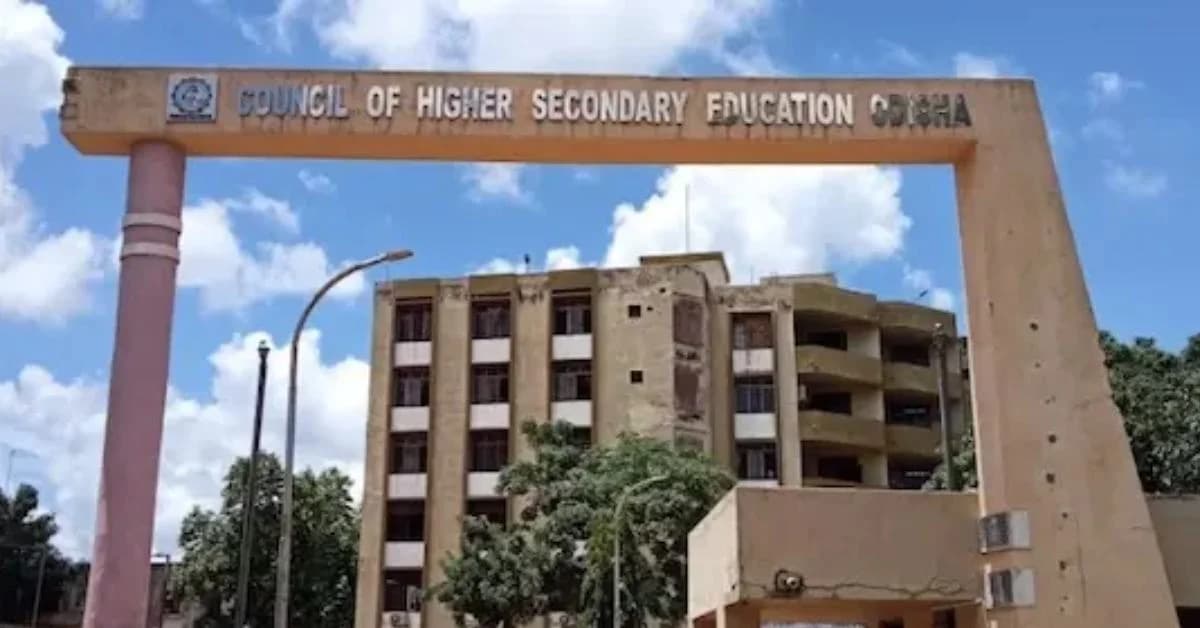
This was the major announcement made by School and Mass Education Secretary N. Thirumala Naik during the 44th Foundation Day celebrations of the Council of Higher Secondary Education (CHSE) in Bhubaneswar.
The reform, set to be implemented from January, marks a significant step in aligning Odisha’s education framework with the National Education Policy (NEP‑2020).
Also read: Odisha to Demolish Unsafe Buildings for Public Safety

📱 Get Argus News App
✨The event was attended by Koraput MLA Rupu Bhadra as chief guest, along with CHSE Chairman Mrinalkanti Das and senior officials including Mass Education Secretary Naik.
Speakers highlighted the importance of preparing students for future challenges and emphasized the transformative changes expected in the education sector. Meritorious students from colleges across the state were also felicitated for achievements in various fields.
Naik explained that NCERT is preparing a new curriculum for Class 10, which will emphasize practical learning and real‑life experiences rather than rote memorization.
“Children will not just learn from books, but will understand subjects through practical exposure and experiential learning. Teaching in mother tongue will also be prioritized,” he said.
Already, textbooks for two science subjects have been provided in Odia, and more subjects including commerce will soon be available in Odia.
Recognizing the rising costs of education and dependence on private tuition, the government has planned free digital learning modules. CHSE is preparing syllabi for Classes 11 and 12, and digital content will help students prepare for competitive exams like IIT‑JEE and NEET.
For this initiative, ₹10 crore has been allocated. Free schooling will be available up to 18 years of age, after which a nominal fee of ₹3,500 will be charged. Vocational and skill‑based education will also be strengthened to ensure employability.
Naik stressed that vocational education remains underdeveloped in India, and NEP‑2020 aims to change that.
“By the time students complete Plus Two, each must acquire at least one skill. Education should not stop at certificates—it must prepare students for livelihood,” he said.
Plans are also underway to integrate vocational courses into open learning systems, creating opportunities for students unable to pursue regular schooling.
CHSE Chairman Mrinalkanti Das reiterated that preparations for the single board system are ongoing. “The Chief Minister has already announced that Odisha will adopt NEP‑2020 with one board. Work is in progress, and once the law is finalized, implementation will follow. Until then, existing systems remain in force,” he clarified.
He also confirmed that NCERT textbooks for Class 10 are
being aligned with Odisha’s requirements, and digital content development is in
progress.
Related Topics
Explore more stories