



Culture / 'Aranyani: The Invisible Queen of India’s Forests'
·6 months ago·3 min read
Key Points
In the heart of India’s forests, Aranyani Devi reigns without temples or idols, her presence felt only in the rustling leaves and mysterious night sounds. The Rigveda’s Aranyani Sukta describes her as the Mother of Beasts, guardian of wildlife, and eternal force of nature who maintains balance without weapons.
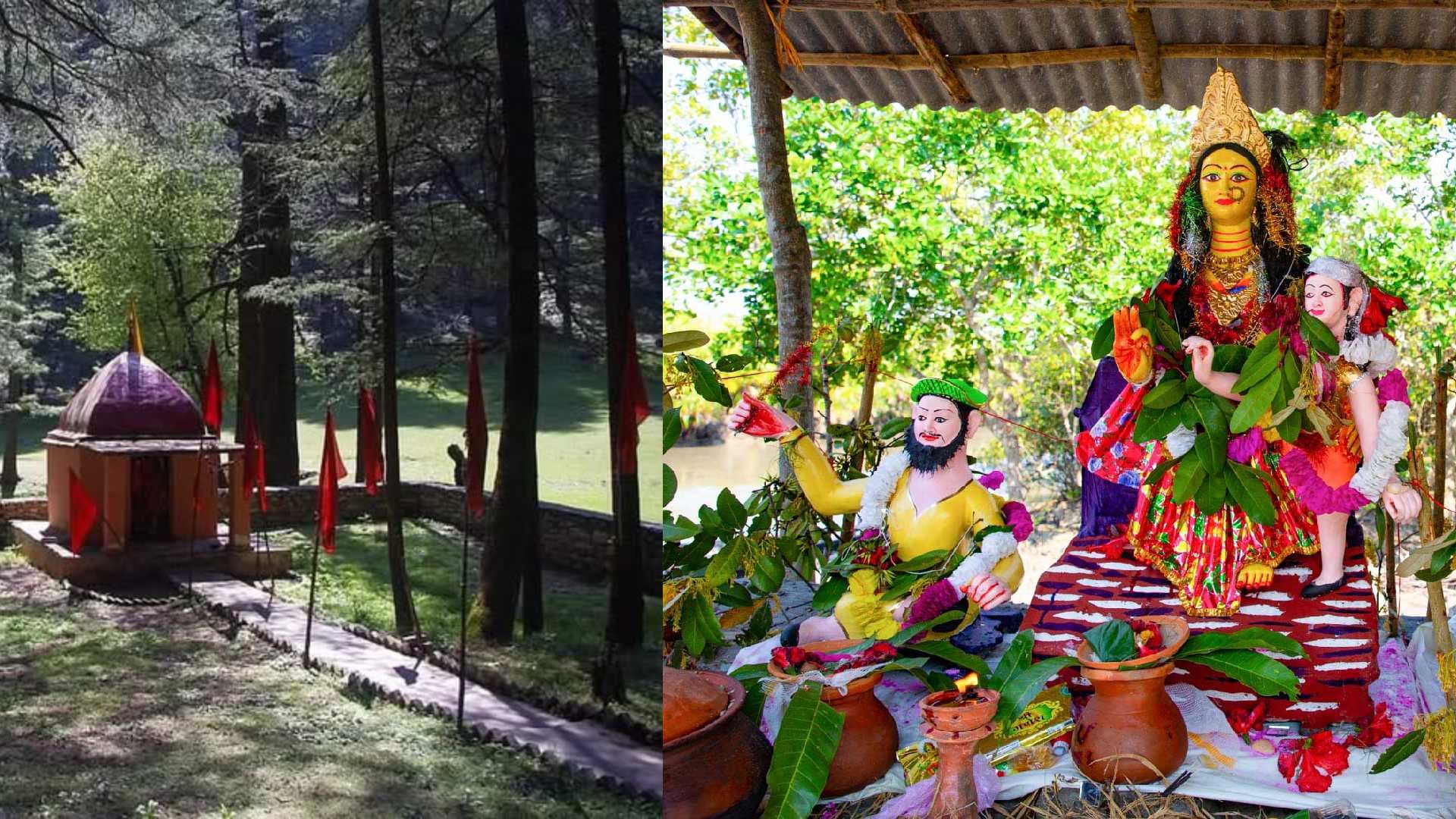
Bihar, Mar 26: In the dense silence of India’s forests, where human footsteps rarely reach, ancient hymns speak of a mysterious goddess - Aranyani, the “Queen of the Forests.” Unlike other deities, she has no temple of stone, no idol of clay. Her realm is the wilderness itself, and every tree is her living shrine.
In an age of climate crisis, Aranyani’s message feels urgent. She reminds humanity that nature is not merely a resource but a living power. To destroy forests is to destroy ourselves. I t is a timeless call to honor the forests that sustain life.
Even today, echoes of her worship survive in India’s sacred groves. Even today, sacred groves across states like Odisha, Maharashtra, Karnataka, and Kerala are preserved in her name, where plucking a single leaf is considered a sin. Communities guard them with reverence, believing Aranyani herself resides there. These groves remain biodiversity hotspots, preserved not by law but by faith.
Read More:Rukuna Rath Yatra Halted Midway In Bhubaneswar Due To Adverse Weather, Chariot Veers Off Route
In an age of climate crisis, Aranyani’s message feels urgent. She reminds humanity that nature is not merely a resource but a living power. To destroy forests is to destroy ourselves. I t is a timeless call to honor the forests that sustain life.
Even today, echoes of her worship survive in India’s sacred groves. Even today, sacred groves across states like Odisha, Maharashtra, Karnataka, and Kerala are preserved in her name, where plucking a single leaf is considered a sin. Communities guard them with reverence, believing Aranyani herself resides there. These groves remain biodiversity hotspots, preserved not by law but by faith.
Read More:Rukuna Rath Yatra Halted Midway In Bhubaneswar Due To Adverse Weather, Chariot Veers Off Route

📱 Get Argus News App
✨📰 60 Word News🎬 Argus Podcast📺 Live TV and Breaking News🔔 Free Notification Alerts
Download Free:
The Rigveda, composed over 3,500 years ago, dedicates an entire hymn — the Aranyani Sukta of the 10th Mandala - to this enigmatic goddess. The verses describe her as elusive yet omnipresent, dwelling among creepers and shadows, protecting wildlife as “Mṛgāṇāṁ Mātā” (Mother of Beasts). She is portrayed as fearless, wandering freely in forests where even predators bow to her invisible authority.
Aranyani’s power lies not in weapons but in balance. She maintains the ecosystem, ensuring harmony between predator and prey. For hunters and those who harm nature, her unseen presence is said to inspire dread. The Rigveda even interprets the strange sounds of the forest at night - the chirping of crickets, the crackling of dry wood - as her divine music.
Known also as Adahanyā ('the one who cannot be destroyed'), Aranyani is believed to guide lost travelers and provide endless fruits and roots without cultivation. Her abundance symbolizes nature’s generosity when treated with respect.
Aranyani symbolizes the living spirit of the forest, reminding humanity that to destroy nature is to destroy itself.
However, there is a physical temple dedicated to Aranyani Devi located in Arrah, Bihar.
Aranyani’s power lies not in weapons but in balance. She maintains the ecosystem, ensuring harmony between predator and prey. For hunters and those who harm nature, her unseen presence is said to inspire dread. The Rigveda even interprets the strange sounds of the forest at night - the chirping of crickets, the crackling of dry wood - as her divine music.
Known also as Adahanyā ('the one who cannot be destroyed'), Aranyani is believed to guide lost travelers and provide endless fruits and roots without cultivation. Her abundance symbolizes nature’s generosity when treated with respect.
Aranyani symbolizes the living spirit of the forest, reminding humanity that to destroy nature is to destroy itself.
However, there is a physical temple dedicated to Aranyani Devi located in Arrah, Bihar.
Related Topics
Explore more stories